Web3 Strategies for US Businesses: Blockchain Adoption by Q4 2026

In the rapidly evolving digital landscape, Web3 is no longer a distant concept but a tangible reality shaping the future of commerce and interaction. For US businesses, understanding and integrating Web3 Business Strategies is not just an option, but a strategic imperative to maintain competitiveness and foster innovation. The deadline for many forward-thinking enterprises is set: leveraging blockchain technology by Q4 2026. This comprehensive guide will delve into the essential strategies, opportunities, and challenges for US businesses navigating this transformative era.
The Dawn of Web3: A Paradigm Shift for US Businesses
Web3, often referred to as the decentralized web, is built upon blockchain technology, cryptocurrencies, and non-fungible tokens (NFTs). It promises a more open, trustless, and user-centric internet where individuals have greater control over their data and digital assets. For US businesses, this paradigm shift presents both immense opportunities and significant challenges. The transition from Web2’s centralized platforms to Web3’s decentralized ecosystems requires a fundamental rethinking of business models, customer engagement, and operational processes. Early adopters of robust Web3 Business Strategies are poised to gain a significant first-mover advantage, capturing new markets, enhancing customer loyalty, and streamlining operations through innovative blockchain solutions.
Understanding the Core Components of Web3
Before diving into specific strategies, it’s crucial to grasp the foundational elements of Web3:
- Blockchain Technology: A distributed, immutable ledger that records transactions across a network of computers. Its transparency and security are key for trustless interactions.
- Cryptocurrencies: Digital or virtual currencies secured by cryptography, operating independently of a central bank. They facilitate value transfer within Web3 ecosystems.
- Non-Fungible Tokens (NFTs): Unique digital assets stored on a blockchain, representing ownership of a specific item or piece of content. They are revolutionizing digital ownership, art, and intellectual property.
- Decentralized Finance (DeFi): Financial applications built on blockchain technology, aiming to disintermediate traditional financial institutions. DeFi offers new avenues for lending, borrowing, and trading.
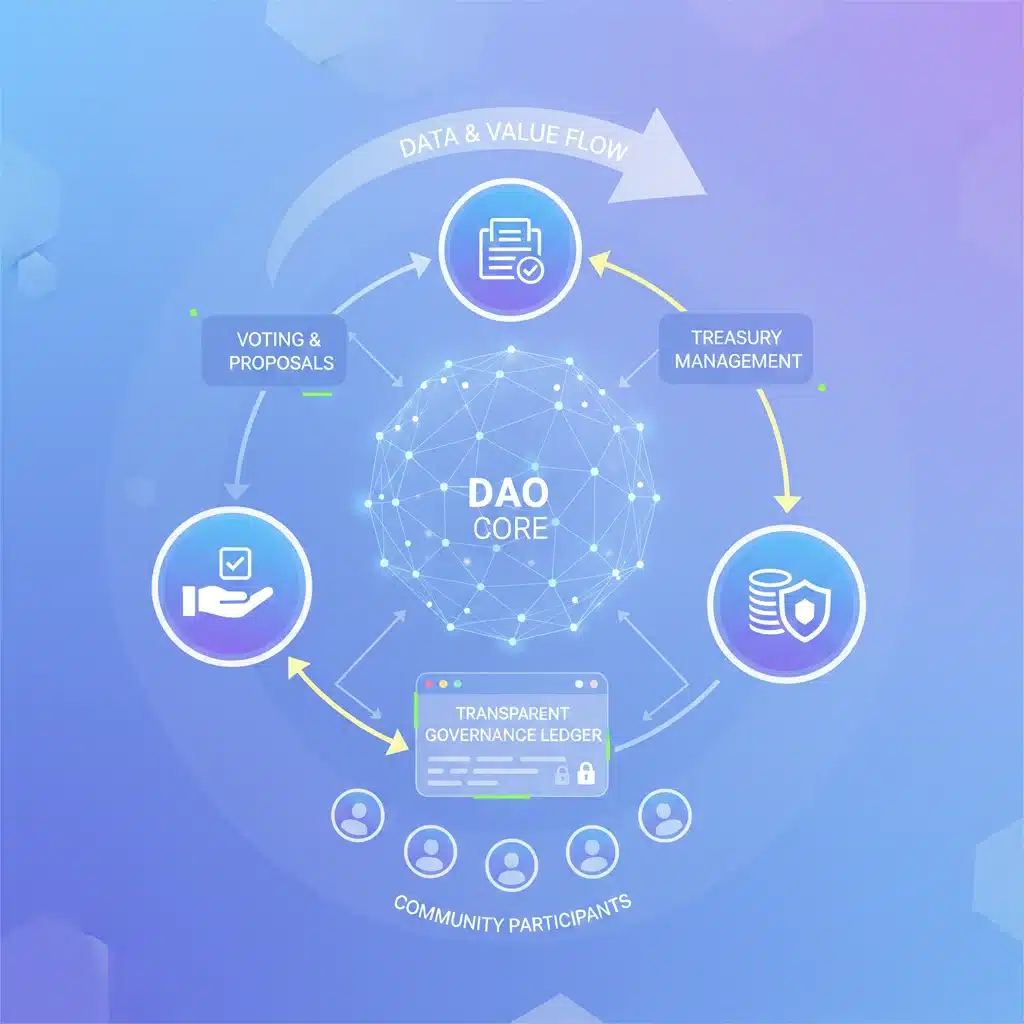
- Decentralized Autonomous Organizations (DAOs): Organizations governed by rules encoded as smart contracts on a blockchain, removing the need for central authority. They offer new models for corporate governance and community participation.
- Smart Contracts: Self-executing contracts with the terms of the agreement directly written into code. They automate processes and ensure transparency without intermediaries.
Each of these components plays a vital role in crafting effective Web3 Business Strategies. US businesses must evaluate how these technologies can be integrated into their existing infrastructure or used to create entirely new ventures.
Key Web3 Business Strategies for US Enterprises by Q4 2026
The timeline to Q4 2026 demands a proactive and structured approach. Here are critical strategies US businesses should consider:
1. Integrating Blockchain for Supply Chain Transparency and Efficiency
One of the most immediate and impactful applications of Web3 for US businesses is in supply chain management. Blockchain’s immutable ledger can track products from origin to consumer, ensuring transparency, authenticity, and accountability. This is particularly crucial for industries like pharmaceuticals, food and beverage, and luxury goods, where provenance and ethical sourcing are paramount. Implementing blockchain can reduce fraud, minimize disputes, and enhance consumer trust. Businesses can leverage smart contracts to automate payments upon delivery or quality verification, significantly improving efficiency and reducing administrative overhead. Developing a robust strategy around supply chain blockchain integration should be a top priority for US businesses looking to optimize their operations and build greater trust with consumers and partners.
2. Leveraging NFTs for Brand Engagement and New Revenue Streams
NFTs have transcended their initial association with digital art and are now powerful tools for brand building, community engagement, and generating new revenue. US businesses can explore:
- Digital Collectibles: Creating limited-edition NFTs tied to products, experiences, or brand milestones.
- Loyalty Programs: Replacing traditional points systems with NFT-based loyalty programs that offer exclusive access, discounts, or unique digital assets.
- Token-Gated Experiences: Granting exclusive access to content, events, or communities based on NFT ownership.
- Intellectual Property Rights: Using NFTs to manage and monetize digital intellectual property.
For example, a fashion brand could release an NFT collection that grants holders early access to new lines or exclusive metaverse fashion shows. A sports team could offer NFT tickets that double as digital collectibles, providing fans with unique benefits. These Web3 Business Strategies not only generate new revenue but also deepen customer relationships in innovative ways.

3. Exploring Decentralized Finance (DeFi) for Financial Innovation
DeFi presents a transformative opportunity for US businesses to rethink traditional financial processes. While the regulatory landscape for DeFi is still evolving, early exploration can position businesses for future advantages. Potential applications include:
- Decentralized Lending and Borrowing: Accessing capital or generating yield through DeFi protocols, potentially at more competitive rates than traditional finance.
- Asset Tokenization: Representing real-world assets (e.g., real estate, commodities, company shares) as digital tokens on a blockchain, enabling fractional ownership and increased liquidity.
- Cross-Border Payments: Utilizing stablecoins and DeFi networks for faster, cheaper, and more transparent international transactions.
Businesses must approach DeFi with caution, conducting thorough due diligence and understanding the associated risks. However, the potential for reduced costs, increased efficiency, and new financial products makes DeFi a crucial component of future-proof Web3 Business Strategies.
4. Implementing DAOs for Enhanced Governance and Community Engagement
DAOs offer a novel approach to organizational structure and governance. For US businesses, DAOs can be leveraged to:
- Community Governance: Empowering customers, partners, or even employees to participate in decision-making processes, fostering a sense of ownership and loyalty.
- Decentralized Project Management: Managing specific projects or initiatives through a DAO, allowing for transparent voting and resource allocation.
- Fundraising: Using DAOs as a mechanism for collective fundraising and investment.
While full corporate transition to a DAO model might be premature for many, experimenting with DAO principles for specific initiatives or community programs can provide valuable insights and build experience in decentralized governance. This is a progressive step in developing comprehensive Web3 Business Strategies.
5. Building on Metaverse and Web3 Gaming Platforms
The metaverse, an immersive virtual world, is intrinsically linked with Web3. US businesses should consider their presence and strategy within these emerging digital spaces:
- Virtual Retail and Experiences: Establishing virtual storefronts or creating immersive brand experiences in the metaverse.
- In-Game Economies: Integrating products or services into Web3 games, leveraging NFTs for in-game assets or rewards.
- Digital Identity: Exploring how decentralized identity solutions can enhance user experience and privacy within virtual worlds.
The metaverse represents a new frontier for customer interaction and commerce. Developing a strategic presence now can position US businesses at the forefront of this next wave of digital evolution, making it a critical aspect of forward-thinking Web3 Business Strategies.
Challenges and Considerations for US Businesses
While the opportunities are vast, navigating Web3 comes with its own set of challenges that US businesses must address:
Regulatory Uncertainty
The regulatory landscape for blockchain, cryptocurrencies, and NFTs in the US is still evolving. Businesses must stay abreast of new legislation and guidance from bodies like the SEC, CFTC, and Treasury. Compliance will be a significant factor in the successful implementation of any Web3 Business Strategies.
Security Risks and Cyber Threats
Blockchain technology offers robust security, but the broader Web3 ecosystem is not immune to cyber threats. Smart contract vulnerabilities, phishing attacks, and private key compromises pose significant risks. US businesses must invest in robust cybersecurity measures and educate their teams on best practices.
Talent Gap and Education
There is a significant demand for skilled professionals with expertise in blockchain development, cryptography, and Web3 architecture. US businesses will need to invest in training existing staff or recruiting new talent to build and manage their Web3 initiatives effectively.
Scalability and Interoperability
Many blockchain networks face scalability challenges, and interoperability between different chains is still a developing area. Businesses need to choose blockchain solutions that can handle their transaction volumes and integrate seamlessly with their existing systems.
User Experience and Adoption
For Web3 to achieve mainstream adoption, the user experience needs to become as seamless and intuitive as Web2. Businesses must focus on abstracting away the complexities of blockchain for their end-users to ensure widespread acceptance of their Web3 offerings.
Roadmap to Web3 Integration by Q4 2026
To successfully implement Web3 Business Strategies by Q4 2026, US businesses can follow a structured roadmap:
Phase 1: Research and Education (Current – Q2 2024)
- Form a Web3 Task Force: Assemble a cross-functional team to research Web3 technologies and their potential impact on the business.
- Stakeholder Education: Educate leadership and key stakeholders on the opportunities and risks of Web3.
- Competitive Analysis: Identify competitors and industry leaders already experimenting with Web3.
- Identify Use Cases: Brainstorm specific areas where Web3 could add value to existing operations or create new business lines.
Phase 2: Pilot Programs and Prototyping (Q3 2024 – Q2 2025)
- Select Pilot Projects: Choose one or two low-risk, high-impact Web3 initiatives for pilot programs (e.g., a small NFT loyalty program, a blockchain-based supply chain tracker for a specific product line).
- Technology Selection: Evaluate and select appropriate blockchain platforms (e.g., Ethereum, Solana, Polygon, Avalanche) and tools.
- Develop Prototypes: Build minimum viable products (MVPs) and test them with internal teams or a small group of early adopters.
- Assess Regulatory Impact: Engage with legal counsel to understand the regulatory implications of pilot projects.
Phase 3: Scaling and Integration (Q3 2025 – Q3 2026)
- Evaluate Pilot Results: Analyze the success metrics, challenges, and lessons learned from pilot programs.
- Strategic Integration: Begin integrating successful Web3 solutions into core business operations. This might involve significant infrastructure changes or partnerships.
- Talent Acquisition/Training: Scale up Web3-specific talent within the organization.
- Partnerships: Form strategic alliances with Web3 technology providers, blockchain development firms, or other Web3-native companies.
Phase 4: Optimization and Expansion (Q4 2026 Onwards)
- Continuous Improvement: Monitor performance, gather user feedback, and iterate on existing Web3 implementations.
- Explore New Opportunities: Continuously evaluate emerging Web3 technologies and expand into new use cases.
- Thought Leadership: Position the business as a leader in Web3 adoption within its industry, sharing insights and contributing to the broader ecosystem.
Case Studies: Early Adopters and Their Successes
Examining current applications can provide valuable insights for developing effective Web3 Business Strategies:
- Nike and RTFKT: Nike acquired RTFKT, a leading virtual sneaker and collectible creator, to launch NFT-based digital apparel and metaverse experiences, demonstrating a clear path for brands to enter the digital fashion space.
- Starbucks Odyssey: Starbucks launched its Web3 loyalty program, Starbucks Odyssey, combining NFTs with interactive journeys to offer members unique rewards and experiences, blending digital ownership with real-world benefits.
- JPMorgan Chase and Onyx: JPMorgan Chase has been at the forefront of enterprise blockchain, with its Onyx division exploring blockchain-based payment systems and tokenized assets for institutional clients, showcasing how traditional finance can embrace decentralized technologies.
- Supply Chain Solutions: Companies like IBM Food Trust (now part of Trust Your Supplier) have demonstrated how blockchain can enhance transparency and traceability for food products, reducing waste and improving consumer safety.
These examples highlight the diverse range of applications and the potential for significant returns on investment when Web3 Business Strategies are executed thoughtfully.
Future Outlook: Beyond Q4 2026
The journey into Web3 does not end in Q4 2026; it merely marks a critical milestone. Beyond this period, we can expect:
- Increased Mainstream Adoption: As user interfaces improve and regulatory clarity emerges, Web3 technologies will become more integrated into everyday life and business operations.
- Hyper-Personalization: Decentralized identity and data ownership will enable businesses to offer highly personalized experiences while respecting user privacy.
- New Business Models: The flexibility of Web3 will foster entirely new business models that are currently unimaginable, centered around digital ownership, community governance, and tokenized economies.
- Interoperable Ecosystems: Greater interoperability between different blockchain networks will create a more seamless and interconnected Web3 ecosystem, allowing for more complex applications and services.
US businesses that establish strong Web3 Business Strategies now will be well-positioned to capitalize on these future trends and maintain their leadership in the global digital economy.
Conclusion: Embracing the Decentralized Future
The imperative for US businesses to engage with Web3 is clear. By Q4 2026, those who have strategically integrated blockchain, NFTs, DeFi, and DAO principles will be operating with enhanced efficiency, deeper customer engagement, and diversified revenue streams. While the path is fraught with challenges, the opportunities for innovation and competitive advantage are too significant to ignore. Developing robust Web3 Business Strategies requires foresight, investment in talent, a commitment to understanding emerging technologies, and a willingness to adapt. The decentralized future is arriving, and US businesses have a unique chance to shape it, ensuring they remain at the forefront of global technological and economic advancement.