Edge AI Adoption: U.S. Businesses Boosting Efficiency 15% by 2026

In the rapidly evolving landscape of digital transformation, businesses are constantly seeking innovative ways to enhance efficiency, reduce costs, and gain a competitive edge. One of the most promising frontiers in this quest is Edge AI adoption. This powerful paradigm shift, integrating Artificial Intelligence capabilities closer to the data source—at the ‘edge’ of the network—is not just a theoretical concept; it’s a tangible force already reshaping industries across the United States. Projections indicate that U.S. businesses are on track to achieve an impressive 15% efficiency boost by 2026 through strategic Edge AI adoption, fundamentally altering operational models and driving unprecedented growth.
The journey towards widespread Edge AI adoption is fueled by a confluence of factors, including the proliferation of IoT devices, the need for real-time data processing, and the imperative to minimize latency and bandwidth consumption. Unlike traditional cloud-based AI, where data must travel to a centralized server for processing, Edge AI processes data locally, enabling instantaneous insights and actions. This localized intelligence is proving to be a game-changer for sectors ranging from manufacturing and logistics to healthcare and retail, offering a pathway to smarter, more responsive, and significantly more efficient operations.
This comprehensive article will delve into the intricacies of Edge AI adoption, exploring its definition, the compelling benefits it offers to U.S. businesses, and the key drivers propelling its rapid growth. We will examine practical applications across various industries, discuss the challenges inherent in its implementation, and provide actionable strategies for successful deployment. Furthermore, we will cast our gaze forward, analyzing the future trends and the profound impact Edge AI is expected to have on the American economy and global technological landscape. Understanding Edge AI adoption is no longer optional; it is essential for any business aiming to thrive in the digital age.
Understanding Edge AI Adoption: A Paradigm Shift
To fully grasp the significance of Edge AI adoption, it’s crucial to understand what it entails. Edge AI refers to the deployment of AI algorithms and machine learning models directly on edge devices, such as sensors, cameras, robots, and other IoT endpoints, rather than relying solely on centralized cloud servers. This approach enables data processing, analysis, and decision-making to occur closer to where the data is generated, often in real-time or near real-time.
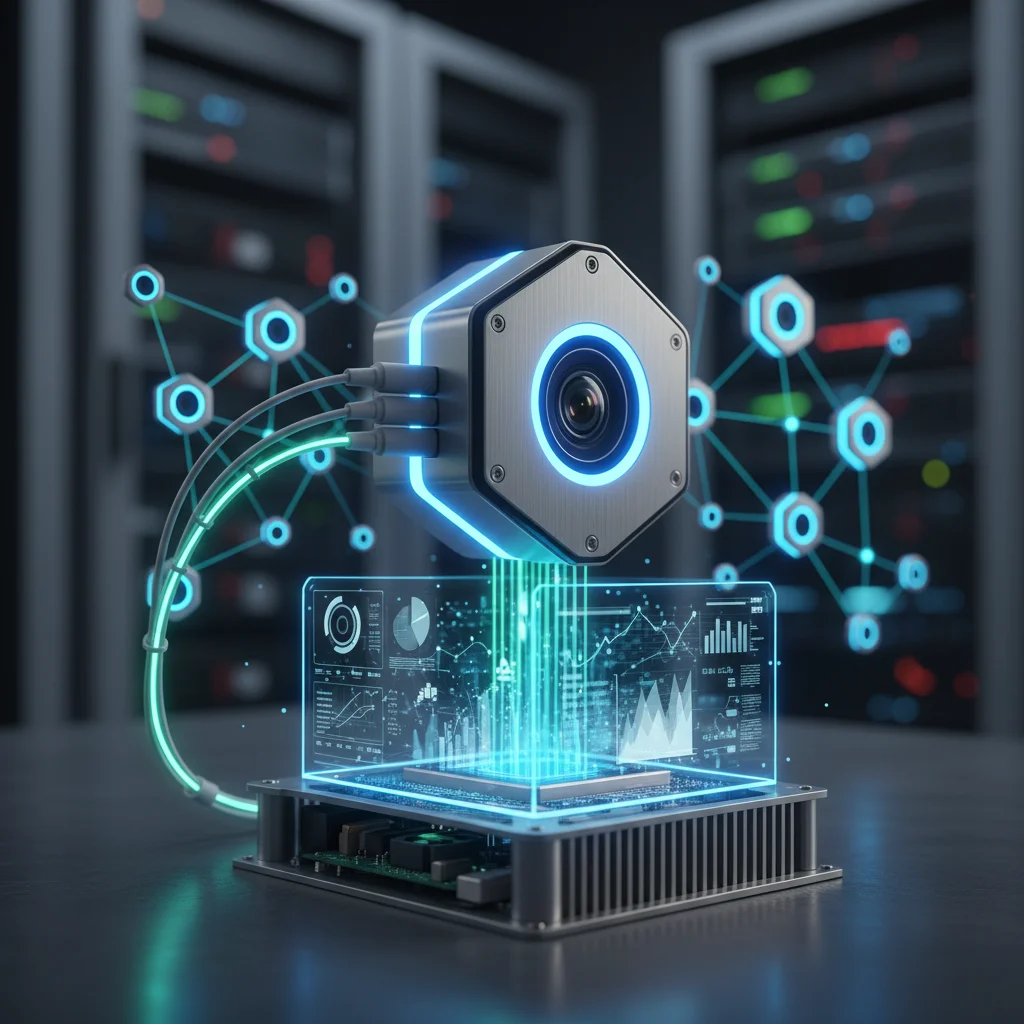
The distinction from traditional cloud AI is critical. In a cloud-centric model, raw data is typically transmitted to a remote data center for processing. While powerful, this approach introduces latency, consumes significant bandwidth, and can pose security and privacy concerns, especially with sensitive data. Edge AI adoption circumvents these limitations by bringing the intelligence to the data’s origin point. This means that instead of sending gigabytes of video footage to the cloud for analysis, an Edge AI-enabled camera can identify anomalies or objects locally and only send alerts or summarized data to the cloud, dramatically reducing the data load and response time.
The architecture of Edge AI involves a distributed computing model. Edge devices are equipped with sufficient processing power and memory to run AI models independently or with minimal interaction with a central server. This decentralization offers several advantages, which we will explore in detail. The growing maturity of hardware, including specialized AI chips designed for edge computing, and the development of lightweight AI models optimized for resource-constrained environments, are significant enablers of this widespread Edge AI adoption. As these technologies continue to advance, the capabilities and accessibility of Edge AI will only expand, making it an increasingly indispensable tool for businesses seeking operational excellence.
Key Drivers Behind Accelerated Edge AI Adoption in the U.S.
Several powerful forces are converging to accelerate Edge AI adoption across various sectors in the United States. These drivers highlight the practical necessities and strategic advantages that make Edge AI an attractive proposition for businesses:
- Real-Time Processing and Low Latency: For many applications, particularly in industrial automation, autonomous vehicles, and critical infrastructure, milliseconds matter. Edge AI eliminates the round-trip delay to the cloud, enabling instantaneous data analysis and decision-making. This is paramount for safety, operational efficiency, and rapid response to dynamic environments.
- Bandwidth and Connectivity Constraints: Transmitting vast amounts of raw data from thousands of IoT devices to the cloud can overwhelm network infrastructure and incur substantial costs. Edge AI adoption significantly reduces the volume of data sent over networks by processing it locally and only transmitting aggregated insights or critical alerts, thereby conserving bandwidth and alleviating connectivity pressures, especially in remote or intermittently connected locations.
- Enhanced Data Security and Privacy: Processing sensitive data locally at the edge minimizes its exposure to external networks and potential cyber threats. For industries dealing with proprietary information, personal health records, or classified government data, Edge AI adoption offers a more secure and privacy-compliant solution, aligning with stringent regulatory requirements like HIPAA and GDPR.
- Cost Reduction: While initial setup costs for Edge AI infrastructure can be a consideration, the long-term cost savings are substantial. Reduced bandwidth usage, lower cloud storage and processing fees, and optimized operational workflows contribute to a significant return on investment. The ability to make faster, more accurate decisions also prevents costly errors and downtime.
- Operational Resilience and Reliability: Edge AI systems can operate autonomously even when network connectivity to the cloud is interrupted or unreliable. This ensures continuous operation of critical functions, making systems more robust and resilient. For mission-critical applications, this uninterrupted functionality is invaluable.
- Proliferation of IoT Devices: The exponential growth of IoT devices—from smart sensors and cameras to industrial machinery and wearable tech—generates an unprecedented volume of data. Edge AI adoption provides the necessary infrastructure to manage and derive value from this data explosion, transforming raw information into actionable intelligence at the source.
These drivers collectively underscore why Edge AI adoption is not merely a technological fad but a fundamental shift in how businesses approach data processing, intelligence, and operational management. As these factors become more pronounced, the imperative for businesses to integrate Edge AI into their strategies will only grow stronger.
The Tangible Benefits: 15% Efficiency Boost by 2026
The projected 15% efficiency boost for U.S. businesses by 2026 through Edge AI adoption is a powerful testament to its transformative potential. This efficiency gain isn’t a single metric but a culmination of improvements across various operational facets. By bringing AI closer to the source of data, businesses can unlock unparalleled levels of agility, productivity, and profitability.
One of the most immediate benefits is the optimization of operational workflows. In manufacturing, for example, Edge AI can monitor production lines in real-time, detecting anomalies, predicting equipment failures before they occur (predictive maintenance), and adjusting parameters to maximize throughput and minimize waste. This proactive approach significantly reduces downtime and maintenance costs, leading to a more streamlined and efficient production process. Similarly, in retail, Edge AI-powered cameras can analyze customer traffic patterns, optimize store layouts, and manage inventory levels more effectively, directly impacting sales and operational costs.
Another significant contributor to efficiency is improved decision-making. With real-time insights generated at the edge, managers and automated systems can make faster, more informed decisions. This agility is crucial in dynamic markets where rapid responses to changing conditions can mean the difference between success and failure. For instance, in logistics, Edge AI can optimize routing for delivery vehicles based on live traffic data and package priorities, reducing fuel consumption and delivery times. In healthcare, Edge AI devices can monitor patient vitals and alert medical staff to critical changes instantly, enabling quicker interventions and better patient outcomes.
Furthermore, Edge AI adoption leads to substantial cost savings. By reducing the need to transmit vast quantities of data to the cloud, businesses save on bandwidth and cloud computing resources. Predictive maintenance capabilities extend the lifespan of expensive equipment, delaying capital expenditures. Enhanced security measures at the edge can prevent costly data breaches. These cumulative savings, combined with increased productivity and revenue generation from optimized operations, contribute to the remarkable efficiency gains anticipated by 2026. The strategic integration of Edge AI is not just about doing things faster; it’s about doing them smarter, more securely, and more economically, fundamentally redefining what’s possible for U.S. enterprises.
Industry-Specific Applications Driving Edge AI Adoption
Edge AI adoption is not a one-size-fits-all solution; its power lies in its adaptability to the specific needs and challenges of diverse industries. Here’s how various sectors are leveraging Edge AI to achieve significant efficiency gains:
Manufacturing and Industrial Automation
The manufacturing sector is a prime beneficiary of Edge AI adoption. Here, real-time monitoring and control are paramount. Edge AI systems on the factory floor can perform:
- Predictive Maintenance: Sensors on machinery collect data (vibration, temperature, acoustics) which Edge AI analyzes locally to predict potential equipment failures, allowing for proactive maintenance and minimizing costly downtime.
- Quality Control: Edge AI-powered cameras inspect products in real-time on assembly lines, identifying defects with greater accuracy and speed than human inspection, reducing waste and improving product quality.
- Process Optimization: AI models at the edge can analyze operational data to fine-tune machine parameters, optimize energy consumption, and improve overall production efficiency.
- Worker Safety: Edge AI can monitor worker movements and identify potential hazards in real-time, alerting personnel to dangerous situations or ensuring compliance with safety protocols.
Retail and E-commerce
In retail, Edge AI enhances both the customer experience and operational efficiency:
- Inventory Management: Edge devices in stores can track inventory levels, monitor shelf stock, and alert staff to restocking needs, preventing out-of-stock situations and optimizing supply chains.
- Personalized Customer Experiences: Edge AI can analyze in-store customer behavior (traffic flow, product interactions) to offer personalized recommendations or promotions in real-time, enhancing sales.
- Loss Prevention: AI-powered cameras at the edge can detect suspicious activities or shoplifting attempts, providing immediate alerts to security personnel.
- Optimized Store Layouts: Analyzing customer movement patterns helps retailers design more effective store layouts and product placements.
Healthcare
Edge AI adoption in healthcare promises to revolutionize patient care and operational management:
- Remote Patient Monitoring: Wearable and in-home Edge AI devices can continuously collect and analyze patient vital signs, alerting healthcare providers to critical changes, enabling proactive care, and reducing hospital readmissions.
- Medical Imaging Analysis: Edge AI can rapidly process medical images (X-rays, MRIs) at the point of care, assisting radiologists in detecting anomalies and speeding up diagnosis, especially in remote clinics.
- Assisted Surgery and Robotics: AI at the edge can guide robotic surgical tools with greater precision, enhancing surgical outcomes.
- Hospital Operations: Edge AI can optimize hospital resource allocation, manage patient flow, and improve logistical efficiency within healthcare facilities.
Transportation and Logistics
For transportation, Edge AI is crucial for safety and efficiency:
- Autonomous Vehicles: Edge AI is at the core of self-driving cars, processing real-time sensor data (lidar, radar, cameras) to navigate, detect obstacles, and make instantaneous driving decisions.
- Fleet Management: Edge devices in commercial vehicles can monitor driver behavior, optimize routes based on real-time traffic and weather, and predict maintenance needs, leading to fuel savings and improved safety.
- Smart Traffic Management: Edge AI can analyze traffic flow at intersections to dynamically adjust traffic signals, reducing congestion and improving urban mobility.
The versatility of Edge AI adoption across these industries underscores its potential to drive significant, measurable improvements in efficiency, safety, and customer satisfaction, pushing U.S. businesses towards their 15% efficiency boost target by 2026.
Challenges and Considerations for Successful Edge AI Adoption
While the benefits of Edge AI adoption are compelling, its implementation is not without challenges. Businesses embarking on this journey must carefully consider several factors to ensure successful deployment and maximize their return on investment.
Technical Hurdles
One of the primary challenges lies in the technical complexity of integrating AI at the edge. Edge devices often have limited computational resources, memory, and power compared to cloud servers. This necessitates the development and deployment of highly optimized, lightweight AI models that can run efficiently on these constrained environments. Model compression techniques, quantization, and efficient neural network architectures are crucial for effective Edge AI adoption.
Another technical hurdle is managing a distributed network of edge devices. This involves deploying, updating, and maintaining AI models across potentially thousands or even millions of devices, often in remote or inaccessible locations. Over-the-air (OTA) updates, robust device management platforms, and secure provisioning mechanisms are essential for scalability and long-term viability.
Interoperability is also a significant concern. Edge AI solutions often involve a diverse ecosystem of hardware vendors, software platforms, and communication protocols. Ensuring seamless integration and data exchange between these disparate components requires careful planning and adherence to industry standards, or the development of custom integration layers.
Data Security and Privacy Concerns
While Edge AI can enhance security by processing data locally, it also introduces new security vulnerabilities. Edge devices can be physically vulnerable to tampering or theft, and their distributed nature makes them harder to secure than a centralized cloud. Businesses must implement robust security measures, including encryption, secure boot, hardware-based root of trust, and continuous monitoring, to protect data at the edge and prevent unauthorized access or manipulation. Adherence to privacy regulations, even with local processing, remains critical, requiring careful anonymization and access controls.
Cost and ROI Justification
The initial investment in Edge AI adoption can be substantial, encompassing hardware (specialized edge processors, sensors), software (AI frameworks, orchestration platforms), and talent (AI engineers, data scientists). Businesses need to develop a clear business case and a detailed financial model to justify these upfront costs and demonstrate a clear path to ROI. This involves accurately quantifying the efficiency gains, cost savings, and new revenue opportunities that Edge AI will generate. Phased deployments, starting with pilot projects, can help mitigate risk and prove value before widespread adoption.
Talent and Skill Gap
The demand for skilled professionals in Edge AI development, deployment, and maintenance far outstrips the current supply. Businesses face a significant challenge in recruiting and retaining engineers with expertise in embedded systems, AI/ML, cybersecurity, and cloud-to-edge integration. Addressing this skill gap requires investing in training programs for existing staff, fostering partnerships with academic institutions, and potentially leveraging AI-as-a-service offerings from vendors to bridge internal capabilities.
Integration with Existing Infrastructure
Many U.S. businesses operate with legacy systems and existing IT infrastructure. Integrating new Edge AI solutions with these established systems can be complex and disruptive. Compatibility issues, data format discrepancies, and the need to retrofit older equipment with new sensors and processing units can slow down Edge AI adoption. A well-defined integration strategy, often involving API-led connectivity and careful system architecture, is essential to ensure a smooth transition and avoid operational disruptions.
Addressing these challenges proactively is crucial for any organization aiming to successfully navigate the landscape of Edge AI adoption and realize its full potential for efficiency enhancement and competitive advantage.
Strategies for Successful Edge AI Adoption
Achieving the projected 15% efficiency boost through Edge AI adoption requires a strategic and methodical approach. Businesses cannot simply deploy technology and expect immediate results; careful planning, execution, and continuous optimization are essential.
Start Small, Scale Smart
One of the most effective strategies is to begin with pilot projects. Identify a specific business problem or workflow that can significantly benefit from Edge AI and has clearly defined success metrics. This allows organizations to test the technology, learn from initial deployments, and refine their approach without committing extensive resources upfront. For example, a manufacturing plant might start with predictive maintenance on a single critical machine before expanding to an entire production line.
Once a pilot project demonstrates success and provides valuable insights, businesses can then scale their Edge AI adoption efforts. This involves expanding to more devices, integrating with more complex systems, and rolling out solutions across different departments or locations. A phased approach minimizes risk, allows for iterative improvements, and builds internal expertise.
Leverage Cloud-to-Edge Solutions
While Edge AI emphasizes local processing, it doesn’t mean abandoning the cloud entirely. A hybrid cloud-to-edge architecture is often the most effective strategy. The cloud can be used for training complex AI models, managing and orchestrating edge devices, and storing aggregated insights for long-term analysis and strategic decision-making. Edge devices then run the inference (applying the trained models) locally. Many major cloud providers offer specialized services and platforms specifically designed for managing and deploying AI to the edge, simplifying the process of Edge AI adoption and offering a cohesive ecosystem.
Focus on Data Governance and Security
Robust data governance policies are paramount. This includes defining what data is collected at the edge, how it’s processed, stored, and transmitted, and who has access to it. Implementing strong encryption for data at rest and in transit, securing edge devices against physical and cyber threats, and adhering to all relevant data privacy regulations (e.g., CCPA, state-specific laws) are non-negotiable. Regular security audits and vulnerability assessments should be part of the ongoing maintenance of Edge AI systems.
Invest in Talent and Training
To overcome the skill gap, businesses must invest in their workforce. This includes training existing IT and operations personnel on Edge AI concepts, tools, and platforms. Partnering with universities or specialized training providers can help develop a pipeline of skilled professionals. Furthermore, fostering a culture of continuous learning and innovation within the organization is crucial to staying abreast of rapid advancements in Edge AI technology.
Choose the Right Hardware and Software Stack
The choice of edge hardware (e.g., specialized AI chips, embedded systems) and software (e.g., AI frameworks, operating systems, orchestration platforms) is critical. These choices should align with the specific application requirements, computational needs, power constraints, and scalability goals. Open-source solutions can offer flexibility and cost savings, while proprietary platforms might provide more integrated support and specialized features. Careful evaluation and proof-of-concept testing are essential before making significant investments.
Measure and Optimize Continuously
Successful Edge AI adoption is an ongoing process. Businesses must establish clear KPIs to measure the impact of their Edge AI initiatives on efficiency, cost savings, and other business objectives. Regular monitoring of system performance, model accuracy, and operational metrics allows for continuous optimization. This iterative approach ensures that Edge AI solutions remain effective, adapt to changing business needs, and continue to deliver value over time, solidifying the path to the 15% efficiency boost.
The Future Outlook of Edge AI Adoption in the U.S.
The trajectory of Edge AI adoption in the U.S. points towards an increasingly intelligent, autonomous, and efficient business landscape. The projected 15% efficiency boost by 2026 is just the beginning; the long-term impact of this technology is expected to be even more profound, reshaping industries and creating new paradigms for innovation.
Expansion into New Industries and Use Cases
While manufacturing, retail, and healthcare are currently leading the charge, Edge AI is poised to penetrate virtually every sector. We can expect to see significant Edge AI adoption in areas such as:
- Smart Cities: Optimizing traffic flow, managing public utilities, monitoring environmental conditions, and enhancing public safety through localized AI processing.
- Agriculture: Precision farming with AI-powered drones and sensors at the edge to monitor crop health, predict yields, and optimize irrigation and fertilization.
- Energy Management: Smart grids leveraging Edge AI for real-time demand-response management, predictive maintenance of infrastructure, and optimizing renewable energy integration.
- Defense and Public Safety: Enhanced situational awareness, autonomous reconnaissance, and real-time threat detection in challenging environments.
As the technology matures and becomes more accessible, innovative use cases that are currently unimaginable will emerge, driven by the unique ability of Edge AI to provide immediate, localized intelligence.
Convergence with Other Emerging Technologies
The true power of Edge AI will be unleashed through its convergence with other cutting-edge technologies:
- 5G and 6G Networks: The ultra-low latency and high bandwidth of next-generation wireless networks will perfectly complement Edge AI, enabling seamless communication between edge devices and allowing for more complex AI models to be distributed and updated efficiently.
- Digital Twins: Edge AI will feed real-time operational data into digital twin models, creating highly accurate virtual representations of physical assets and processes, enabling sophisticated simulations, predictive analytics, and proactive management.
- Blockchain: Enhanced security and data integrity for Edge AI systems could be provided by blockchain technology, ensuring the trustworthiness of data collected and processed at the edge.
- Quantum Computing: While still nascent, quantum computing could eventually enable even more powerful and efficient AI models to run on edge devices, unlocking capabilities beyond current classical computing limits.

This synergistic relationship will multiply the capabilities of each technology, leading to unprecedented levels of automation, intelligence, and responsiveness across various domains.
Ethical Considerations and Regulatory Frameworks
As Edge AI adoption becomes more pervasive, ethical considerations and regulatory frameworks will gain increasing importance. Issues such as data privacy, algorithmic bias, accountability for autonomous systems, and the impact on employment will require careful attention. Governments and industry bodies will need to collaborate to establish clear guidelines and standards to ensure that Edge AI is developed and deployed responsibly, equitably, and for the benefit of society. Trust and transparency will be paramount for widespread public acceptance and continued growth.
The future of Edge AI in the U.S. is bright, promising a landscape where businesses are not just more efficient, but also more intelligent, resilient, and capable of adapting to an ever-changing world. The journey to 2026 and beyond will be defined by how strategically and responsibly U.S. businesses embrace and integrate this revolutionary technology.
Conclusion: Embracing Edge AI for a Competitive Future
The compelling narrative of Edge AI adoption among U.S. businesses is clear: it represents a pivotal shift towards a more efficient, responsive, and intelligent operational paradigm. The projected 15% efficiency boost by 2026 is not merely an optimistic forecast but a tangible outcome driven by the strategic integration of AI capabilities at the very edge of the network. This localized intelligence empowers businesses to overcome traditional limitations of latency, bandwidth, and security, unlocking unprecedented levels of productivity and innovation across diverse sectors.
From the precise predictive maintenance in manufacturing that minimizes downtime and waste, to the personalized customer experiences in retail that drive engagement and sales, and the life-saving real-time monitoring in healthcare, Edge AI is proving its worth as a transformative technology. Its ability to process data instantaneously, enhance data security, and reduce operational costs makes it an indispensable tool for any organization striving for competitive advantage in today’s fast-paced digital economy.
However, realizing the full potential of Edge AI adoption demands a thoughtful and strategic approach. Businesses must navigate technical complexities, address security and privacy concerns, justify initial investments, and bridge the existing talent gap. By starting with focused pilot projects, leveraging hybrid cloud-to-edge architectures, prioritizing robust data governance, and continuously investing in talent and optimization, companies can lay a solid foundation for sustainable growth and innovation.
As we look towards 2026 and beyond, the influence of Edge AI will only continue to expand, intertwining with emerging technologies like 5G and digital twins to create even more sophisticated and autonomous systems. The ethical considerations and the need for comprehensive regulatory frameworks will become increasingly important, ensuring that this powerful technology is deployed responsibly and equitably. For U.S. businesses, embracing Edge AI adoption is not just about keeping pace with technological advancements; it’s about proactively shaping a future where efficiency, intelligence, and resilience define success. The time to invest in and integrate Edge AI is now, to secure a competitive and prosperous future.