Digital Divide 2.0: Urban vs. Rural High-Speed Internet Access 2026
The Persistent Chasm: Digital Divide 2.0 and the Battle for Rural Internet Access in 2026
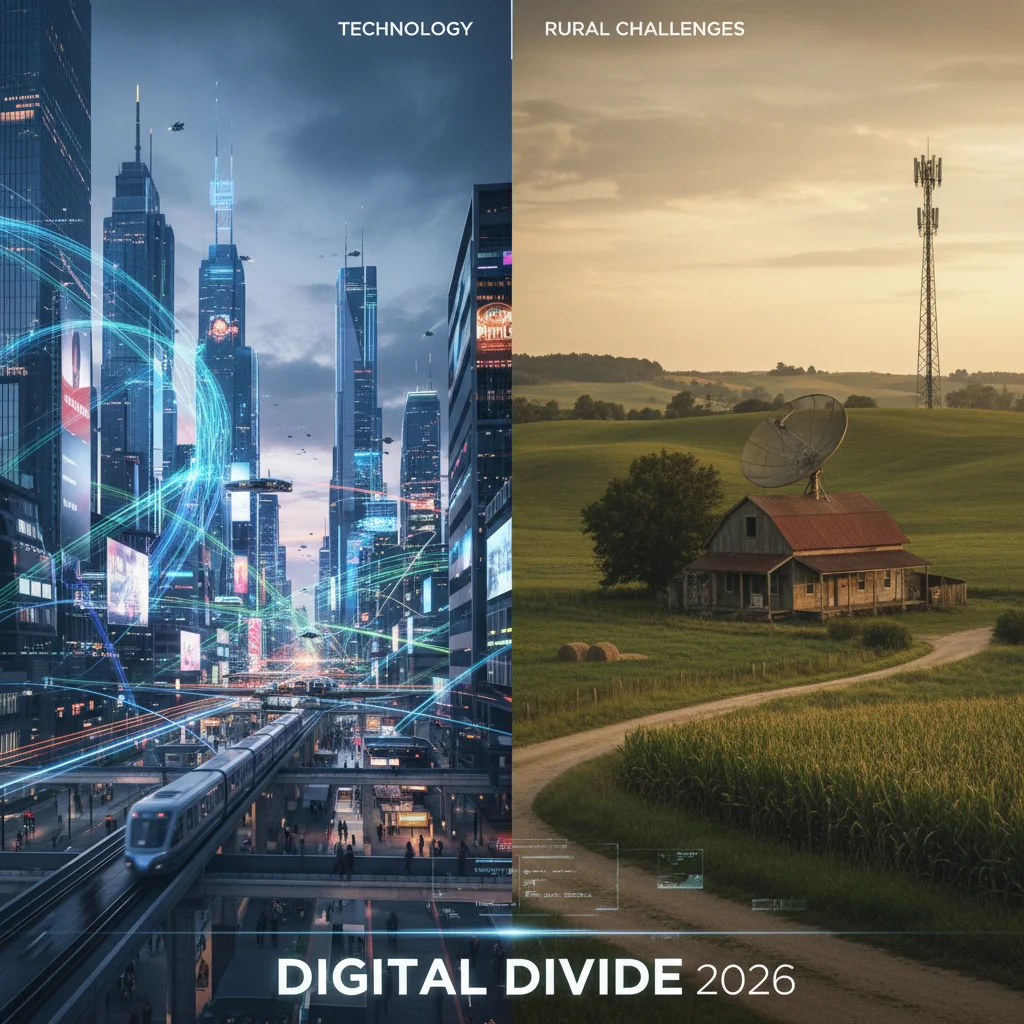
The year is 2026, and while advancements in artificial intelligence, quantum computing, and space exploration dominate headlines, a more fundamental challenge persists on Earth: the digital divide. Specifically, the disparity in high-speed internet access between urban and rural areas remains a critical societal and economic issue. While urban centers boast hyper-fast, ubiquitous connectivity, many rural communities continue to struggle with slow, unreliable, or entirely absent internet services. This article delves deep into this “Digital Divide 2.0,” providing a comparative analysis of urban vs. rural access to high-speed internet in 2026, exploring the underlying causes, technological solutions, policy interventions, and the profound societal impacts of this ongoing chasm. Understanding the nuances of rural internet access is paramount for fostering equitable growth and opportunity in the coming decade.
Defining High-Speed Internet in 2026: A Shifting Benchmark
Before we can compare access, we must first define what constitutes “high-speed internet” in 2026. The benchmarks have evolved significantly. What was considered fast a decade ago is now merely adequate. In 2026, a true high-speed connection generally implies download speeds of at least 100 Mbps and upload speeds of 20 Mbps, with many urban areas regularly experiencing gigabit (1000 Mbps) speeds. This standard is driven by the increasing demands of cloud computing, high-definition streaming, virtual reality, remote work, and advanced e-learning platforms. For rural internet access to be considered truly “high-speed,” it must meet or exceed these modern requirements, enabling participation in the digital economy and society without compromise.
The definition isn’t just about raw speed; it also encompasses reliability, latency, and affordability. A connection that frequently drops, has high latency (delay), or is prohibitively expensive, regardless of its theoretical speed, fails to serve its purpose effectively. Therefore, when discussing rural internet access, we are not just talking about the presence of a signal, but the presence of a robust, dependable, and accessible connection that empowers users.
The Urban Advantage: A Web of Connectivity
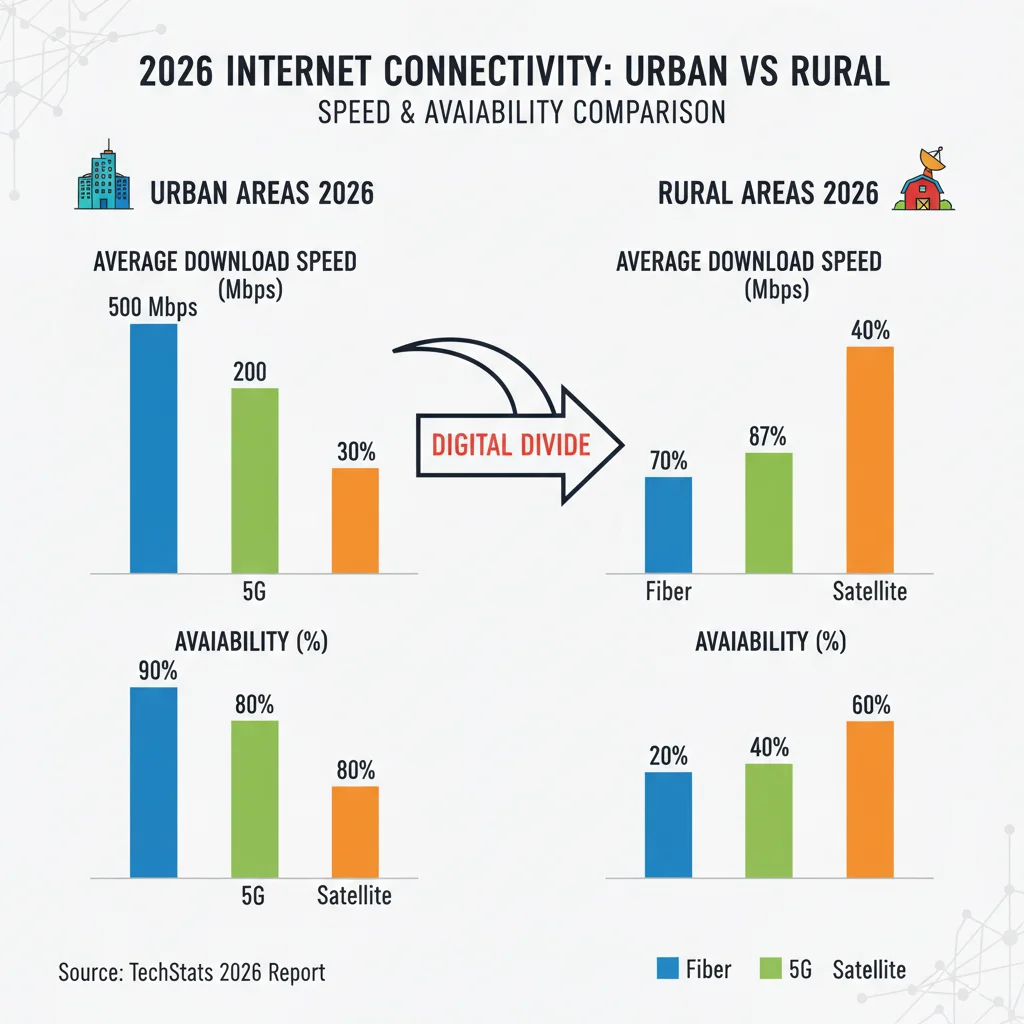
Urban areas in 2026 are characterized by a dense, competitive, and technologically advanced internet infrastructure. Fiber-optic networks are the backbone, reaching a vast majority of homes and businesses. This allows for symmetrical gigabit speeds, enabling seamless data transfer for complex applications, large file uploads, and ultra-low latency activities. The high population density makes fiber deployment economically viable for Internet Service Providers (ISPs), as the cost per subscriber is significantly lower. Furthermore, urban environments benefit from:
- Multiple Providers: Competition among numerous ISPs drives innovation, better service, and more competitive pricing. Consumers often have a choice of several fiber, cable, and fixed wireless providers.
- Advanced Wireless: 5G and even early 6G deployments are widespread, offering multi-gigabit speeds and ultra-low latency for mobile devices and fixed wireless access. This complements the wired infrastructure, providing seamless connectivity on the go.
- Infrastructure Investment: Continuous private and public investment ensures that urban networks are constantly upgraded to meet increasing demand. Smart city initiatives often include robust public Wi-Fi networks and IoT infrastructure that relies on high-speed internet.
- Skilled Workforce: A larger pool of skilled technicians and engineers is available for deployment, maintenance, and troubleshooting, ensuring rapid problem resolution and network optimization.
The urban digital ecosystem is a self-reinforcing cycle: high demand justifies investment, which leads to better services, which in turn fuels more demand and innovation. This creates an environment where high-speed rural internet access often struggles to compete on par.
The Rural Reality: Barriers to Broadband
The landscape for rural internet access in 2026 presents a stark contrast. Despite significant efforts over the past few years, many rural communities still face substantial hurdles in achieving reliable, high-speed connectivity. The challenges are multifaceted and deeply entrenched:
Geographic and Economic Dispersal
The primary barrier is the low population density and vast distances in rural areas. Laying fiber optic cables across miles of sparsely populated land is incredibly expensive, and the return on investment for ISPs is often insufficient to justify the upfront capital expenditure. This “last mile” problem remains the most significant hurdle. While urban areas can connect thousands of homes per mile of fiber, rural areas might only connect a handful, making the per-subscriber cost astronomically high.
Lack of Competition
Where internet service exists in rural areas, it’s often dominated by one or two providers, leading to a lack of competition. This can result in higher prices, slower speeds, and poorer customer service compared to urban markets. Without competitive pressure, there’s less incentive for providers to invest in upgrades or expand their networks to underserved areas.
Technological Limitations and Infrastructure Gaps
While fiber is the gold standard, its deployment in rural areas is slow. Other technologies, while improving, still face limitations:
- DSL: Often the only option, DSL relies on outdated copper telephone lines and offers speeds far below the 2026 high-speed benchmark.
- Satellite Internet: Historically plagued by high latency, data caps, and high costs, traditional geostationary satellite internet has been a last resort. While Low Earth Orbit (LEO) satellite constellations like Starlink offer a promising alternative with lower latency and higher speeds, coverage can still be patchy in some terrains, and the equipment and subscription costs can be prohibitive for many rural households.
- Fixed Wireless Access (FWA): FWA, often leveraging 5G or advanced LTE, uses ground-based towers to beam internet signals to receivers at homes. While effective in some areas, it requires line-of-sight, can be affected by terrain and weather, and tower density is still lower in rural regions compared to urban areas.
- Subsidies and Funding Gaps: Government subsidies and grants aimed at bridging the digital divide, while crucial, often struggle to keep pace with the scale of the problem. Bureaucracy, complex application processes, and insufficient funding can hinder their effectiveness in accelerating rural internet access.
Technologies Bridging the Divide: Hope for Rural Internet Access
Despite the challenges, 2026 sees several technological advancements offering significant hope for improving rural internet access:
Low Earth Orbit (LEO) Satellite Constellations
LEO satellites, exemplified by Starlink, represent a paradigm shift. Orbiting much closer to Earth than traditional geostationary satellites, they drastically reduce latency, making online gaming, video calls, and other real-time applications feasible. Their global coverage potential means even the most remote areas can theoretically gain access. However, challenges remain with equipment costs, service reliability in extreme weather, and the sheer volume of data demand in a community setting.
Advanced Fixed Wireless Access (FWA) with 5G and Beyond
5G technology, with its enhanced speed, capacity, and lower latency, is increasingly being deployed as a viable solution for FWA in rural and suburban areas. Operators are leveraging mid-band and even some high-band spectrum to deliver speeds competitive with traditional wired broadband. As 5G infrastructure expands and 6G research progresses, FWA will become an even more powerful tool for extending high-speed rural internet access where fiber is not economically feasible.
Community Networks and Public-Private Partnerships
Local communities are taking matters into their own hands, establishing municipal broadband networks or forming cooperatives. These initiatives, often supported by public-private partnerships, can be more responsive to local needs and bypass the profit-driven motivations of large ISPs. Utilizing grant funding and local expertise, these networks can deploy fiber or advanced wireless solutions tailored to their specific geographic and demographic requirements.
White Space Broadband
TV White Space (TVWS) technology utilizes unused spectrum in the broadcast TV bands to deliver broadband over long distances, even through obstacles like trees. While speeds are generally lower than fiber or 5G, it can provide foundational internet access in very remote areas where other solutions are impractical. Its development continues, offering a complementary approach to broader connectivity efforts for rural internet access.
Societal and Economic Impacts of the Digital Divide 2.0
The gap in rural internet access has far-reaching consequences that exacerbate existing inequalities and hinder national progress:
Education Disparities
In 2026, education is increasingly digital-first. Students without reliable high-speed internet struggle with online assignments, remote learning opportunities, access to digital libraries, and skill development critical for future careers. This creates a “homework gap” and limits educational attainment for rural youth, perpetuating cycles of disadvantage.
Healthcare Access and Telemedicine
Telemedicine has become indispensable, especially for remote consultations, mental health services, and specialist care. Without adequate rural internet access, residents miss out on these vital services, often having to travel long distances for appointments, delaying care, or foregoing it entirely. The digital divide directly impacts health outcomes and equity.
Economic Development and Job Creation
High-speed internet is a prerequisite for modern economic activity. Businesses in rural areas struggle to compete without reliable connectivity, limiting their ability to use cloud services, process online transactions, reach global markets, and attract skilled labor. Remote work, a growing trend, is inaccessible to many without robust rural internet access, preventing economic diversification and job creation in these communities.
Agricultural Innovation (AgriTech)
Modern agriculture is increasingly reliant on data, IoT devices, and precision farming techniques. From monitoring soil conditions to automating irrigation and tracking livestock, internet connectivity is vital for enhancing efficiency and sustainability. Limited rural internet access hampers the adoption of AgriTech, putting rural farmers at a disadvantage and potentially impacting food security and agricultural productivity.
Civic Engagement and Social Inclusion
Access to government services, news, and information is increasingly online. Without reliable internet, rural citizens can be excluded from civic processes, public discourse, and access to essential social services. This can lead to feelings of isolation and further marginalize these communities within the broader society.
Policy Interventions and the Path Forward for Rural Internet Access
Recognizing the critical nature of the digital divide, governments worldwide, alongside private industry and non-profits, are implementing various strategies to improve rural internet access. In 2026, these efforts are becoming more coordinated and impactful:
Targeted Funding and Infrastructure Grants
Significant government funding programs are being directed towards unserved and underserved rural areas. These grants incentivize ISPs to deploy fiber or advanced wireless technologies where it would otherwise be unprofitable. Streamlining the application process and ensuring accountability for deployment targets are key to their success.
Broadband Mapping and Data Accuracy
Accurate mapping of existing broadband coverage is crucial to identify true gaps. In 2026, more granular data collection, often down to the individual address level, helps ensure that funding is directed precisely where it’s needed most, preventing overbuilding in already served areas and maximizing the impact of investments in rural internet access.
Promoting Open Access Networks
Some policies encourage the development of open-access fiber networks, where a single physical infrastructure can be used by multiple service providers. This reduces the deployment cost for individual ISPs and fosters competition, leading to better services and pricing for rural consumers.
Streamlining Permitting and Regulations
Burdensome permitting processes and outdated regulations can significantly delay broadband deployment. Governments are increasingly working to streamline these processes, making it easier and faster for companies to build out infrastructure for rural internet access.
Digital Literacy and Device Access Programs
Beyond infrastructure, addressing the digital divide also requires ensuring that rural residents have the skills and devices to utilize the internet effectively. Programs providing digital literacy training, affordable devices, and technical support are vital complements to infrastructure investments.
Public-Private Partnerships and Cooperative Models
Collaboration between government entities, private ISPs, local communities, and non-profit organizations is proving to be the most effective model. These partnerships pool resources, expertise, and funding to tackle the unique challenges of extending rural internet access.
Case Studies and Success Stories in Rural Connectivity
While the challenges are significant, there are growing examples of successful initiatives bridging the divide:
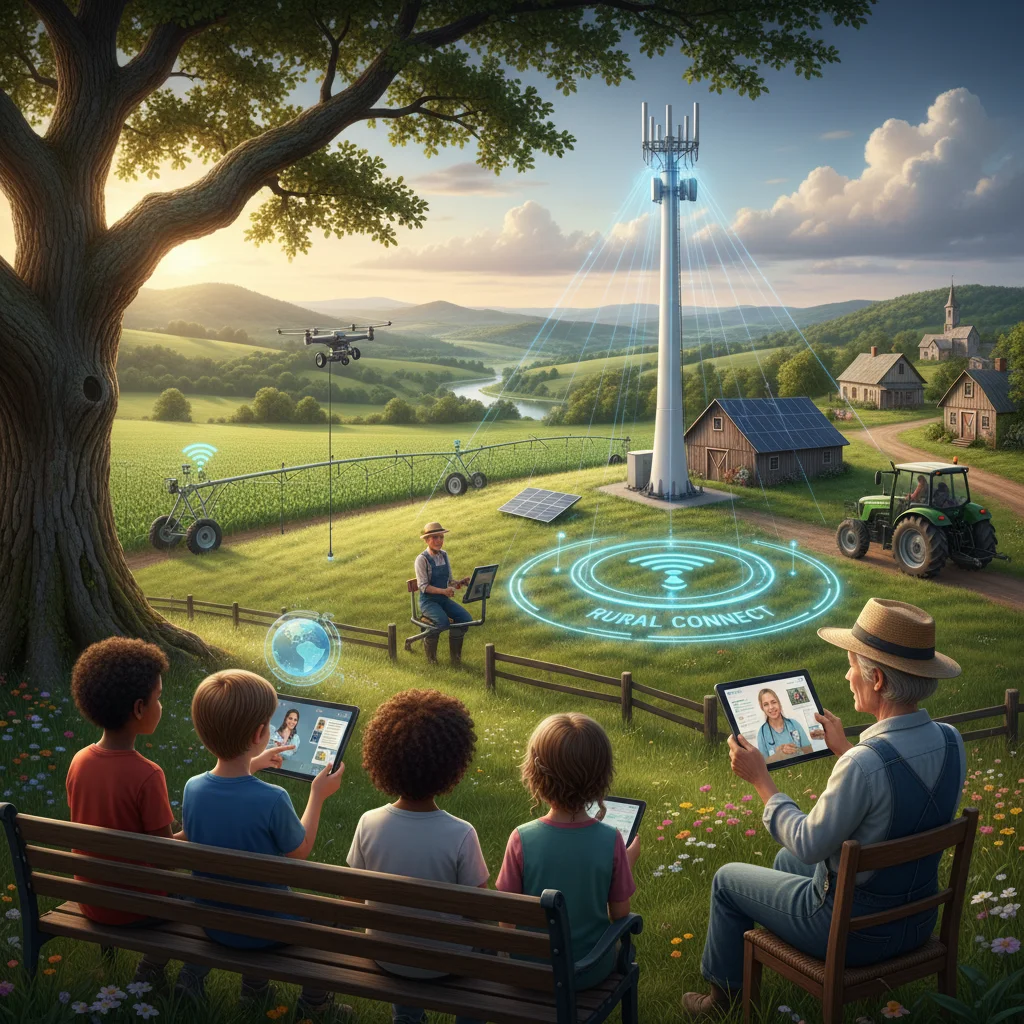
- The "Gigabit Village" Project: In a remote mountainous region, a cooperative of local residents and businesses, with partial government funding, deployed a fiber-to-the-home network, transforming their economy and attracting new residents and remote workers. This demonstrated the power of community-led initiatives for high-speed rural internet access.
- State-Wide FWA Expansion: A particular state has successfully leveraged 5G FWA, combined with strategic tower placement and subsidies, to provide competitive broadband to over 70% of its previously underserved rural population within three years.
- LEO Satellite Integration Programs: Several pilot programs are integrating LEO satellite services with community Wi-Fi hotspots in the most isolated areas, offering shared access and experimenting with subsidized user terminals to overcome cost barriers for rural internet access.
The Future of Rural Internet Access: 2026 and Beyond
Looking ahead from 2026, the trajectory for rural internet access is one of cautious optimism. The convergence of advanced wireless technologies (5G/6G), increasingly efficient LEO satellite constellations, and robust policy frameworks offers a potent combination to finally close the digital divide. However, sustained commitment, flexible regulatory approaches, and continued innovation will be essential.
The goal is not just to provide “some” internet, but to ensure that rural communities have access to the same quality, speed, and affordability of high-speed internet as their urban counterparts. This parity is critical not only for economic competitiveness but for social equity, educational opportunity, and access to essential services. The battle for universal rural internet access is a defining challenge of our era, and 2026 marks a crucial point in this ongoing effort to build a truly connected society.
Conclusion: A Connected Future for All
The comparative analysis of urban vs. rural access to high-speed internet in 2026 reveals a persistent, albeit narrowing, gap. While urban areas enjoy a rich tapestry of advanced, competitive broadband services, many rural communities still grapple with the fundamental challenges of connectivity. The Digital Divide 2.0 is not merely a technological problem; it is a socio-economic issue with profound implications for education, healthcare, economic development, and overall quality of life. The increasing sophistication of LEO satellites, the expansion of 5G FWA, and a renewed focus on strategic policy interventions offer tangible pathways to bridge this divide. Achieving universal rural internet access requires a concerted, multi-stakeholder effort, but the benefits – a more equitable, prosperous, and connected society – are undeniably worth the investment. The future of our interconnected world depends on ensuring that no community is left behind in the digital revolution.