Bridging the Digital Divide: Internet Access for Low-Income Households

In an increasingly digital world, where connectivity is paramount for education, employment, healthcare, and civic engagement, the persistent internet access gap remains a stark reminder of societal inequalities. Despite significant technological advancements and concerted efforts to expand broadband infrastructure, a substantial portion of low-income households continues to lack reliable internet access. As we look towards 2026, this digital disparity, particularly the internet access gap, poses profound societal and financial challenges, hindering progress and exacerbating existing divides. This comprehensive analysis delves into the multifaceted nature of this issue, exploring its causes, consequences, and potential solutions to ensure digital equity for all.
The Enduring Internet Access Gap: A 2026 Perspective
Even in 2026, the promise of universal internet access remains unfulfilled for a significant segment of the global population, with low-income households disproportionately affected. The internet access gap is not merely a matter of convenience; it represents a fundamental barrier to participation in modern society. While many developed nations boast high overall internet penetration rates, these figures often mask the deep-seated inequalities that persist within their borders. For low-income families, the cost of broadband services, coupled with the expense of necessary devices and the lack of digital literacy, creates an insurmountable hurdle.
The landscape of 2026 sees technological innovation accelerating at an unprecedented pace. Artificial intelligence, virtual reality, and advanced automation are becoming increasingly integrated into daily life, from personalized education platforms to remote work opportunities and sophisticated telehealth services. Yet, without reliable internet access, low-income households are effectively locked out of these advancements, further widening the chasm between the digitally connected and the digitally disenfranchised. This exclusion has far-reaching implications, impacting everything from economic mobility to social inclusion and access to essential services.
Understanding the internet access gap requires a nuanced approach, acknowledging that the problem is not uniform across all low-income communities. Geographical location, often dictating the availability of infrastructure, plays a crucial role. Rural areas, for instance, frequently suffer from a lack of high-speed broadband deployment due to the high cost of installation and lower population density, making it less profitable for private providers. Urban low-income areas, while often having infrastructure, face challenges related to affordability, digital literacy, and sometimes, a lack of awareness about available assistance programs. The multifaceted nature of the internet access gap demands tailored solutions that address these diverse circumstances.
Defining ‘Reliable Internet Access’ in 2026
It’s crucial to define what constitutes ‘reliable internet access’ in the context of 2026. Merely having some form of internet connection is no longer sufficient. Reliable access implies high-speed broadband capable of supporting multiple users and devices concurrently, enabling seamless participation in video conferencing, online learning, streaming, and data-intensive applications. It also means consistent, uninterrupted service, free from frequent outages or throttling. For low-income households, this often translates to a connection that is both affordable and robust enough to meet the demands of modern digital life, rather than a bare-bones, slow, or inconsistent service.
The shift to cloud-based applications, the proliferation of smart devices, and the increasing reliance on digital platforms for virtually all aspects of life mean that substandard internet access is almost as detrimental as no access at all. Children attempting to complete homework assignments on slow, unreliable connections are at a significant disadvantage compared to their peers. Adults seeking employment or accessing telehealth services face similar frustrations and limitations. Therefore, addressing the internet access gap must involve ensuring not just access, but access to high-quality, reliable, and affordable broadband that empowers, rather than hinders, users.
Societal Impact: The Human Cost of the Internet Access Gap
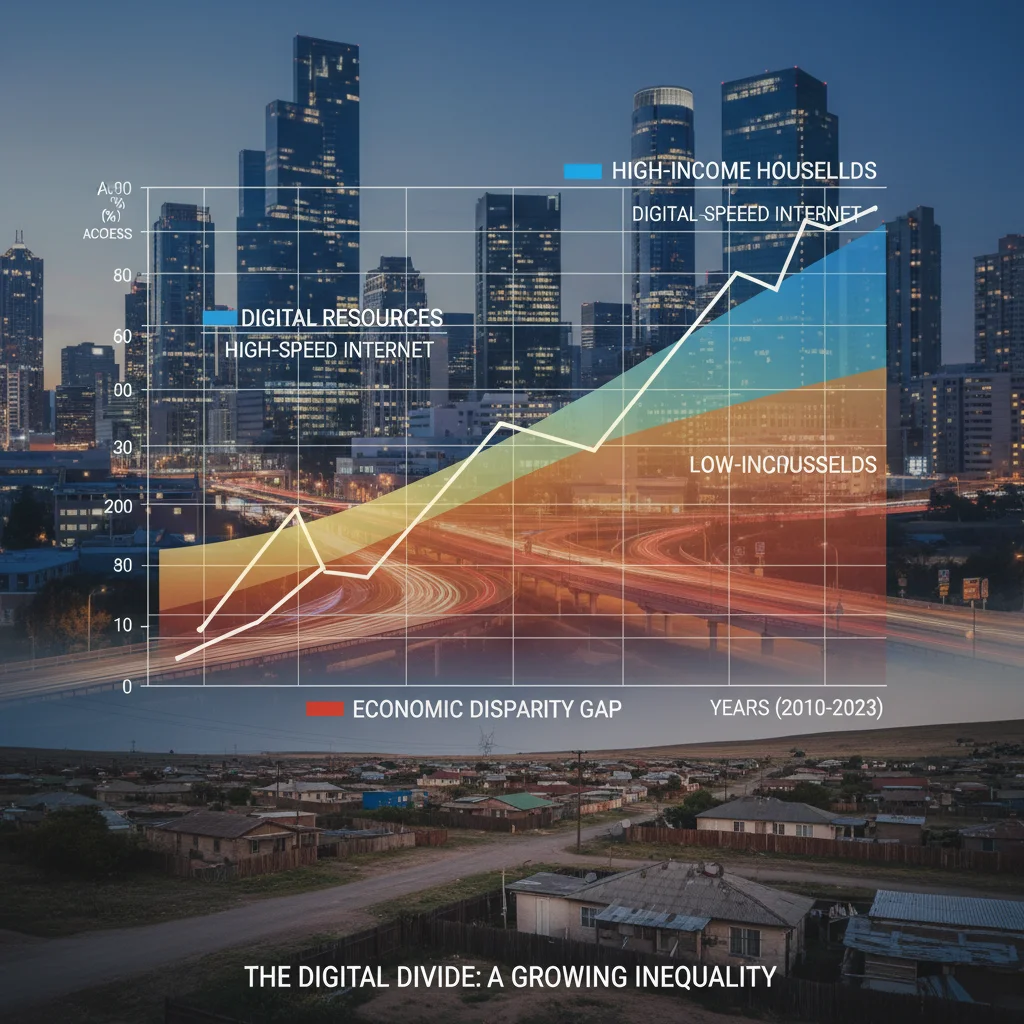
The societal impact of the internet access gap is profound and touches every aspect of human development and well-being. When 20% of low-income households still lack reliable internet access in 2026, it signifies a systemic failure to provide equitable opportunities, leading to a deepening of existing social inequalities. These households are often marginalized in education, healthcare, employment, and civic participation, creating a cycle of disadvantage that is difficult to break.
Educational Disparities
One of the most immediate and devastating consequences of the internet access gap is its impact on education. The COVID-19 pandemic highlighted the critical role of internet connectivity in learning, as schools shifted to remote and hybrid models. Even as classrooms have largely reopened, online learning resources, digital assignments, and virtual collaboration tools remain integral to modern education. Children from low-income households without reliable internet access are at a severe disadvantage, often struggling to complete homework, access educational content, or participate in online classes. This digital homework gap contributes to lower academic achievement, reduced graduation rates, and limits future educational and career opportunities. The internet access gap perpetuates educational inequality, denying these students the tools they need to succeed in an increasingly digital academic environment.
Healthcare Inequities
Telehealth services have become an indispensable part of healthcare delivery, offering convenience and accessibility, particularly for individuals in remote areas or those with mobility challenges. However, the internet access gap creates a significant barrier for low-income households trying to access these vital services. Without reliable internet, scheduling appointments, consulting with doctors virtually, accessing online medical records, or utilizing digital health management tools becomes impossible. This lack of access can lead to delayed diagnoses, inadequate management of chronic conditions, and poorer health outcomes, further exacerbating health disparities already prevalent in low-income communities. The internet access gap directly impacts health equity, denying vulnerable populations the full benefits of modern medicine.
Limited Employment and Economic Opportunities
In 2026, the job market is heavily reliant on digital skills and online platforms. From searching for job openings and submitting applications to participating in virtual interviews and undertaking remote work, internet access is a prerequisite for economic participation. Low-income individuals without reliable connectivity face significant hurdles in their job search, limiting their access to a wider range of opportunities and potentially trapping them in low-wage, unstable employment. Furthermore, the rise of the gig economy and remote work opportunities, which often offer flexibility and better pay, are largely inaccessible to those on the wrong side of the internet access gap. This perpetuates economic stagnation within these communities, making upward mobility incredibly challenging.
Civic and Social Exclusion
The internet has become the primary conduit for civic engagement, accessing government services, and staying informed about local and national issues. Online platforms facilitate voter registration, permit applications, unemployment benefits claims, and access to public information. When low-income households lack internet access, they are effectively excluded from these essential civic processes. This digital exclusion can lead to reduced political participation, a lack of awareness about available social programs, and a diminished voice in community decision-making. Moreover, social isolation can increase, as digital platforms are increasingly used for maintaining social connections and community building. The internet access gap thus undermines democratic participation and social cohesion.
Financial Impact: The Economic Burden of Digital Exclusion
Beyond the immediate societal ramifications, the internet access gap imposes substantial financial costs, both on individual households and on the broader economy. These costs are often hidden but are deeply embedded in the structures of digital exclusion.
Increased Household Expenses
Paradoxically, lacking reliable home internet can lead to increased expenses for low-income households. Without a home connection, individuals often rely on public Wi-Fi hotspots, which can be insecure and unreliable, or pay for expensive mobile data plans that offer limited bandwidth and quickly exceed data caps. This “data poverty” means that essential tasks like job searching, online learning, or accessing government services become more cumbersome and costly, requiring travel to public libraries or community centers, incurring transportation costs and time away from work or family responsibilities. The internet access gap doesn’t just mean a lack of access; it means a more expensive and less efficient way of living.
Lost Economic Productivity
The aggregate effect of limited employment opportunities and reduced digital literacy among a significant portion of the workforce translates into substantial lost economic productivity for the nation. A workforce that is not digitally fluent is less competitive in the global economy. Businesses may struggle to find skilled workers, and the overall pace of innovation and economic growth can be stifled. The internet access gap prevents a large segment of the population from contributing their full potential to the economy, leading to lower GDP, reduced tax revenues, and increased demand for social safety nets. Investing in broadband expansion and digital literacy for low-income households is not just a social expenditure; it’s an economic investment with significant returns.
Hindered Small Business Growth
Small businesses, particularly those in low-income communities, are increasingly reliant on online presence, e-commerce, and digital marketing to thrive. The internet access gap impacts entrepreneurs and small business owners who may lack the connectivity to operate effectively in the digital marketplace. This limits their reach, growth potential, and ability to compete with larger, digitally-enabled enterprises. Bridging the internet access gap is therefore crucial for fostering local economic development and supporting the entrepreneurial spirit within underserved communities.
Addressing the Internet Access Gap: Strategies for Digital Equity by 2026
Achieving digital equity by significantly reducing the internet access gap for low-income households by 2026 requires a multi-pronged approach involving government, private industry, non-profits, and communities themselves. No single solution will suffice; a combination of infrastructure investment, affordability programs, digital literacy initiatives, and policy reform is essential.
1. Expanding Broadband Infrastructure
The foundational step to bridging the internet access gap is ensuring that high-speed broadband infrastructure reaches every community, regardless of income level or geographical location. This requires significant public and private investment, particularly in rural and remote areas where market forces alone may not drive deployment. Government subsidies, public-private partnerships, and innovative infrastructure solutions (such as satellite internet or fixed wireless access) are critical. Policy frameworks must incentivize providers to build out networks in underserved areas, ensuring that the “last mile” is connected efficiently and affordably. The aim is not just coverage, but resilient, future-proof infrastructure capable of meeting evolving digital demands.
2. Enhancing Affordability Programs
Even with available infrastructure, the cost of internet service remains a major barrier for low-income households. Programs like the Affordable Connectivity Program (ACP) in the United States have demonstrated the effectiveness of subsidies in making broadband accessible. Expanding and permanently funding such programs, while simplifying the application process, is crucial. Additionally, encouraging internet service providers (ISPs) to offer low-cost, high-speed plans specifically for eligible low-income families can significantly reduce the financial burden. This requires regulatory oversight to ensure these plans are truly affordable and provide adequate service quality, rather than being “discounted” plans with inferior performance.
3. Promoting Digital Literacy and Skills Training
Providing internet access is only half the battle; ensuring that individuals possess the skills to use it effectively and safely is equally important. Digital literacy programs, offered through schools, libraries, community centers, and non-profit organizations, are vital. These programs should cover basic computer skills, online safety, navigating government websites, using digital tools for education and employment, and identifying misinformation. For older adults and individuals with disabilities, tailored training approaches are necessary to ensure inclusive participation. Investing in digital literacy empowers individuals to leverage internet access for personal growth and economic advancement, truly closing the internet access gap in a holistic sense.
4. Device Access and Affordability
Reliable internet access is moot without the necessary devices—computers, laptops, or tablets—to access it. Device affordability programs, such as subsidized device distribution or low-cost refurbished device initiatives, are essential. Partnerships with technology companies, philanthropic organizations, and community groups can help supply these devices to low-income households. Moreover, schools and educational institutions can play a role in providing devices to students, especially for remote learning needs, ensuring that the internet access gap doesn’t translate into a device gap.
5. Policy and Regulatory Reform
Governments must implement robust policies and regulations that prioritize digital equity. This includes setting clear goals for broadband deployment and adoption, establishing consumer protection measures to prevent predatory pricing, and ensuring fair competition among ISPs. Data collection on internet access and usage patterns, disaggregated by income and demographics, is critical for identifying underserved areas and evaluating the effectiveness of interventions. Furthermore, policies that support digital inclusion as a fundamental right can drive sustained efforts to close the internet access gap.

Case Studies and Success Stories in Bridging the Internet Access Gap
Across the globe, various initiatives have shown promising results in tackling the internet access gap. Examining these successes can provide valuable blueprints for future efforts.
Community-Owned Networks
In some municipalities, communities have taken the initiative to build and operate their own broadband networks. These community-owned networks often prioritize affordability and access for all residents, including low-income households, rather than solely focusing on profit margins. By leveraging public funds and local expertise, these networks can offer high-speed internet at significantly lower costs, effectively bypassing the traditional market failures that leave certain areas underserved. These models demonstrate a powerful way to bridge the internet access gap through local empowerment and collective action.
Public-Private Partnerships for Rural Broadband
In regions where private ISPs have been reluctant to invest due to high costs and low returns, successful public-private partnerships have emerged. Governments can provide grants, tax incentives, or infrastructure sharing agreements to encourage private companies to extend their networks to rural and remote low-income areas. These collaborations often involve a shared risk and reward model, ensuring that the benefits of expanded internet access are realized by both the providers and the communities they serve. Such partnerships are crucial for addressing the internet access gap in geographically challenging regions.
Non-Profit Digital Inclusion Programs
Numerous non-profit organizations are at the forefront of digital inclusion efforts, working directly with low-income communities. These organizations often provide a holistic suite of services, including free or subsidized internet access, refurbished devices, and comprehensive digital literacy training. They act as vital intermediaries, connecting eligible households with available resources and providing personalized support. Their grassroots approach is invaluable in reaching the most vulnerable populations and ensuring that the internet access gap is addressed with empathy and understanding.
The Role of 5G and Future Technologies in Bridging the Internet Access Gap
As we advance towards 2026 and beyond, emerging technologies like 5G and satellite internet hold immense potential to further narrow the internet access gap. 5G, with its high speeds and low latency, can provide a viable alternative to traditional wired broadband, especially in urban and suburban areas where fiber deployment might be cost-prohibitive. Its ability to support a massive number of devices can also facilitate smart community initiatives that enhance connectivity for public services.
Satellite internet, particularly from constellations of low Earth orbit (LEO) satellites, offers a promising solution for incredibly remote and rural areas where terrestrial infrastructure is simply not feasible. While initial costs might be higher, the decreasing price points and increasing availability of these services could make them a game-changer for closing the internet access gap in the most challenging geographical locations. However, ensuring affordability and equitable distribution of these advanced technologies will require careful policy planning and regulatory intervention.
Conclusion: A Call to Action for Digital Equity
The fact that 20% of low-income households are projected to still lack reliable internet access in 2026 is not just a statistic; it’s a call to action. The internet access gap represents a profound injustice, denying millions the fundamental tools necessary to thrive in the 21st century. The societal and financial costs of this disparity are immense, perpetuating cycles of poverty, limiting educational and economic opportunities, and hindering overall national progress.
Bridging this internet access gap requires a concerted, collaborative, and sustained effort from all sectors. It demands investment in infrastructure, innovative affordability programs, comprehensive digital literacy initiatives, and forward-thinking policy reforms. By prioritizing digital equity, we can unlock the full potential of every individual and community, fostering a more inclusive, prosperous, and connected future for everyone. The time to act decisively and ensure that reliable internet access is a right, not a privilege, is now. Only then can we truly claim to have built a society where everyone has the opportunity to participate and succeed in the digital age.