AI in Education: How U.S. Learning Platforms Are Adapting for 2026 and Beyond

The landscape of education is undergoing a seismic shift, driven by the relentless march of artificial intelligence. In the United States, learning platforms are not just adapting to this change; they are actively embracing it, transforming traditional pedagogical models into dynamic, personalized, and highly effective learning experiences. As we look towards 2026 and the years beyond, the integration of AI Education Platforms is poised to redefine how students learn, how educators teach, and how institutions operate. This comprehensive exploration delves into the current state, future trajectories, and profound implications of AI in U.S. education.
The Dawn of a New Educational Era: Why AI Education Platforms Matter
For decades, education has grappled with the challenge of catering to individual learning styles and paces within a standardized system. The one-size-fits-all approach, while practical in its time, often left many students behind or failed to fully engage those who excelled. Enter artificial intelligence. AI Education Platforms are emerging as the answer to this long-standing dilemma, offering unprecedented opportunities for personalization, efficiency, and accessibility.
At its core, AI in education is about leveraging sophisticated algorithms and machine learning to analyze vast amounts of data related to student performance, engagement, and learning patterns. This data then informs the creation of adaptive content, personalized feedback, and tailored learning paths. The goal is not to replace human educators but to augment their capabilities, freeing them from mundane tasks and allowing them to focus on higher-level instruction, mentorship, and socio-emotional development. The promise of AI Education Platforms is a learning environment where every student can thrive, reaching their full potential at their own pace and in their own way.
Understanding the Core Components of AI in Learning
To fully grasp the impact of AI Education Platforms, it’s crucial to understand the key AI technologies being integrated:
- Machine Learning (ML): This is the backbone of most AI applications, enabling systems to learn from data without explicit programming. In education, ML algorithms analyze student responses, identify patterns, and predict future performance, allowing platforms to adapt content difficulty and recommend resources.
- Natural Language Processing (NLP): NLP allows AI to understand, interpret, and generate human language. This is vital for intelligent tutoring systems, automated essay grading, and conversational AI chatbots that can answer student questions and provide support.
- Computer Vision: While less prevalent in all learning platforms, computer vision can be used for monitoring student engagement during online sessions, analyzing facial expressions for signs of confusion or boredom, or even in virtual labs for object recognition.
- Adaptive Learning Systems: These systems are perhaps the most direct application of AI in education. They dynamically adjust the curriculum and instructional methods based on a student’s individual progress, strengths, and weaknesses.
- Predictive Analytics: By analyzing historical data, AI can identify students at risk of falling behind, allowing educators to intervene proactively. This is a critical component for student retention and success.
These components work in concert to create a robust and responsive educational ecosystem. The sophistication of these integrations is accelerating, promising even more advanced functionalities in the near future, making AI Education Platforms indispensable tools for modern learning.
Current Adaptations: How U.S. Learning Platforms Are Implementing AI
U.S. learning platforms are already showcasing impressive adaptations, moving beyond simple digital textbooks to truly intelligent systems. Major players in the EdTech space, alongside innovative startups, are investing heavily in AI research and development to gain a competitive edge and better serve the evolving needs of students and educators.
Personalized Learning Paths and Content Delivery
One of the most significant applications of AI Education Platforms is the creation of personalized learning paths. Traditional classrooms often struggle to differentiate instruction for each student. AI-powered platforms can:
- Assess Prior Knowledge: Before starting a new topic, AI can quickly assess a student’s existing knowledge and identify gaps, ensuring they don’t waste time on concepts they already understand or get lost in material they’re not ready for.
- Tailor Content and Pace: Based on ongoing performance, the platform can adjust the difficulty of exercises, recommend supplementary materials, and even suggest alternative explanations or examples if a student is struggling. This adaptive pacing ensures optimal challenge without overwhelming the learner.
- Provide Real-Time Feedback: Immediate and constructive feedback is crucial for learning. AI can provide instant feedback on assignments, quizzes, and even open-ended questions, guiding students toward correct answers and deeper understanding.
Companies like Khan Academy, through their ‘Khanmigo’ AI tutor, and McGraw Hill, with its ‘ALEKS’ adaptive learning system, are prime examples of how AI Education Platforms are revolutionizing content delivery. These systems are not just about delivering information; they’re about delivering the right information, at the right time, in the right format for each individual student.
Intelligent Tutoring Systems and Virtual Assistants
The concept of a personalized tutor, available 24/7, is becoming a reality thanks to AI. Intelligent Tutoring Systems (ITS) are designed to mimic human tutors, providing individualized instruction and support. These systems can:
- Answer Questions: Students can ask questions in natural language, and the AI can provide relevant explanations or direct them to appropriate resources.
- Guide Problem Solving: For subjects like math or coding, ITS can walk students through problem-solving steps, offering hints and scaffolding without giving away the answer directly.
- Offer Remediation: If a student consistently makes the same type of error, the AI can identify the underlying misconception and provide targeted remedial exercises.
Beyond tutoring, virtual assistants are also streamlining administrative tasks for educators and students. These assistants can help with scheduling, reminding students of deadlines, providing access to grades, and answering frequently asked questions, thus reducing the administrative burden on teachers and allowing them to focus more on instruction. The evolution of these AI Education Platforms is making learning support more accessible and immediate than ever before.
Automated Assessment and Feedback
Grading assignments, especially essays and open-ended responses, is a time-consuming task for educators. AI is stepping in to automate and enhance this process:
- Automated Essay Scoring (AES): AI can analyze essays for grammar, spelling, style, coherence, and even content, providing immediate scores and feedback. While not yet perfect, AES systems are becoming increasingly sophisticated, offering valuable first-pass evaluations.
- Formative Assessments: AI can generate and grade quizzes and tests automatically, providing instant feedback to students and detailed analytics to teachers on class performance and areas needing more attention.
- Plagiarism Detection: AI-powered tools are highly effective at identifying plagiarism, helping to maintain academic integrity.
This automation allows educators to spend less time on grading and more time on high-impact instructional activities, such as designing engaging lessons or providing one-on-one support to students struggling with complex concepts. The efficiency gains from AI Education Platforms in assessment are substantial and directly contribute to better student outcomes.
The Horizon: AI Education Platforms in 2026 and Beyond
Looking ahead to 2026, the integration of AI into U.S. learning platforms will be even more pervasive and sophisticated. We can anticipate several key trends that will shape the future of education.
Hyper-Personalization and Adaptive Learning Evolution
The current level of personalization offered by AI Education Platforms is just the beginning. By 2026, we’ll see hyper-personalization, where AI systems will not only adapt to a student’s cognitive abilities but also their emotional state, preferred learning modalities (visual, auditory, kinesthetic), and even their interests. This will involve:
- Emotion AI: AI systems will be able to detect signs of frustration, boredom, or confusion through facial expressions or vocal tone, and then adjust the content or delivery method accordingly.
- Learning Style Optimization: Platforms will dynamically switch between text, video, interactive simulations, or gamified exercises based on what works best for an individual student in a given context.
- Interest-Driven Content Generation: AI will generate or recommend learning content that aligns with a student’s declared interests, making learning more engaging and relevant. For example, a student interested in sports might learn physics through the mechanics of a baseball pitch.
This level of detailed adaptation will make learning exponentially more effective and enjoyable, pushing the boundaries of what AI Education Platforms can achieve.
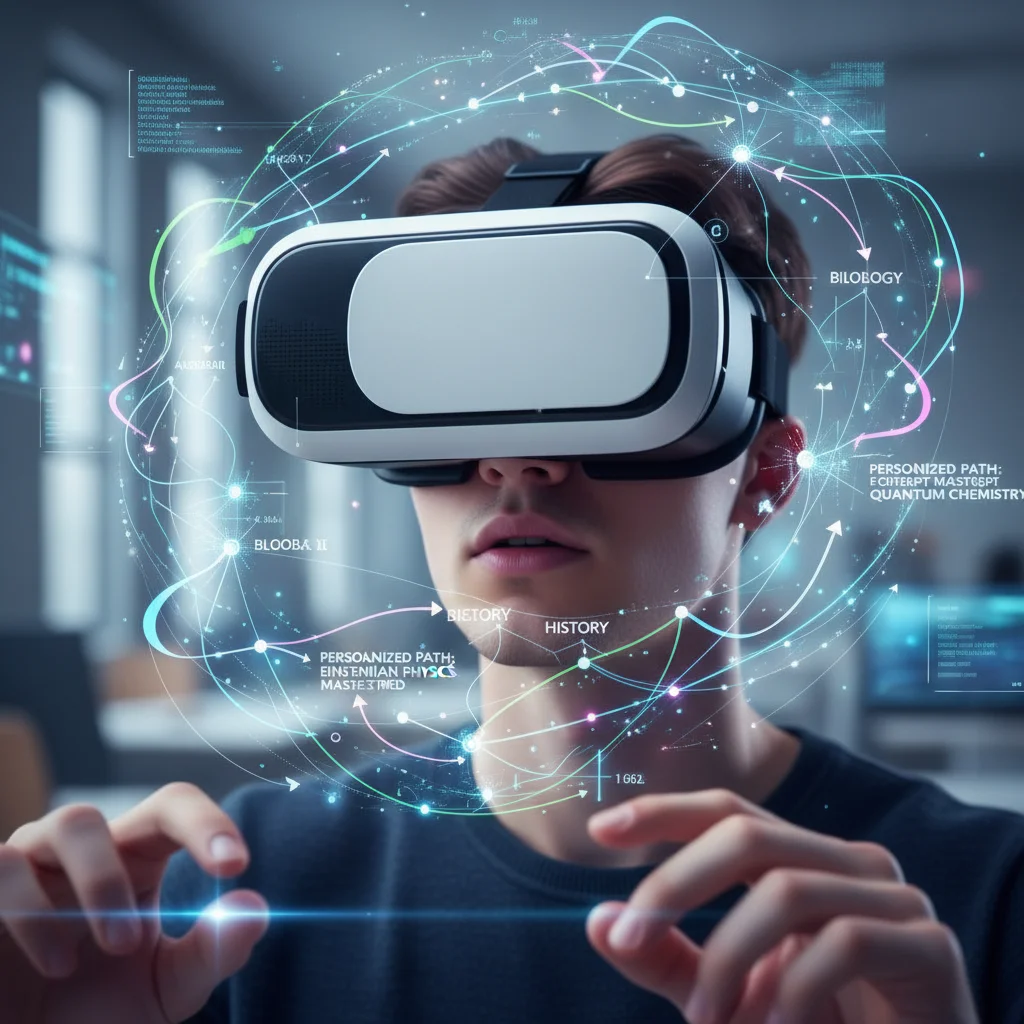
Immersive Learning Experiences (VR/AR Integration)
Virtual Reality (VR) and Augmented Reality (AR) are poised to merge seamlessly with AI Education Platforms to create truly immersive learning experiences. Imagine:
- Virtual Field Trips: Students could explore ancient Rome, dissect a frog, or visit the surface of Mars, all within a VR environment guided by an AI tutor.
- AR Overlays for Real-World Objects: AR could provide interactive information overlays on physical objects in a classroom or museum, enriching hands-on learning.
- Skill Training Simulations: For vocational training or complex procedures (e.g., medical surgery), AI-powered VR simulations will offer safe, realistic environments for practice and feedback.
These technologies, combined with AI’s adaptive capabilities, will offer unparalleled opportunities for experiential learning, making abstract concepts concrete and engaging. The visual and interactive nature of these environments will significantly enhance comprehension and retention, marking a new chapter for AI Education Platforms.
Advanced Analytics for Educators and Institutions
Beyond individual student support, AI Education Platforms will provide educators and administrators with increasingly sophisticated analytics. By 2026, dashboards will offer:
- Early Warning Systems: More precise predictive models will identify students at risk of academic failure or dropping out with greater accuracy, allowing for timely interventions.
- Curriculum Optimization: AI will analyze how different curriculum elements perform across diverse student populations, suggesting improvements to pedagogical strategies and content.
- Resource Allocation Insights: Institutions can use AI data to make informed decisions about staffing, facility usage, and technology investments, optimizing educational resources.
- Teacher Professional Development: AI can identify areas where teachers might need additional training or support based on student performance data, leading to more targeted professional development programs.
These advanced analytical capabilities will empower stakeholders to make data-driven decisions that improve educational quality and efficiency across the board, solidifying the role of AI Education Platforms in strategic planning.

Challenges and Ethical Considerations for AI Education Platforms
While the potential of AI Education Platforms is immense, their widespread adoption also brings significant challenges and ethical considerations that must be addressed proactively.
Data Privacy and Security
The effectiveness of AI relies heavily on collecting and analyzing student data. This raises serious concerns about privacy and security. Platforms must implement robust encryption, anonymization techniques, and strict access controls to protect sensitive student information. Clear policies on data usage, retention, and sharing are paramount. Parents, students, and educators need transparency regarding what data is collected, how it’s used, and who has access to it. Building trust in AI Education Platforms hinges on unwavering commitment to data protection.
Algorithmic Bias and Equity
AI algorithms are only as unbiased as the data they are trained on. If training data reflects existing societal biases (e.g., racial, gender, socioeconomic), the AI could perpetuate or even amplify those biases, leading to inequitable outcomes. For instance, an AI designed to predict academic success might inadvertently penalize students from underrepresented backgrounds if the training data primarily came from privileged populations. Developers of AI Education Platforms must actively work to identify and mitigate bias in their algorithms, ensuring fairness and equitable access to quality education for all students.
The Role of the Human Educator
A common concern is that AI might replace human teachers. However, the prevailing view is that AI Education Platforms are tools to empower, not supplant, educators. The challenge lies in redefining the teacher’s role. Educators will need to become facilitators, mentors, and guides, leveraging AI to manage administrative tasks and differentiate instruction, while focusing their human touch on critical thinking, creativity, socio-emotional learning, and complex problem-solving. Adequate training and professional development will be crucial to help educators adapt to this evolving role and effectively integrate AI into their teaching practices.
Digital Divide and Accessibility
The benefits of AI Education Platforms can only be realized if all students have equitable access to the necessary technology and internet connectivity. The digital divide remains a significant barrier for many students in underserved communities. Policy makers and educational leaders must work to ensure that the adoption of AI in education does not exacerbate existing inequalities but rather helps to bridge them. Investing in infrastructure, providing devices, and offering digital literacy training are essential steps to ensure inclusive access to AI-powered learning.
Ethical AI Development and Governance
As AI Education Platforms become more sophisticated, ethical guidelines and robust governance frameworks will be vital. This includes:
- Transparency: Understanding how AI makes recommendations or assessments.
- Accountability: Establishing who is responsible when AI systems make errors or produce biased outcomes.
- Student Agency: Ensuring students retain control over their learning and are not merely passive recipients of AI-driven instruction.
- Long-term Impact: Continuously evaluating the psychological and developmental effects of extensive AI interaction on students.
Ongoing dialogue between technologists, educators, policymakers, and ethicists will be critical to navigate these complex issues and ensure that AI serves the best interests of learners.
Strategies for Successful AI Integration in U.S. Education
To fully harness the potential of AI Education Platforms, a strategic and thoughtful approach is required. This involves collaboration across various stakeholders and a clear vision for the future of learning.
Investing in Infrastructure and Connectivity
Fundamental to the success of any digital transformation is robust infrastructure. Schools and districts must invest in high-speed internet, reliable hardware, and secure network systems capable of supporting AI-intensive applications. Government initiatives and public-private partnerships will be essential to ensure that all educational institutions, regardless of their socioeconomic standing, have the foundational technology required for effective AI Education Platforms.
Professional Development for Educators
Teachers are at the forefront of implementing new technologies. Comprehensive and ongoing professional development programs are necessary to equip them with the skills and knowledge to effectively utilize AI Education Platforms. This includes understanding AI’s capabilities and limitations, interpreting AI-generated data, designing AI-enhanced lessons, and addressing ethical concerns with students. Empowering educators will be key to successful integration.
Curriculum Development and Alignment
The curriculum itself needs to evolve to incorporate AI literacy. Students will not only learn with AI but also about AI. This means integrating topics like algorithmic thinking, data ethics, and the societal impact of AI into various subjects. Furthermore, curriculum developers must ensure that AI Education Platforms align with educational standards and learning objectives, complementing rather than simply digitizing existing content.
Pilot Programs and Iterative Implementation
Rather than a wholesale adoption, a phased and iterative approach to integrating AI Education Platforms is advisable. Pilot programs in select schools or districts can provide valuable insights into what works, what doesn’t, and what adjustments are needed. This allows for continuous improvement and refinement before broader rollout, ensuring that the technology genuinely meets educational needs and challenges.
Collaboration Between EdTech Companies and Educators
The most effective AI Education Platforms will be those developed in close collaboration between EdTech companies and active educators. Teachers understand the realities of the classroom, student needs, and pedagogical best practices. Their input is invaluable in designing AI tools that are not only technologically advanced but also pedagogically sound, user-friendly, and truly impactful in a learning environment. This synergy will drive innovation and ensure relevance.
The Transformative Power of AI Education Platforms
The journey towards a fully AI-integrated educational system is complex, but the potential rewards are immense. By 2026 and beyond, AI Education Platforms are set to:
- Democratize Education: Providing personalized learning experiences that were once only available to a select few, making high-quality education more accessible to a wider range of students.
- Empower Educators: Freeing teachers from administrative burdens, allowing them to focus on mentoring, inspiring, and fostering critical human skills.
- Enhance Student Engagement: Making learning more interactive, relevant, and tailored to individual interests, leading to deeper engagement and better retention.
- Prepare Students for the Future: Equipping students with the AI literacy and adaptable skills necessary to thrive in an increasingly AI-driven world.
- Improve Educational Outcomes: Through data-driven insights and adaptive learning, AI can help close achievement gaps and ensure more students reach their academic potential.
The transformation driven by AI Education Platforms is not merely about technology; it’s about reimagining education itself. It’s about creating a future where learning is a truly personalized, engaging, and empowering journey for every student, preparing them not just for tests, but for life in the 21st century and beyond.
Conclusion: A Smarter Future for U.S. Education
The integration of AI into U.S. learning platforms is not a fleeting trend but a fundamental evolution in how we approach education. As we move towards 2026, the capabilities of AI Education Platforms will continue to expand, offering ever more sophisticated tools for personalized learning, immersive experiences, and data-driven insights. While challenges related to privacy, bias, and equity must be navigated with care, the overarching promise of AI to create more effective, engaging, and equitable educational opportunities is undeniable.
The future of education in the U.S. is intelligent, adaptive, and deeply personal. By embracing AI Education Platforms thoughtfully and strategically, we can unlock a smarter, more inclusive, and ultimately more successful learning environment for generations to come. The collaboration between innovators, educators, policymakers, and communities will be the cornerstone of this transformative journey, ensuring that AI serves as a powerful ally in the pursuit of educational excellence.