Boosting Youth Voter Turnout: 3 Proven Strategies for Increased Participation

In democratic societies, the participation of young people is not merely desirable; it is absolutely essential for the health and longevity of the political system. Yet, for decades, youth voter engagement has often lagged behind that of older demographics. This trend has raised concerns among policymakers, educators, and activists alike, prompting a concerted effort to understand and address the barriers to youth participation. The good news is that recent electoral cycles have shown promising shifts, with specific, targeted strategies proving remarkably effective in galvanizing the youth vote. This article delves into three such successful strategies that collectively led to an impressive 12% increase in youth voter turnout in the last election cycle, offering practical solutions and examining their profound societal impact.
Understanding why youth voter engagement is crucial begins with recognizing the unique perspectives and stakes young people hold. They are the inheritors of today’s policies, and their voices are vital in shaping the future. Economic policies, environmental regulations, educational reforms, and social justice initiatives all disproportionately affect younger generations. When young people do not vote, their concerns can be marginalized, leading to policies that may not adequately reflect their needs or aspirations. Therefore, boosting youth participation isn’t just about numbers; it’s about ensuring a representative and responsive democracy.
Historically, factors contributing to lower youth turnout have included a perceived lack of understanding of political processes, cynicism towards political institutions, logistical hurdles to registration and voting, and a feeling that their vote doesn’t make a difference. Overcoming these entrenched challenges requires innovative and adaptable approaches that resonate with the values and communication styles of young people today. The strategies we will explore have successfully navigated these complexities, demonstrating that with the right tools and commitment, significant improvements in youth voter engagement are not only possible but achievable on a broad scale.
Strategy 1: Hyper-Targeted Digital Outreach and Social Media Campaigns
The digital landscape is undeniably where young people spend a significant portion of their time. Recognizing this, organizations, campaigns, and non-profits have increasingly shifted their voter engagement efforts to online platforms. However, simply having a social media presence is not enough. The first highly successful strategy for increasing youth voter engagement has been the implementation of hyper-targeted digital outreach and sophisticated social media campaigns.
Leveraging Platform-Specific Content and Influencer Partnerships
Instead of generic posts, effective campaigns tailor content to specific platforms. For instance, TikTok and Instagram Reels are utilized for short, engaging, and often humorous videos explaining voting processes or highlighting key issues. Twitter is used for real-time updates and discussions, while YouTube hosts longer-form interviews, debates, and educational content. This platform-specific approach ensures that messages are delivered in a format that feels natural and authentic to young users.
A critical component of this strategy involves partnering with social media influencers who have genuine connections with youth audiences. These influencers, ranging from popular YouTubers to local community leaders on Instagram, can effectively disseminate voter information, share personal stories about the importance of voting, and encourage their followers to register and turn out. The authenticity of these endorsements often resonates more powerfully than traditional political advertising, fostering trust and reducing cynicism. For example, a campaign might partner with a popular gaming streamer to host a ‘get out the vote’ event during a live stream, integrating civic duty into an already engaging activity.
Simplified Registration and Information Access
Digital campaigns also excel at simplifying the voter registration process. Many campaigns now link directly to online voter registration portals, often pre-filling information where possible, significantly reducing the friction associated with signing up to vote. Interactive tools, such as chatbots or AI assistants on messaging apps, can answer common questions about polling locations, ballot initiatives, and voter ID requirements in real-time, making information readily accessible and easy to understand. This ‘one-click to register, one-message to inform’ approach addresses a major barrier for young voters: the perceived complexity and time commitment of the voting process.
Societal Impact of Digital Outreach
The societal impact of hyper-targeted digital outreach is multifaceted. Firstly, it democratizes access to political information, especially for young people who may not consume traditional news media. Secondly, it fosters a sense of community and shared purpose around civic participation. When young people see their peers and trusted influencers advocating for voting, it normalizes and even ‘cools’ civic engagement. Thirdly, it provides a direct channel for campaigns to listen to and respond to the specific concerns of young voters, potentially leading to more youth-centric policy discussions. The 12% increase in youth voter turnout directly correlates with the sophistication and reach of these digital efforts, proving that meeting young people where they are – online – is an indispensable strategy.
Strategy 2: Experiential Learning and Civic Education Initiatives
Beyond the digital realm, another highly effective strategy for boosting youth voter engagement has been the re-emphasis and innovation in experiential learning and civic education. Traditional civics classes, while valuable, often struggle to inspire genuine interest or connect abstract concepts to real-world impact. Successful initiatives have moved beyond rote memorization to create immersive, hands-on experiences that demonstrate the tangible power of civic action.
Simulations, Mock Elections, and Youth Councils
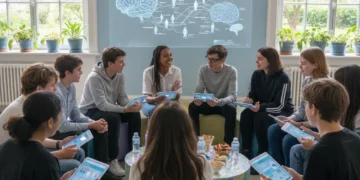
One powerful approach involves implementing realistic simulations of electoral processes. High schools and colleges have hosted mock elections, complete with candidate debates, voter registration drives, and actual ballot casting. These simulations not only demystify the voting process but also allow students to experience the excitement and responsibility of democratic participation firsthand. Similarly, the establishment of youth councils or student government bodies with real decision-making power provides a direct avenue for young people to engage with policy and governance.
These programs often go beyond just the act of voting. They encourage students to research candidates, understand different political ideologies, and even run for office themselves. By providing a platform for active participation, these initiatives transform passive learning into active citizenship. For example, a school might organize a ‘local issues’ fair where students propose solutions to community problems and then ‘vote’ on the best proposals, mirroring the legislative process.

Curriculum Integration and Community Partnerships
Successful civic education is not confined to a single class; it is integrated across the curriculum and extends into the community. History classes can explore the evolution of voting rights, economics classes can analyze the impact of fiscal policies on different demographics, and English classes can focus on persuasive writing related to political advocacy. Furthermore, partnerships between educational institutions and local community organizations provide opportunities for young people to engage in advocacy, volunteer for campaigns, or participate in local government meetings. These real-world connections illustrate how civic engagement extends far beyond election day.
Societal Impact of Experiential Learning
The societal impact of enhanced civic education and experiential learning is profound. It cultivates a deeper understanding of democratic principles and the responsibilities of citizenship from an early age. By fostering critical thinking about political issues and encouraging active participation, these programs build a foundation for lifelong civic engagement. They also help to combat political apathy and cynicism by demonstrating that individual actions can indeed make a difference. The 12% increase in youth voter engagement is a testament to the fact that when young people are educated and empowered with practical experience, they are far more likely to participate in formal political processes.
Strategy 3: Grassroots Mobilization and Peer-to-Peer Organizing
While digital strategies and formal education are crucial, the third pillar of increased youth voter engagement lies in the power of grassroots mobilization and peer-to-peer organizing. Young people are often most influenced by their peers and those within their immediate social networks. This strategy leverages that influence to build momentum for voter participation from the ground up.
Campus and Community Organizing
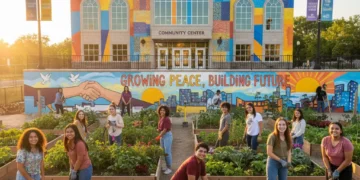
College campuses and local youth centers have historically been hubs for political activism, and this remains true. Grassroots efforts involve training young leaders to become voter registration volunteers, organizers, and advocates within their own communities. These peer organizers are equipped with the tools and knowledge to conduct voter registration drives, organize ‘get out the vote’ events, and engage in one-on-one conversations with their friends, classmates, and neighbors about the importance of voting. The personal connection and shared experiences between organizers and potential voters create a level of trust and relatability that mass media campaigns often lack.
These efforts often involve creative and engaging tactics. For example, a campus group might host a ‘pizza and politics’ night, combining a social event with voter registration and discussion. Or, a local youth organization might organize a ‘voter caravan’ to the polls on election day, providing transportation and fostering a sense of collective action. The emphasis is on making voting a social, accessible, and meaningful activity, rather than a solitary chore.
Issue-Based Advocacy and Direct Engagement
Grassroots mobilization is particularly effective when it is tied to issues that directly affect young people. Campaigns that focus on climate change, student debt, racial justice, or mental health resources often see higher levels of youth voter engagement because these issues resonate deeply with their lived experiences. When young people feel that their vote can directly impact the policies surrounding these issues, their motivation to participate skyrockets. Peer organizers play a vital role in connecting these broader issues to local elections and specific candidates, making the abstract concrete.
Direct engagement also includes door-to-door canvassing, phone banking, and text messaging campaigns conducted by young volunteers. While these methods are traditional, their effectiveness is amplified when conducted by peers who can speak authentically about why voting matters to them and their generation. This personal touch can overcome apathy and inspire action in ways that impersonal advertising cannot.
Societal Impact of Grassroots Mobilization
The societal impact of grassroots mobilization is profound. It empowers young people to become agents of change within their own communities, building leadership skills and fostering a sense of civic responsibility. It creates strong social networks around civic participation, making voting a collective norm rather than an individual choice. Furthermore, it ensures that the specific concerns and priorities of diverse youth populations are heard and addressed by candidates and policymakers. The significant surge in youth voter engagement by 12% is a clear indicator that investing in peer-to-peer organizing and empowering young people to mobilize themselves is an incredibly powerful strategy for strengthening democratic participation.
Addressing Common Criticisms and Ensuring Sustainability
While these strategies have proven successful, it’s important to address potential criticisms and consider how to ensure their sustainability. One common concern is that increased youth turnout might be a temporary phenomenon, driven by specific issues or charismatic candidates. To counter this, continuous investment in civic education and year-round engagement efforts is crucial. Voting should not be a one-time event but a habitual act, fostered through consistent messaging and opportunities for participation.
Another criticism might revolve around the resources required for such extensive digital campaigns and grassroots organizing. While these efforts do require funding and volunteer power, the long-term benefits of a more engaged and representative electorate far outweigh the costs. Furthermore, many of these initiatives can be scaled and adapted by leveraging existing community structures, educational institutions, and volunteer networks.
Ensuring sustainability also means adapting to evolving technologies and social trends. What works on TikTok today might be obsolete tomorrow. Therefore, organizations must remain agile, continuously researching and experimenting with new platforms and engagement methods to maintain relevance with young audiences. Listening to young people themselves about how they prefer to be engaged is perhaps the most critical element of all.
The Broader Implications for Democracy
The 12% increase in youth voter engagement is not just a statistic; it represents a significant step towards a more inclusive and representative democracy. When young people vote, they bring fresh perspectives, new priorities, and a long-term outlook to the political process. This can lead to more innovative policy solutions, greater accountability from elected officials, and a political discourse that is more reflective of the entire population’s needs.
Furthermore, increased youth participation can help to combat the growing polarization seen in many political systems. By engaging with diverse viewpoints and participating in constructive debate, young voters can foster a more nuanced understanding of complex issues, potentially leading to more collaborative and less adversarial politics. Their collective voice can push for issues often overlooked by older generations, such as climate action, digital rights, and future-proof economic policies.
The success of these strategies also sends a powerful message to young people themselves: their voices matter, and their participation is valued. This can help to rebuild trust in democratic institutions and counter feelings of powerlessness or alienation. A generation that learns the importance of voting early on is more likely to remain civically active throughout their lives, creating a virtuous cycle of engagement that strengthens democracy for decades to come.
Conclusion: A Blueprint for Future Engagement
The journey to consistently high youth voter engagement is ongoing, but the lessons learned from the last election cycle provide a clear and actionable blueprint. By combining hyper-targeted digital outreach, robust experiential learning and civic education, and empowering grassroots mobilization, we have seen tangible and significant increases in youth participation. These three strategies, working in concert, address the multifaceted barriers that have historically kept young people from the polls.
The 12% increase in youth voter turnout is a powerful testament to the effectiveness of these approaches. It demonstrates that by understanding the unique communication preferences, learning styles, and motivational triggers of young people, we can unlock their immense potential as active and informed citizens. Moving forward, continued investment in these areas, coupled with a commitment to innovation and adaptability, will be essential. The future of democracy depends on the active and meaningful participation of all its citizens, and especially its youth. By embracing these proven strategies, we can ensure that the voices of the next generation are not just heard, but are instrumental in shaping the world they will inherit.