Digital Legacy Planning: Why 2026 is the Year for US Families to Act

Digital Legacy Planning: Why 2026 is the Year for US Families to Act
In an increasingly digitized world, our lives are intricately woven into the fabric of the internet. From cherished family photos stored in the cloud to financial accounts managed online, our digital footprint is vast and ever-expanding. Yet, for many US families, the concept of digital legacy planning remains an abstract, often overlooked, aspect of estate planning. However, 2026 is poised to be a pivotal year, marking a critical juncture where proactive digital legacy planning will become not just advisable, but absolutely essential for every family.
The Evolving Digital Landscape and Its Implications
The acceleration of digital transformation, exacerbated by recent global events, has fundamentally altered how we live, work, and interact. Our digital lives now encompass a broader spectrum of assets and liabilities than ever before. Consider the sheer volume:
- Personal Memories: Thousands of photos and videos on social media, cloud storage, and personal devices.
- Financial Accounts: Online banking, investment platforms, cryptocurrency wallets, and e-commerce accounts.
- Professional Assets: Business accounts, intellectual property, domain names, and professional social media profiles.
- Digital Identity: Email accounts, social media profiles, blogs, and online memberships.
- Digital Goods: E-books, music, movies, software licenses, and online gaming assets.
Each of these digital elements holds significant personal, emotional, and often monetary value. Without proper digital legacy planning, these assets can become inaccessible, lost, or even exploited upon an individual’s incapacitation or death, causing immense distress and logistical nightmares for grieving families.
Why 2026 is the Critical Deadline for Digital Legacy Planning
Several converging factors make 2026 a crucial year for US families to finalize their digital legacy planning strategies:
1. Maturation of Digital Asset Laws
While the legal framework for digital assets is still evolving, significant progress has been made. The Revised Uniform Fiduciary Access to Digital Assets Act (RUFADAA), first introduced in 2014, has been adopted, in varying forms, by many US states. By 2026, it is anticipated that a majority of states will have comprehensive legislation in place, providing clearer guidelines for fiduciaries to access, manage, and distribute digital assets. However, these laws often require explicit consent and direction from the account holder. Without a pre-existing plan, even with robust laws, families might face bureaucratic hurdles and delays.
2. Increasing Cyber Threats and Data Breaches
The digital world is fraught with risks. Identity theft, hacking, and data breaches are becoming more sophisticated and frequent. An unmanaged digital estate is a prime target. If your digital accounts are not properly secured and their access information is not safely documented, they become vulnerable. By 2026, the sophistication of cyber threats is expected to escalate further, making proactive security measures and digital legacy planning an imperative to protect sensitive information and prevent financial fraud post-mortem.
3. Exploding Volume of Digital Assets
Every year, individuals accumulate more digital assets. From new social media platforms to emerging cryptocurrency investments, the sheer volume of digital information is growing exponentially. The longer you wait, the more complex and time-consuming the task of cataloging and planning for these assets becomes. By 2026, the average person’s digital footprint will be significantly larger than it is today, making early planning more manageable and effective.
4. The “Digital Native” Generation Reaches Adulthood
By 2026, a significant portion of the population that has grown up entirely online will be reaching adulthood and entering their peak earning and asset-accumulation years. This generation, often referred to as “digital natives,” has an even more extensive and intricate digital life. Their parents and grandparents, who may not be as digitally savvy, will need to understand and incorporate digital legacy planning into their own estates to properly guide their descendants.
5. The Psychological and Emotional Toll on Survivors
The emotional burden of losing a loved one is immense. Adding the stress of navigating their digital life – trying to access photos, close accounts, or recover important documents – can be overwhelming. Without clear instructions, families can spend countless hours and significant emotional energy attempting to piece together a digital life that could have been easily managed with prior digital legacy planning. 2026 is the year to alleviate this future burden.
Key Components of an Effective Digital Legacy Plan
A robust digital legacy planning strategy goes beyond simply listing passwords. It involves a comprehensive approach to managing your entire digital footprint. Here are the essential components:
1. Inventory Your Digital Assets
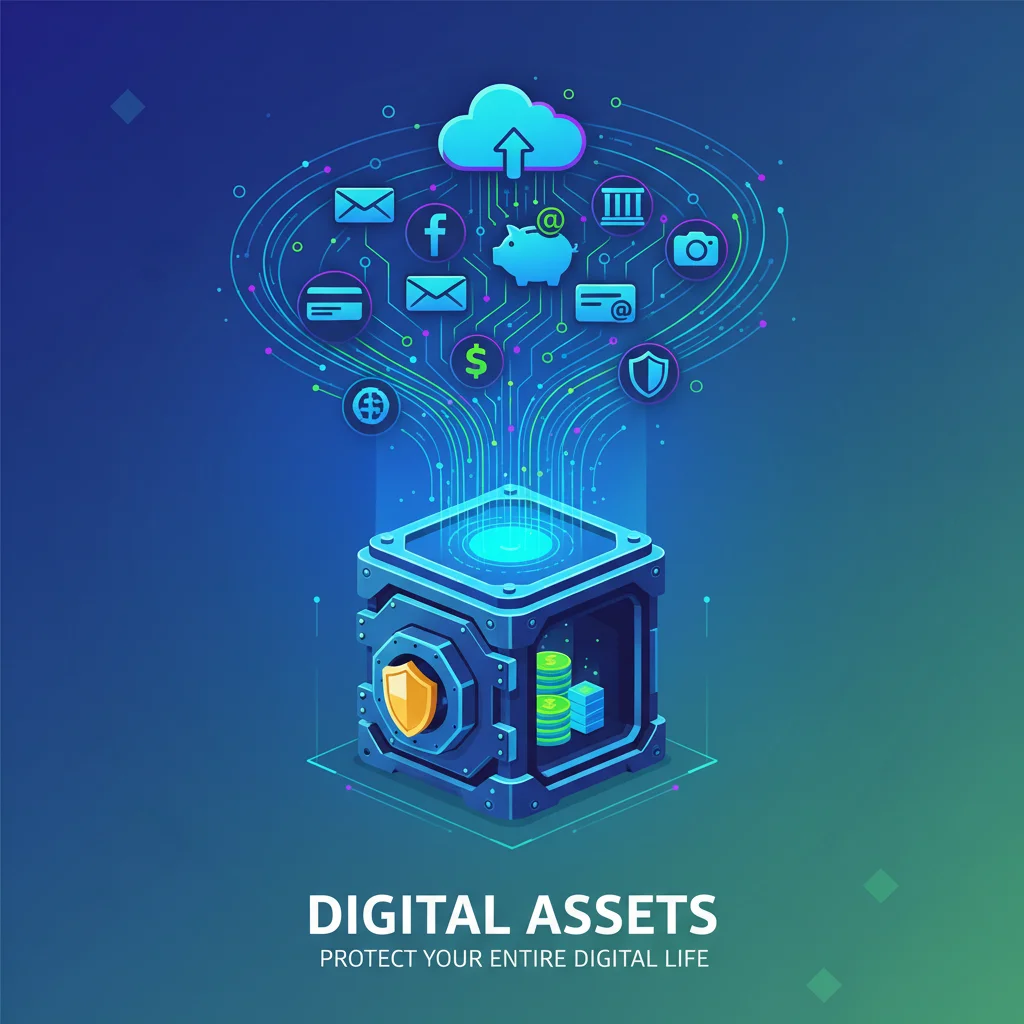
Start by creating a detailed inventory of all your digital assets. This includes:
- Online Accounts: Email, social media (Facebook, Instagram, LinkedIn, X/Twitter, TikTok), streaming services (Netflix, Spotify), online shopping (Amazon, eBay), cloud storage (Google Drive, Dropbox, iCloud).
- Financial Accounts: Online banking, investment platforms, cryptocurrency exchanges, PayPal, Venmo.
- Digital Content: Photos, videos, music, e-books, software licenses, domain names, websites, blogs.
- Devices: Computers, smartphones, tablets, external hard drives, smart home devices.
For each asset, note down the account name, URL, and a brief description of its contents or purpose. Do NOT store passwords directly in this inventory unless it’s in a highly secured, encrypted format.
2. Document Access Information Securely
This is perhaps the most sensitive part of digital legacy planning. You need a secure method to store usernames, passwords, and answers to security questions. Options include:
- Password Managers: Services like LastPass, 1Password, or Dashlane offer encrypted vaults. Many have features to designate emergency contacts who can gain access under specific conditions.
- Encrypted USB Drives: Store a document with access details on an encrypted USB drive, kept in a secure physical location (e.g., a fireproof safe).
- Legacy Contacts on Platforms: Some platforms, like Facebook and Google, allow you to designate a “legacy contact” who can manage your account after your death. Utilize these features.
Crucially, communicate to your chosen executor or trusted family member how and where to access this information.
3. Designate Digital Fiduciaries and Grant Permissions
Just as you appoint an executor for your physical estate, you should designate a digital fiduciary. This person will be responsible for managing your digital assets according to your wishes. Clearly outline their responsibilities, such as:
- Closing social media accounts.
- Transferring photos and videos to family members.
- Accessing and closing financial accounts.
- Managing or transferring domain names and websites.
Ensure your will or a separate digital assets directive explicitly grants this individual the authority to act on your behalf, referencing any state-specific digital asset laws like RUFADAA.
4. Outline Your Wishes for Each Digital Asset
For each significant digital asset, specify what you want to happen to it. Do you want your social media profiles memorialized, deleted, or managed by a family member? Should your blog be archived or taken down? Are there specific photos or files you want to be shared with certain individuals?
Clarity in your instructions will prevent future disputes and ensure your digital legacy reflects your intentions. This is a core element of effective digital legacy planning.
5. Integrate with Your Overall Estate Plan
Your digital legacy plan should not exist in isolation. It needs to be an integral part of your larger estate plan, including your will, trusts, and power of attorney documents. Consult with an estate planning attorney who is knowledgeable about digital asset laws to ensure your plan is legally sound and enforceable.
Regularly review and update your plan, at least annually, as your digital footprint evolves and new platforms emerge. This ongoing maintenance is vital for effective digital legacy planning.
The Risks of Neglecting Digital Legacy Planning
Failing to engage in digital legacy planning can lead to a multitude of problems for your loved ones:
- Inaccessible Memories: Precious family photos, videos, and correspondence stored digitally could be lost forever if access is not provided.
- Financial Loss: Funds in online accounts, cryptocurrency, or digital investment platforms may become inaccessible or undiscovered, leading to financial loss for your estate.
- Identity Theft and Fraud: Unsecured accounts can be vulnerable to malicious actors who might exploit your digital identity for fraudulent purposes.
- Emotional Distress: Your family may face significant emotional pain and frustration trying to manage your digital life without clear guidance.
- Legal Complications: Without proper legal directives, your executor may face legal battles with service providers who refuse access to accounts due to privacy policies.
- Unmanaged Digital Footprint: Your online presence might remain active indefinitely, potentially leading to inappropriate content or misunderstandings if not properly managed or memorialized.
The time and resources required to sort through an unplanned digital estate far outweigh the effort of proactive digital legacy planning.
Practical Steps for US Families to Take Before 2026
The good news is that taking action now can significantly mitigate future challenges. Here’s a step-by-step guide for US families to begin their digital legacy planning journey:
1. Educate Your Family
Start by discussing the importance of digital legacy planning with your family members. Explain what digital assets are, why they need to be planned for, and the potential consequences of inaction. This open dialogue is crucial for collective understanding and cooperation.
2. Choose Your Digital Executor Wisely
Select a trusted individual who is digitally savvy, organized, and empathetic. This person will need to be comfortable navigating online platforms and handling sensitive information. Discuss their role and responsibilities with them to ensure they are willing and able to undertake this important task.
3. Utilize Digital Asset Management Tools
Consider using specialized digital asset management platforms or secure password managers that offer legacy features. These tools can streamline the process of inventorying and securely sharing access information with your designated digital executor.
4. Consult with an Estate Planning Attorney
Engage an attorney specializing in estate planning and digital assets. They can help you draft a comprehensive will or a specific digital assets directive that complies with your state’s laws (e.g., RUFADAA) and ensures your wishes are legally enforceable.
5. Regularly Review and Update Your Plan
The digital world is constantly changing. New platforms emerge, existing ones update their terms of service, and your own digital footprint evolves. Make it a habit to review your digital legacy planning document at least once a year, or whenever there’s a significant life event (marriage, birth, new job, major financial change). This ensures its accuracy and relevance.
6. Secure Your Accounts Now
While planning for the future, also ensure your current digital life is secure. Use strong, unique passwords for all accounts, enable two-factor authentication wherever possible, and be vigilant against phishing attempts. A secure present lays the foundation for a secure digital legacy.
The Future of Digital Legacy and Your Family
As we approach 2026, the discussion around digital legacy planning will only intensify. The digital world is no longer separate from our physical lives; it is an extension of it. Our digital assets are deeply intertwined with our identities, memories, and financial well-being. Ensuring their proper management and transition is a profound act of care for your loved ones.

Think of digital legacy planning not as a morbid task, but as an empowering one. It gives you control over your story, your memories, and your assets, even after you’re gone. It provides peace of mind, knowing that your family will be spared unnecessary stress and heartache during a difficult time.
The year 2026 serves as a powerful reminder and a call to action for every US family. Don’t let your digital life become a burden for your survivors. Take the necessary steps now to secure your digital legacy planning, ensuring your digital footprint reflects your values and continues to serve as a source of comfort and connection for generations to come. Proactive planning today guarantees a smoother, more secure digital future for your family tomorrow.
By making digital legacy planning a priority, families can navigate the complexities of the digital age with confidence and ensure that their online presence, memories, and assets are handled with the same care and intention as their physical estate. The clock is ticking towards 2026; now is the time to act.