5G Advanced U.S. Smart Cities: Emerging Use Cases 2026
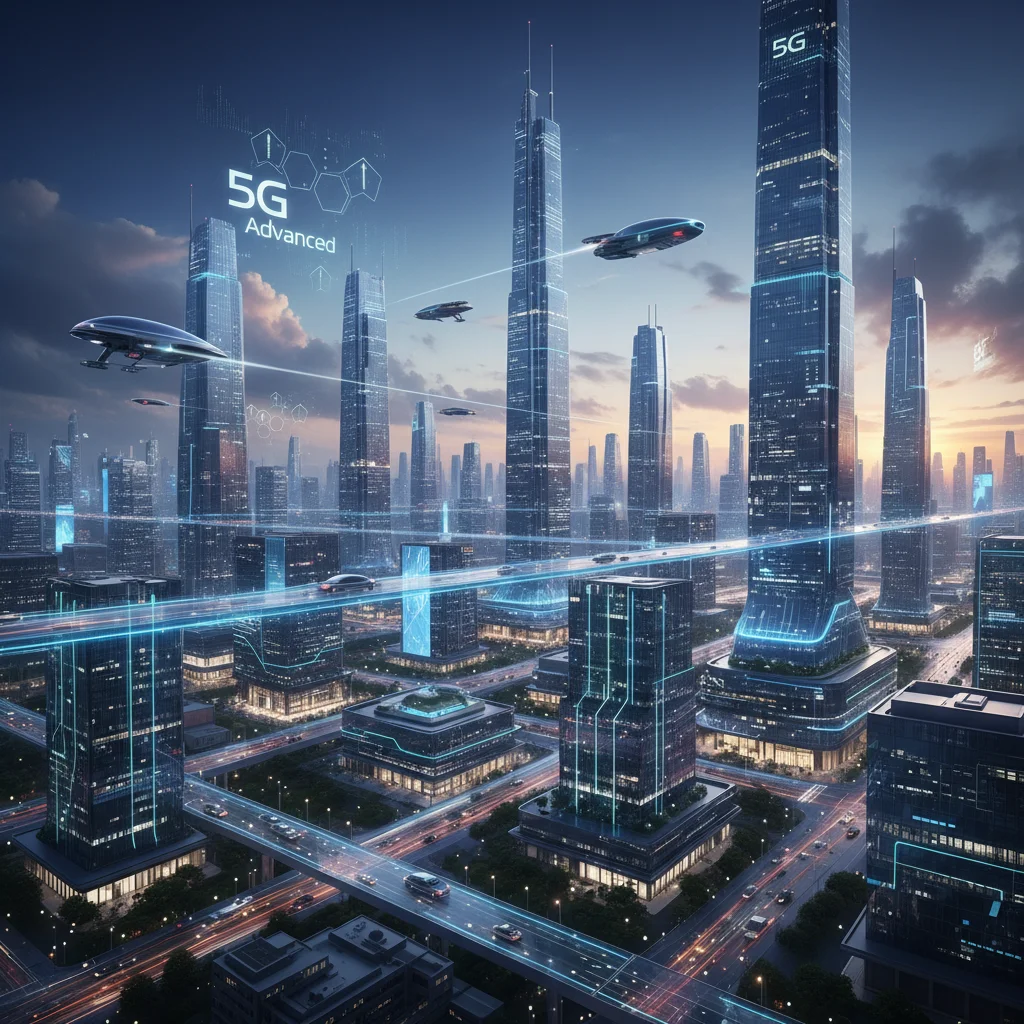
The urban landscape is on the cusp of an unprecedented transformation, driven by the relentless march of technological innovation. At the heart of this evolution lies 5G Advanced Smart Cities, a paradigm shift that promises to redefine how we live, work, and interact within our metropolitan environments. As we approach 2026, the foundational elements of 5G Advanced, with its enhanced capabilities in speed, latency, and connectivity, are set to unlock a new generation of smart city applications across the United States. This advanced iteration of 5G is not merely an incremental upgrade; it is a fundamental enabler for truly intelligent urban ecosystems, capable of processing vast amounts of data in real-time, facilitating complex autonomous systems, and fostering unprecedented levels of public safety and efficiency.
The concept of 5G Advanced goes beyond simply faster mobile internet. It encompasses a suite of technological advancements, including enhanced Mobile Broadband (eMBB), Ultra-Reliable Low-Latency Communications (URLLC), and massive Machine Type Communications (mMTC). These pillars collectively form the backbone necessary for supporting the intricate web of sensors, devices, and AI-powered systems that characterize a smart city. The U.S., with its diverse urban centers and a strong drive for innovation, is poised to be a global leader in adopting and showcasing these transformative technologies. By 2026, we anticipate the widespread emergence of several groundbreaking use cases that will fundamentally alter the urban experience, making cities safer, more sustainable, and significantly more responsive to the needs of their inhabitants.
This article delves into three pivotal emerging use cases of 5G Advanced Smart Cities that are expected to gain significant traction in the U.S. by early 2026. These applications, ranging from hyper-connected public safety networks to intelligent infrastructure management and dynamic urban mobility solutions, illustrate the profound impact that next-generation connectivity will have on our urban fabric. Understanding these developments is crucial for policymakers, urban planners, technology providers, and citizens alike, as they collectively shape the future of our urban environments.
The Foundation: What is 5G Advanced and Why Does it Matter for Smart Cities?
Before exploring specific use cases, it’s essential to grasp the core capabilities of 5G Advanced and why it represents such a significant leap for smart city development. While initial 5G deployments focused primarily on increased bandwidth and improved mobile experiences, 5G Advanced, often referred to as 5.5G or beyond, refines and expands upon these foundational elements. It introduces critical enhancements that are indispensable for the intricate demands of a truly smart urban environment.
Key Enhancements of 5G Advanced:
- Further Reduced Latency: While initial 5G promised low latency, 5G Advanced pushes this even further, enabling near-instantaneous communication. This is critical for applications requiring real-time decision-making, such as autonomous vehicles, remote surgery, and industrial automation, all of which have direct relevance to smart city operations.
- Enhanced Reliability: Mission-critical applications in smart cities, like emergency services and critical infrastructure monitoring, demand unwavering reliability. 5G Advanced offers significantly improved network stability and resilience, ensuring continuous operation even under challenging conditions.
- Massive Connectivity Density: A smart city is characterized by an explosion of connected devices – sensors, cameras, smart meters, vehicles, and more. 5G Advanced is designed to support an unprecedented density of connections, allowing millions of devices per square kilometer to communicate seamlessly without network congestion.
- AI Integration at the Edge: 5G Advanced networks are built with AI and machine learning capabilities integrated directly into the network edge. This allows for faster data processing, localized intelligence, and more efficient resource allocation, reducing the need to send all data back to centralized cloud servers. This ‘edge AI’ is a game-changer for responsive smart city services.
- Improved Energy Efficiency: The sheer volume of devices in a smart city necessitates highly energy-efficient communication. 5G Advanced includes features that optimize power consumption for IoT devices, extending battery life and reducing the environmental footprint of urban digital infrastructure.
- Slicing and Customization: Network slicing, a core 5G capability, becomes even more sophisticated with 5G Advanced. It allows for the creation of virtual, isolated networks tailored to specific applications, each with guaranteed performance characteristics. For instance, a slice could be dedicated to public safety communications, another to traffic management, ensuring optimal service delivery for each critical function.
These advancements collectively transform the potential of smart cities, moving beyond mere data collection to intelligent, predictive, and autonomous urban management. The U.S. is investing heavily in these technologies, with both public and private sectors recognizing the immense benefits that 5G Advanced Smart Cities can bring to economic growth, environmental sustainability, and quality of life.
Emerging Use Case 1: Hyper-Connected Public Safety and Emergency Response
One of the most immediate and impactful transformations brought about by 5G Advanced Smart Cities will be in the realm of public safety and emergency response. By early 2026, we expect to see U.S. cities deploying hyper-connected systems that provide first responders with unprecedented situational awareness, real-time data, and predictive capabilities.
Real-time Data Integration for First Responders:
Imagine a scenario where emergency services respond to a multi-vehicle accident. With 5G Advanced, police, fire, and medical teams will have instantaneous access to a unified stream of data: live video feeds from street cameras, drone footage providing an aerial view, real-time traffic conditions to optimize routes, sensor data from affected vehicles (e.g., airbag deployment, impact severity), and even anonymized health data from wearables of victims. This rich, integrated data allows for more informed decision-making, faster deployment of resources, and ultimately, better outcomes.
The ultra-low latency of 5G Advanced is crucial here, ensuring that critical information is transmitted and received without delay. Furthermore, network slicing can dedicate specific bandwidth and quality of service (QoS) to public safety communications, guaranteeing that these vital services are never compromised by network congestion, even during large-scale events or disasters.
AI-Powered Predictive Policing and Emergency Management:
Beyond reactive response, 5G Advanced will enable proactive public safety measures. AI algorithms, powered by the vast data streams enabled by 5G, will analyze patterns in crime data, traffic incidents, and environmental conditions to predict potential hotspots or risks. For example, AI could identify areas prone to increased pedestrian accidents during specific hours or pinpoint locations where a surge in certain types of crime is statistically likely.
This predictive capability allows law enforcement and emergency services to strategically deploy resources, conduct preventative patrols, and issue timely public warnings. In the event of a natural disaster, 5G Advanced coupled with IoT sensors can monitor flood levels, air quality, and structural integrity of buildings in real-time, providing authorities with critical information to evacuate areas, manage resources, and assess damage more efficiently.
Connected Drones and Robotics for Remote Operations:
Drones and ground robots, wirelessly connected via 5G Advanced, will become invaluable tools for public safety. Drones can provide aerial surveillance for large crowds, assess damage in hazardous environments (e.g., chemical spills, collapsed buildings), deliver medical supplies to hard-to-reach areas, or even act as mobile communication hubs in disaster zones. The high bandwidth and low latency of 5G Advanced are essential for controlling these unmanned vehicles precisely and transmitting high-definition video feeds without interruption.
Robotic units can be deployed to investigate suspicious packages, defuse bombs, or enter dangerous structures, keeping human first responders out of harm’s way. The ability to operate these devices remotely with minimal delay will significantly enhance safety and efficacy in various emergency scenarios.

Emerging Use Case 2: Intelligent Infrastructure Management and Environmental Monitoring
The aging infrastructure of many U.S. cities presents significant challenges. 5G Advanced Smart Cities offer a revolutionary approach to managing and maintaining critical urban infrastructure, from roads and bridges to water pipes and power grids. By 2026, we will see widespread adoption of intelligent systems that monitor, predict, and optimize infrastructure performance, leading to greater efficiency, reduced costs, and enhanced sustainability.
Proactive Maintenance and Predictive Analytics for Urban Assets:
The deployment of millions of IoT sensors across urban infrastructure will be a hallmark of 5G Advanced deployments. These sensors, connected via mMTC capabilities, will continuously collect data on structural integrity, temperature, vibration, and material degradation for bridges, roads, tunnels, and buildings. For instance, sensors embedded in concrete can detect micro-fissures long before they become visible, allowing for proactive repairs instead of costly emergency interventions.
Water pipes can be fitted with acoustic sensors to detect leaks, minimizing water loss and preventing major bursts. Smart streetlights can monitor their own operational status, dimming or brightening based on ambient light and pedestrian traffic, and automatically reporting outages. This wealth of data, analyzed by AI at the network edge, enables predictive maintenance models, allowing city authorities to allocate resources more effectively, extend the lifespan of assets, and prevent catastrophic failures.
Smart Grids and Energy Optimization:
5G Advanced will be instrumental in transforming traditional power grids into intelligent, resilient, and efficient smart grids. It enables real-time communication between power generators, substations, and individual consumers. Smart meters, enabled by 5G, can provide granular data on energy consumption, allowing utilities to balance load more effectively, integrate renewable energy sources seamlessly, and respond quickly to outages.
Furthermore, 5G Advanced facilitates vehicle-to-grid (V2G) communication, where electric vehicles can not only draw power from the grid but also feed excess energy back during peak demand, stabilizing the grid and promoting energy independence. This intelligent energy management contributes significantly to a city’s sustainability goals, reducing carbon footprint and operational costs.
Advanced Environmental Monitoring and Climate Resilience:
Climate change poses growing threats to urban areas. 5G Advanced Smart Cities will leverage extensive sensor networks to provide highly localized and real-time environmental monitoring. Air quality sensors, operating on 5G networks, can provide hyper-granular data on pollutants, allowing cities to identify sources, implement targeted interventions, and issue health advisories. Noise pollution can also be monitored and managed, improving urban living quality.
Moreover, 5G Advanced will support sophisticated climate resilience strategies. Early warning systems for extreme weather events (e.g., flash floods, heatwaves) can be enhanced with real-time data from weather stations, water level sensors, and predictive models, enabling cities to take timely protective measures and minimize damage. The ability to collect and process vast environmental datasets rapidly is critical for adapting to and mitigating the impacts of climate change in urban settings.
Emerging Use Case 3: Dynamic Urban Mobility and Autonomous Systems
The way people and goods move through cities is undergoing a profound revolution, with autonomous vehicles and intelligent traffic systems at the forefront. By 2026, 5G Advanced Smart Cities in the U.S. will be characterized by highly dynamic urban mobility solutions, powered by the ultra-low latency and massive connectivity of 5G Advanced.
Vehicle-to-Everything (V2X) Communication for Autonomous Vehicles:
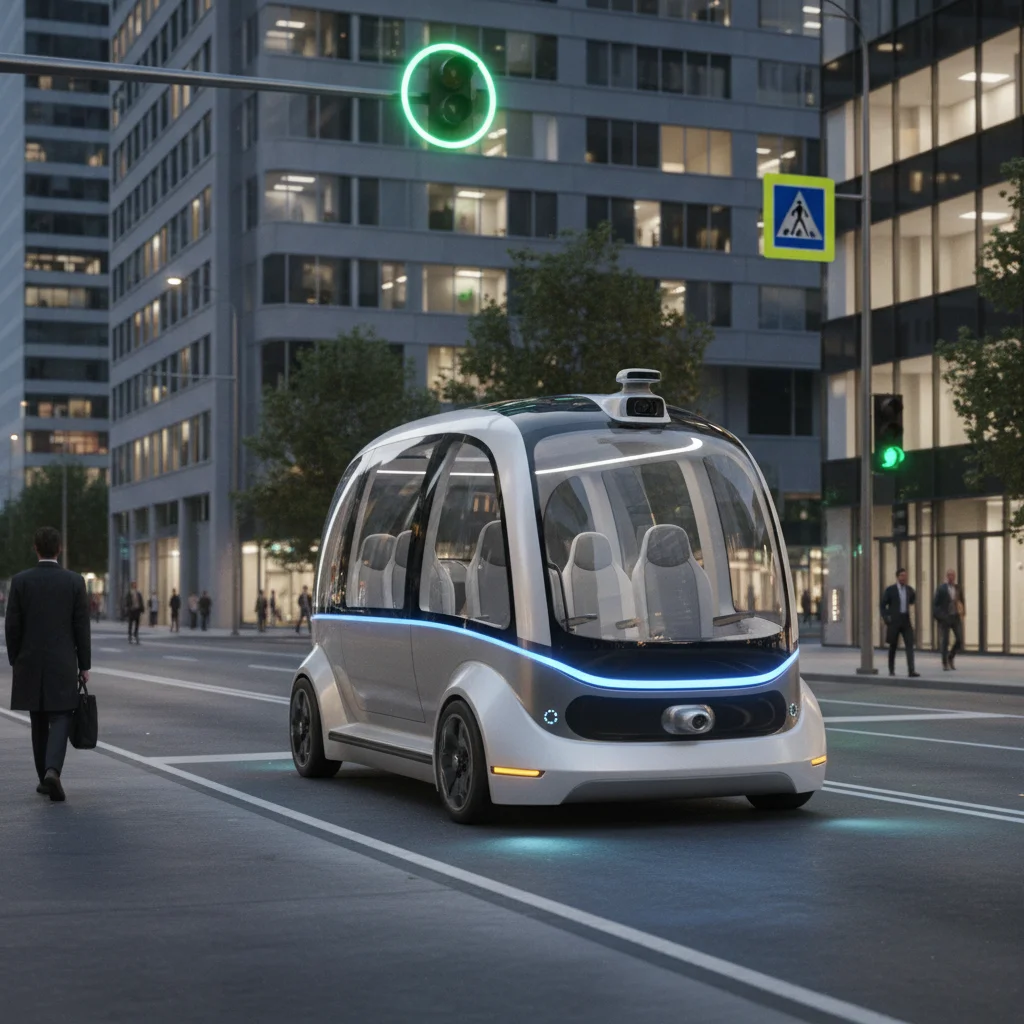
The promise of fully autonomous vehicles hinges on reliable, low-latency communication with their surroundings. 5G Advanced provides the essential backbone for Vehicle-to-Everything (V2X) communication, which includes Vehicle-to-Vehicle (V2V), Vehicle-to-Infrastructure (V2I), Vehicle-to-Network (V2N), and Vehicle-to-Pedestrian (V2P) interactions.
This allows autonomous cars to communicate their speed, direction, and intentions to other vehicles, traffic lights, road sensors, and even pedestrians’ smartphones. Such real-time data exchange is critical for preventing accidents, optimizing traffic flow, and enabling seamless navigation in complex urban environments. For instance, traffic lights can dynamically adjust their timing based on real-time vehicle density, and autonomous vehicles can coordinate their movements to minimize congestion and improve travel times.
Intelligent Traffic Management and Congestion Reduction:
Beyond autonomous vehicles, 5G Advanced will transform overall traffic management. Smart traffic lights, equipped with AI and connected via 5G, can analyze traffic patterns from cameras and sensors in real-time, dynamically adjusting signal timings to alleviate bottlenecks and reduce travel delays. Parking management systems will guide drivers to available spots, reducing cruising time and associated emissions.
Furthermore, cities can implement dynamic lane management, where the direction of traffic lanes can be altered based on peak flow, all orchestrated and monitored through a 5G-enabled network. Public transport systems can become more responsive, with buses and trains adjusting schedules and routes in real-time based on passenger demand and traffic conditions, providing more efficient and reliable services.
Drone Delivery and Urban Air Mobility:
The high bandwidth and low latency of 5G Advanced also pave the way for the widespread adoption of drone delivery services and the nascent field of Urban Air Mobility (UAM). By 2026, we could see drone networks facilitating rapid delivery of goods, medical supplies, and even emergency equipment across urban areas. The precise control and real-time telemetry required for safe and efficient drone operations are perfectly supported by 5G Advanced.
Similarly, the development of air taxis and other UAM solutions will rely heavily on robust 5G connectivity for navigation, air traffic control integration, and passenger communication. These innovations promise to reduce ground congestion, improve logistics, and open up new possibilities for urban travel, fundamentally altering the urban mobility paradigm.
Challenges and Considerations for 5G Advanced Smart Cities in the U.S.
While the prospects for 5G Advanced Smart Cities are incredibly exciting, their implementation in the U.S. is not without challenges. Addressing these considerations will be crucial for successful deployment by 2026 and beyond.
Infrastructure Deployment and Investment:
Building out the dense network infrastructure required for 5G Advanced, especially the small cells necessary for pervasive coverage and capacity, demands significant investment and streamlined regulatory processes. Cities need to work closely with telecommunications providers to facilitate site acquisition, permitting, and installation. Public-private partnerships will be vital to accelerate deployment and ensure equitable access.
Data Privacy and Security:
The sheer volume of data collected by 5G Advanced Smart Cities raises considerable concerns about data privacy and cybersecurity. Robust frameworks for data governance, anonymization, and encryption are essential to protect citizen information. Cities must implement stringent security protocols to prevent cyberattacks that could compromise critical infrastructure or sensitive data. Public trust will hinge on transparent policies and strong safeguards.
Interoperability and Standardization:
Smart city solutions often involve a multitude of vendors and technologies. Ensuring interoperability between different systems and devices is paramount to creating a cohesive and efficient urban ecosystem. The development and adoption of open standards will be critical to avoid vendor lock-in and foster innovation. Cities should prioritize solutions that are designed for scalability and integration.
Digital Divide and Equity:
The benefits of 5G Advanced Smart Cities must be accessible to all residents, regardless of socioeconomic status or geographic location within a city. There’s a risk that advanced smart city applications could exacerbate the digital divide if not carefully planned. Initiatives to provide affordable access, digital literacy programs, and equitable deployment of infrastructure are necessary to ensure that no community is left behind.
Ethical AI and Algorithmic Bias:
As AI plays an increasingly central role in smart city operations, from predictive policing to traffic management, addressing ethical considerations and algorithmic bias is crucial. Algorithms must be developed and deployed responsibly, with mechanisms for accountability and oversight to prevent discrimination and ensure fairness in decision-making processes. Transparency in how AI systems are used and their impact on citizens is vital for public acceptance.
Conclusion: The Dawn of Truly Intelligent Urban Living
The horizon of 2026 promises a dramatic shift in the capabilities of U.S. urban centers, largely powered by the advancements in 5G Advanced Smart Cities technology. The three emerging use cases discussed – hyper-connected public safety, intelligent infrastructure management, and dynamic urban mobility – represent just a glimpse into the profound societal and economic benefits that await. These innovations are not futuristic fantasies but concrete applications that are already undergoing pilot programs and rapid development.
The transition to 5G Advanced will enable cities to become more responsive, resilient, and sustainable. Public safety will be enhanced by real-time intelligence and proactive measures. Urban infrastructure will be managed with unprecedented efficiency, extending lifespans and reducing environmental impact. Mobility will be transformed, offering seamless, safer, and more efficient ways to navigate urban landscapes.
However, realizing the full potential of 5G Advanced Smart Cities requires a concerted effort from all stakeholders. Collaborative planning, strategic investment, robust policy frameworks, and a commitment to addressing ethical and equity concerns will be essential. As U.S. cities embrace this technological revolution, they stand to set a global benchmark for intelligent urban living, creating environments that are not only technologically advanced but also more livable, equitable, and sustainable for all their inhabitants. The future of our cities is intelligent, interconnected, and arriving sooner than we think.