Data Localization Compliance: US Business Guide for 2026

In an increasingly interconnected yet paradoxically fragmented digital world, the concept of data localization has emerged as a paramount concern for businesses operating across borders. For US businesses, understanding and preparing for the evolving landscape of data localization compliance is not merely a legal formality but a strategic imperative. As we approach 2026, the global regulatory environment is tightening, with more countries enacting and enforcing laws that dictate where and how digital data must be stored, processed, and accessed. This comprehensive guide will delve into the intricacies of data localization, explore the trends shaping its future, and provide actionable insights for US businesses to achieve robust compliance by 2026.
What is Data Localization and Why is it Critical for US Businesses?
Data localization, at its core, refers to the requirement that certain types of data generated within a country must be stored and processed within that country’s geographical borders. This seemingly straightforward concept masks a complex web of motivations, ranging from national security and law enforcement access to economic protectionism and privacy concerns. For US businesses, which often rely on global cloud infrastructure and cross-border data flows, these requirements present significant operational, technical, and legal challenges.
The Evolving Landscape of Data Localization Compliance
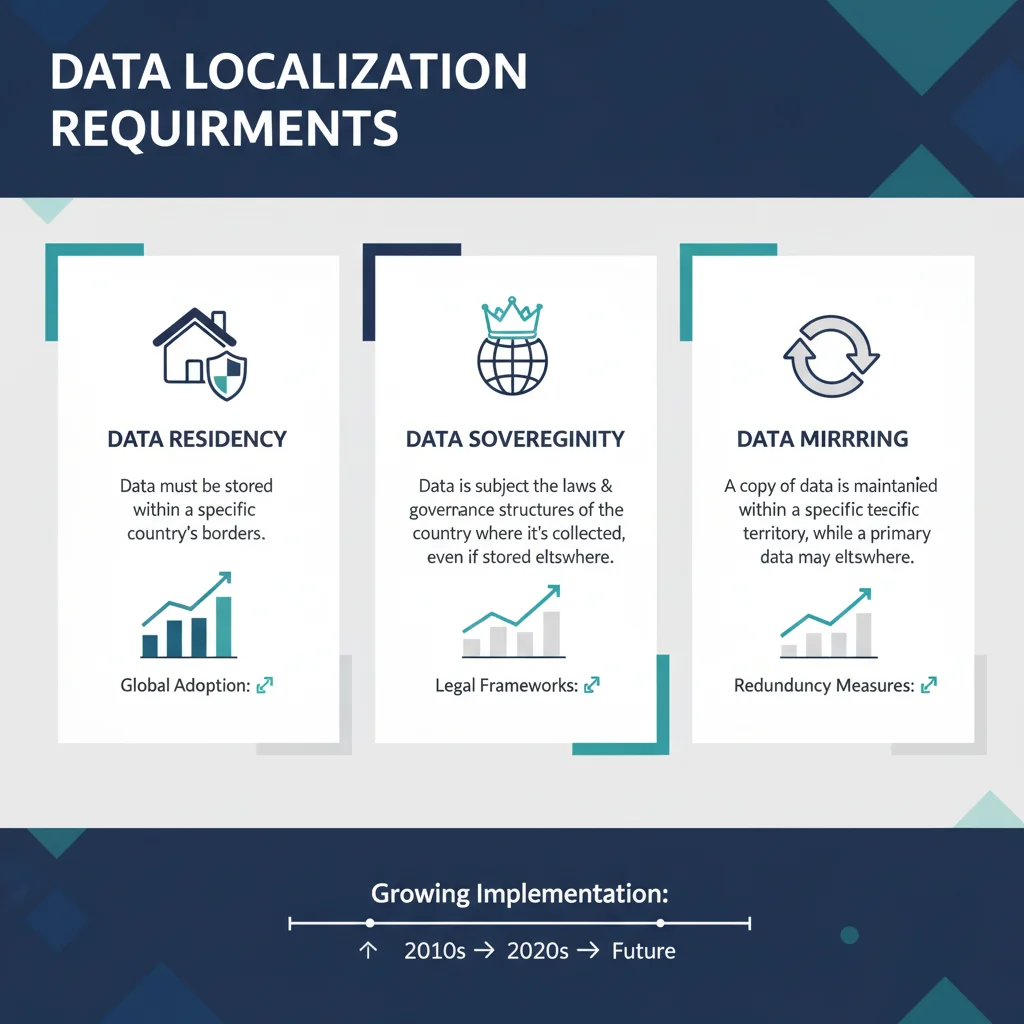
Historically, the internet was envisioned as a borderless realm. However, governments worldwide are increasingly asserting digital sovereignty, leading to a proliferation of data localization laws. This trend is not uniform; different countries have varying degrees of strictness and scope. Some mandate complete data residency for specific sectors (e.g., financial, healthcare), while others allow for data mirroring or offer conditional exceptions. The critical takeaway for US businesses is that a ‘one-size-fits-all’ approach to data management is no longer viable.
The implications of failing to adhere to data localization compliance can be severe, including hefty fines, reputational damage, operational disruptions, and even the inability to operate in certain markets. As 2026 looms, businesses must proactively assess their data architecture, understand their data flows, and implement robust strategies to meet these diverse and evolving requirements.
Key Data Localization Trends Impacting US Businesses Towards 2026
Several key trends are shaping the future of data localization compliance, and US businesses need to be acutely aware of them to ensure preparedness for 2026.
1. Increased Regulatory Scrutiny and Enforcement
Governments are not only enacting new data localization laws but are also significantly increasing their enforcement efforts. This means that non-compliance is more likely to be detected and penalized. Regions like the European Union (with GDPR, though not strictly a localization law, it influences data transfer), China (with its Cybersecurity Law and Data Security Law), India (with its Digital Personal Data Protection Act), and Russia are leading the charge. These regulations often come with extraterritorial reach, meaning they can impact US businesses even if they don’t have a physical presence in those countries, provided they process data belonging to their citizens.
2. Sector-Specific Localization Requirements
While some laws apply broadly, there’s a growing trend towards sector-specific data localization. Financial services, healthcare, telecommunications, and government data are frequently subject to stricter rules. For instance, a US fintech company operating in a foreign market might find that its customer transaction data must be stored exclusively within that country, even if its primary processing infrastructure is in the US. This necessitates a granular understanding of which types of data are subject to which regulations.
3. The Rise of Data Sovereignty
Beyond mere data residency, the concept of data sovereignty is gaining traction. This implies that data is subject to the laws and governance structures of the country in which it originates, regardless of where it is physically stored. This is a more profound challenge than simple localization, as it can dictate how data is accessed, shared, and even encrypted. US businesses need to consider not just physical location but also legal jurisdiction when planning their data strategies.
4. Geopolitical Influence on Data Flows
Geopolitical tensions are increasingly manifesting in data policy. Concerns over foreign surveillance, cyber warfare, and economic espionage are driving countries to assert greater control over their digital borders. This can lead to rapid changes in data localization requirements, often with little warning, making agility and adaptability crucial for US businesses.
5. Cloud Computing and Hybrid Architectures
The widespread adoption of cloud computing, while offering immense flexibility and scalability, complicates data localization compliance. Public cloud providers often operate global networks, and data might be replicated or processed in multiple jurisdictions. US businesses leveraging cloud services must ensure their cloud providers offer localized data storage options and can demonstrate compliance with specific regional requirements. Hybrid cloud and multi-cloud strategies, which allow for greater control over data placement, are becoming increasingly attractive.
Challenges for US Businesses in Achieving Data Localization Compliance
The path to data localization compliance is fraught with challenges for US businesses. These are not just technical hurdles but involve significant strategic, operational, and financial considerations.
1. Complexity of Global Regulations
The sheer number and diversity of data localization laws across different countries make compliance a daunting task. Each jurisdiction may have unique definitions of what constitutes ‘local’ data, varying storage requirements, and different enforcement mechanisms. Keeping track of these ever-changing regulations requires dedicated legal and compliance resources.
2. Infrastructure and IT Costs
Meeting data localization requirements often necessitates investing in new infrastructure, such as local data centers or cloud regions in specific countries. This can involve significant capital expenditure and ongoing operational costs. For smaller US businesses, this can be a prohibitive barrier to entry into certain markets.
3. Data Sprawl and Discovery
Many businesses struggle with ‘data sprawl’ – data being stored inconsistently across various systems, applications, and regions. Before a business can localize data, it must first know where all its data resides, what type of data it is, and who owns it. Data discovery and mapping are foundational steps that can be complex and time-consuming.
4. Impact on Performance and Latency
Localizing data can sometimes lead to increased latency and reduced application performance, especially if users are accessing data from a different geographical region than where it is stored. This can impact customer experience and operational efficiency. Businesses need to balance compliance with performance considerations.
5. Vendor Management and Third-Party Risks
US businesses often rely on a vast ecosystem of third-party vendors, including cloud providers, SaaS applications, and data processors. Ensuring that these vendors also comply with data localization requirements adds another layer of complexity. Businesses must conduct thorough due diligence and establish clear contractual obligations with their vendors.
6. Talent and Expertise Gap
Navigating data localization requires specialized expertise in legal, IT, and cybersecurity domains. Many US businesses may lack the internal talent to effectively manage these complex requirements, necessitating investment in training or hiring external consultants.
Strategies for US Businesses to Prepare for 2026 Data Localization Compliance
Proactive planning and strategic implementation are crucial for US businesses to successfully navigate the 2026 data localization compliance landscape. Here are key strategies:
1. Conduct a Comprehensive Data Audit and Mapping Exercise
The first step is to understand your data. Identify all data assets, their types (e.g., personal, financial, health), where they are currently stored, how they are processed, and where they flow. This data mapping exercise is fundamental to identifying localization requirements and potential compliance gaps. Use data discovery tools to automate this process where possible.
2. Develop a Robust Data Governance Framework
Establish clear policies and procedures for data handling, storage, and processing. This framework should define roles and responsibilities, data retention policies, and incident response plans. A strong data governance framework is the backbone of any successful compliance strategy, including data localization compliance.
3. Adopt a Risk-Based Approach
Not all data or all jurisdictions pose the same level of risk. Prioritize your compliance efforts based on the sensitivity of the data and the strictness of the localization laws in the relevant regions. Focus on high-risk data types and critical markets first.
4. Strategically Design Your Data Architecture
Consider architectural changes to support localization. This might involve:
- Regional Cloud Deployments: Utilizing cloud provider regions within specific countries to store and process local data.
- Hybrid Cloud Solutions: Keeping sensitive data on-premises or in private clouds within a country, while using public cloud for less sensitive data.
- Data Mirroring/Replication: Creating copies of data in different geographical locations to meet residency requirements, while maintaining a primary copy elsewhere.
- Data Minimization: Only collecting and storing data that is absolutely necessary, reducing the overall compliance burden.
- Anonymization/Pseudonymization: Where possible, anonymize or pseudonymize data to reduce its classification as ‘personal data’ subject to stringent localization rules.
5. Engage Legal and Compliance Expertise
Partner with legal experts specializing in international data privacy and localization laws. Their guidance is invaluable in interpreting complex regulations, assessing risks, and ensuring your strategies are legally sound. Internal compliance officers should also be continuously educated on global developments in data localization compliance.
6. Review and Update Vendor Contracts
Scrutinize all contracts with third-party data processors and cloud providers. Ensure they explicitly address data localization requirements, data transfer mechanisms, and your right to audit their compliance. Negotiate for clauses that allow for data residency in specific regions.
7. Invest in Data Security and Encryption
While not directly a localization requirement, robust data security and encryption are foundational to compliance. Encrypting data at rest and in transit can help protect it, even if it crosses borders, and may sometimes offer partial mitigation in certain regulatory contexts. Strong security practices also build trust and reduce overall risk.

8. Implement Continuous Monitoring and Auditing
Data localization is not a one-time project; it’s an ongoing process. Implement systems for continuous monitoring of data flows and storage locations to ensure ongoing compliance. Regularly audit your systems and processes, and be prepared to adapt to new regulations or changes in existing ones. This proactive approach is key to maintaining data localization compliance.
9. Train Employees and Foster a Culture of Compliance
Employees are often the first line of defense in data protection. Provide regular training on data handling policies, localization requirements, and the importance of compliance. Foster a culture where data privacy and security are paramount. This human element is critical for effective data localization compliance.
10. Leverage Technology Solutions
Explore specialized technology solutions designed to aid data localization. These can include data residency-as-a-service offerings, data governance platforms with localization features, and tools for automated data classification and discovery. Such technologies can significantly streamline compliance efforts.
Specific Regional Considerations for US Businesses
While a global strategy is necessary, US businesses must also consider specific regional nuances for data localization compliance.
European Union (EU)
The GDPR, while not a strict localization law, imposes stringent requirements for transferring personal data outside the EU. US businesses must rely on mechanisms like Standard Contractual Clauses (SCCs) or Binding Corporate Rules (BCRs) and ensure that data processed in the US adheres to GDPR principles. The Schrems II decision has also heightened scrutiny on data transfers to the US, emphasizing the need for supplementary measures.
China
China’s Cybersecurity Law, Data Security Law, and Personal Information Protection Law (PIPL) impose some of the strictest data localization requirements globally, especially for ‘critical information infrastructure operators’ and for large volumes of personal information. Data generated in China must often be stored within its borders, and cross-border transfers require security assessments and consent. US businesses with operations or customers in China face significant compliance hurdles.
India
India’s Digital Personal Data Protection Act (DPDPA) mandates that certain personal data be stored in India, with specific rules for cross-border transfers. While the final rules are still being developed, the intent is clear: greater control over Indian citizens’ data within India. Financial data, in particular, has seen strict localization requirements from the Reserve Bank of India.
Russia
Russia’s Federal Law No. 242-FZ requires personal data of Russian citizens to be stored in databases located within Russia. This has led many international companies to establish local data centers to maintain operations in the country. Non-compliance can lead to website blocking and significant fines.
Other Emerging Markets
Many other countries, including Vietnam, Indonesia, Australia, and various Latin American nations, are also enacting or strengthening their data localization laws. US businesses must monitor these developments closely and adapt their strategies accordingly.
The Path Forward: A Call to Action for 2026
The deadline of 2026 for enhanced data localization compliance is not far off. For US businesses, this period represents a critical window to assess, strategize, and implement the necessary changes to their data infrastructure and governance models. Procrastination is not an option, as the costs of non-compliance far outweigh the investment in proactive preparation.
Embracing data localization should be viewed not merely as a burden but as an opportunity. By enhancing data governance, improving security, and demonstrating a commitment to local regulations, US businesses can build greater trust with international customers and regulatory bodies. This can, in turn, foster stronger international relationships and open new avenues for growth.
Start today by initiating a comprehensive data audit. Engage your legal, IT, and compliance teams. Evaluate your cloud strategy. And most importantly, foster a culture within your organization that understands and prioritizes global data privacy and data localization compliance. The future of global business depends on it.
Conclusion
The global trend towards data localization is undeniable and will only intensify as we approach and move beyond 2026. For US businesses, this means a fundamental shift in how data is managed, stored, and transferred across international borders. By understanding the key trends, recognizing the challenges, and proactively implementing the strategies outlined in this guide, US businesses can not only meet their data localization compliance obligations but also strengthen their operational resilience, enhance data security, and build a foundation for continued success in the global digital economy. The time to act is now to ensure your business is fully prepared for the evolving demands of data localization.