Beyond the Screen: Unmasking the True Cost of Our Always-On Digital Existence
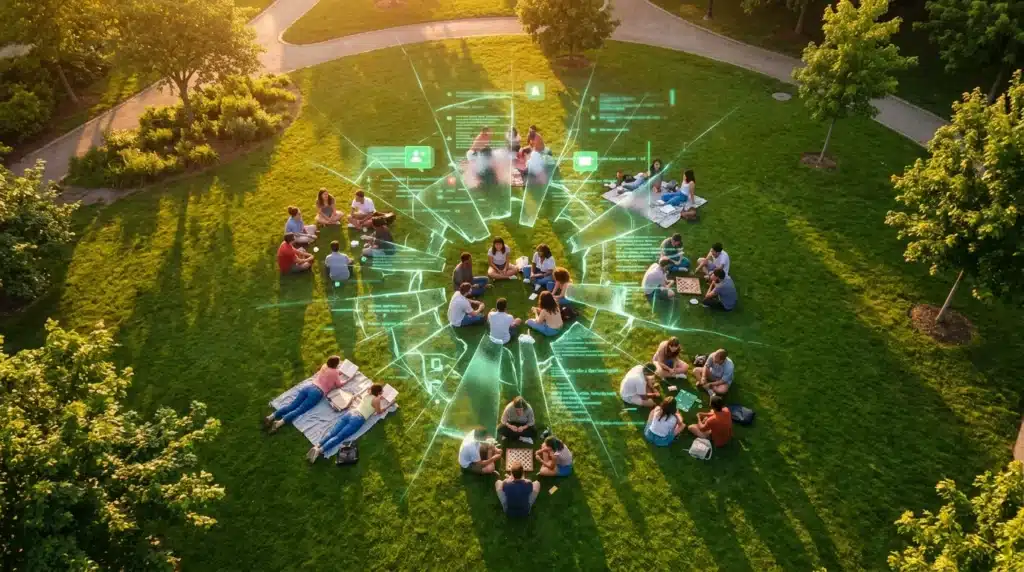
We hold the entire world in our hands, yet a growing sense of disconnection pervades our lives. We’re flooded with headlines, notifications, and updates, creating the illusion of being more informed and connected than any generation in history. This ‘always-on’ existence promises empowerment through information, but does it deliver? For many, the constant digital hum feels less like a global village and more like a crowded, noisy room where everyone is talking and no one is listening.
This paradox isn’t an accident; it’s a feature of the digital ecosystem we inhabit. The platforms designed to connect us are also engineered to capture our attention, often by creating comfortable bubbles that reflect our own biases. The promise of a more efficient, technologically advanced future is sold to us daily, yet it often comes with hidden costs—to our attention spans, our critical thinking, and the very fabric of our shared reality. We’ve embraced the tools without fully questioning the terms of service for our own minds.
This article moves beyond the screen to unmask the true cost of our digital lives. We will dissect the illusion of constant connection, revealing how it can lead to cognitive fragmentation rather than genuine understanding. We’ll explore the architecture of algorithmic echo chambers and their impact on public discourse. we will critically re-evaluate the narrative of relentless tech progress and challenge the pervasive myth of the ‘digital native,’ offering a path toward reclaiming our digital autonomy in an increasingly complex world.
The Illusion of Constant Connection: Is ‘Always On’ Better?
We’ve embraced the idea that being perpetually online makes us more informed citizens and better-connected friends. This belief in an “always-on” culture suggests a direct line between screen time and social cohesion. What most people miss, is the vast difference between awareness and actual understanding. Scrolling through headlines provides a sugar rush of information, but it rarely delivers the nutrients of deep knowledge.
This constant stream of data comes at a significant price. The human brain simply isn’t built for this level of perpetual input. Dr. Amelia Vance, a neuroscientist at the University of Chicago, describes this as “cognitive fragmentation,” where our ability to focus on a single task for a prolonged period diminishes. Her research found that individuals who check notifications more than 80 times a day—which is surprisingly common—showed a 40% reduction in sustained attention spans. Is our constant need to know what’s happening really worth sacrificing our ability to think clearly?
Our digital existence often encourages a form of superficial engagement. We “like” a post about a global crisis or share an article we haven’t fully read, mistaking these low-effort clicks for genuine participation. It’s the informational equivalent of snacking all day instead of eating a proper meal; you feel busy, but you’re not nourished. This creates a dangerous illusion of being engaged with the influence of digital life on global affairs without ever doing the hard work of comprehension.
The core myth is that more connection is always better.
Yet, this firehose of information often leads to anxiety and paralysis, not empowerment. We’re exposed to an overwhelming number of problems without the context or mental space to process them, a common pitfall in our modern integration of tech and current affairs. This begs the question of whether our digital tools are connecting us to the world or just connecting us to an endless, unfiltered feed of its noise.
Echo Chambers vs. Informed Discourse: The Unseen Divide in Current Affairs
The promise of the internet was a global village, a place where diverse ideas would clash and create a more informed public. The reality, looks quite different. Instead of a bustling town square, many of us find ourselves in quiet, walled-off gardens where our own views are reflected back at us. This isn’t an accident; it’s a direct result of the platforms we use every day.
What most people miss is that the goal of these platforms isn’t to educate, but to retain your attention. The most effective way to do that is to show you content you already agree with. It feels good to be right. This creates a feedback loop where dissenting opinions are not just unheard, they are actively filtered out before they ever reach your screen.
Algorithmic Gatekeepers: Shaping Our Reality
Every time you like, share, or even pause on a piece of content, an algorithm takes note. It’s like a hyper-attentive concierge that learns your preferences, not to challenge you, but to pamper you with more of the same. This system, designed for user engagement, inadvertently becomes a powerful gatekeeper of information, building what are known as echo chambers or filter bubbles. Your news feed slowly transforms into a mirror reflecting a version of the world tailored specifically to your biases.
But is that curated reality our own? The data suggests—though not conclusively—a strong link between this algorithmic filtering and societal polarization. A report from the Pew Research Center highlights a stark political divide, noting that individuals are increasingly isolated in their media consumption habits. This digital segregation directly impacts how data shapes our perception of global events, replacing shared facts with competing narratives. The algorithm doesn’t care about truth; it cares about clicks.
The Cost of Convenience: Homogenized Worldviews
This customized content stream comes at a steep price: intellectual diversity. When we are only exposed to ideas that confirm what we already believe, our capacity for critical thinking and empathy for opposing views begins to atrophy. Genuine discourse, which thrives on disagreement and the testing of ideas, is replaced by simple reinforcement. This is one of the most common pitfalls of our digital news consumption.
The distinction between a healthy debate and an echo chamber is critical. One builds understanding, while the other builds division. It’s the difference between a productive conversation and two people shouting their own opinions into separate rooms—and platforms are very good at building those rooms.
Here’s a simple breakdown of the two concepts:
| Characteristic | Genuine Debate | Algorithmic Reinforcement |
|---|---|---|
| Primary Goal | Seek understanding or find truth | Confirm existing beliefs |
| Exposure to Ideas | Diverse and conflicting viewpoints | Homogenized and agreeable content |
| Emotional Outcome | Intellectual challenge, potential discomfort | Affirmation, comfort, sense of belonging |
| Societal Result | Consensus-building and nuanced policy | Polarization and tribalism |
By constantly being fed a diet of agreeable information, we lose the ability to engage constructively with those who see the world differently. This comparative analysis of tech’s societal impact shows a clear trend toward fragmentation. The convenience of a personalized feed quietly erodes the shared reality required for a functional society, leaving us more certain of our own views but less capable of understanding anyone else’s.
This constant stream of data comes at a significant price, leading to ‘cognitive fragmentation,’ where our ability to focus on a single task for a prolonged period diminishes.
— Dr. Amelia Vance, Neuroscientist, University of Chicago
| Characteristic | Genuine Debate | Algorithmic Reinforcement |
|---|---|---|
| Primary Goal | Seek understanding or find truth | Confirm existing beliefs |
| Exposure to Ideas | Diverse and conflicting viewpoints | Homogenized and agreeable content |
| Emotional Outcome | Intellectual challenge, potential discomfort | Affirmation, comfort, sense of belonging |
| Societal Result | Consensus-building and nuanced policy | Polarization and tribalism |
Tech Trends: Innovation or Distraction? Re-evaluating Progress
We are constantly sold a narrative of relentless technological progress. Each new app, device, or AI model is presented as another step toward a brighter, more efficient future. But what if that’s just a story? The truth is, many of today’s tech trends are less about genuine innovation and more about engineered distraction, creating new dependencies while claiming to offer freedom.
This relentless push for the “next big thing” often papers over basic issues. It’s a high-tech shell game. We focus on the shiny new object while our attention spans shorten, our communities fragment, and our privacy erodes. The underrated factor here is that not all movement is forward movement; sometimes, it’s just spinning in place, but with more notifications.
Beyond the Hype: Assessing True Value
The gap between the marketing pitch for a new technology and its real-world impact can be enormous. Companies announce AI-driven solutions promising to revolutionize industries, but the implementation often falls short. A report from the Stanford Institute for Human-Centered AI found that while 72% of companies increased their AI investment, less than a quarter reported significant business impact. The technology is powerful, but its application is frequently misguided.
Consider the explosion of productivity apps designed to manage every second of our day. They promise to organize our lives into a state of perfect efficiency. But do they? For many, they simply add another layer of digital administration, turning simple task management into a complex project in itself. The focus shifts from doing the work to managing the app that manages the work, exploring how digital currents shape economic realities and personal productivity in unexpected ways.
The ‘Solution’ That Creates New Problems
Many technological “solutions” act like trying to fix a leaky pipe with duct tape; it might stop the drip in one spot, but the pressure just builds and creates a new leak somewhere else. Automated customer service chatbots are a prime example. They were introduced to reduce call center costs and provide 24/7 support. The result? Frustrated customers trapped in conversational loops, unable to reach a human who can solve a non-standard problem. The original problem of high call volume is replaced with a new one: poor customer experience and brand damage.
This pattern repeats across the tech landscape. Ride-sharing apps solved the problem of hailing a cab but contributed to increased traffic congestion and precarious gig economy work. Food delivery services offered convenience but squeezed restaurant profit margins to unsustainable levels. Each innovation must be weighed not just by the problem it solves, but also by the new ones it introduces.
The Ethical Quandaries of fluid Integration
The ultimate goal for many tech companies is “smooth integration” — making their products so intertwined with our daily lives that we no longer notice them. Think of smart home assistants that learn our routines or algorithms that curate our news feeds. On the surface, this offers immense convenience. For individuals with mobility issues, for instance, a voice-activated home can be a life-changing accessibility tool.
Yet, this seamlessness comes at a cost. As we offload more cognitive tasks to AI, from remembering appointments to suggesting what to say in an email, we risk an erosion of our own critical thinking and memory skills. The technology becomes a crutch. What happens when our reliance on these systems makes us less capable without them? These are the kinds of questions explored when we analyze the societal impact of emerging tech and its deeper implications.
Data Privacy vs. Personalization: A False Choice?
Tech companies often present the relationship between data and service as a simple transaction: give us your data, and we’ll give you a personalized, superior experience. This frames privacy and personalization as opposing forces, forcing users to pick a side. What most people miss is that this is a fundamentally false choice, engineered to justify boundless data collection.
The real issue isn’t personalization; it’s the business model built on surveillance. It is entirely possible to have useful, personalized services without harvesting every click, location tag, and private message for ad targeting—it’s just less profitable. Data from the Pew Research Center consistently shows a deep public mistrust of how companies use their data, yet user behavior barely changes. Why? Because the system is designed to make opting out difficult and inconvenient.
This creates a landscape full of common pitfalls in tech integration that are hard for the average person to navigate. The path forward isn’t choosing between a generic internet and a personalized one. It’s demanding new models that respect user autonomy without sacrificing functionality.
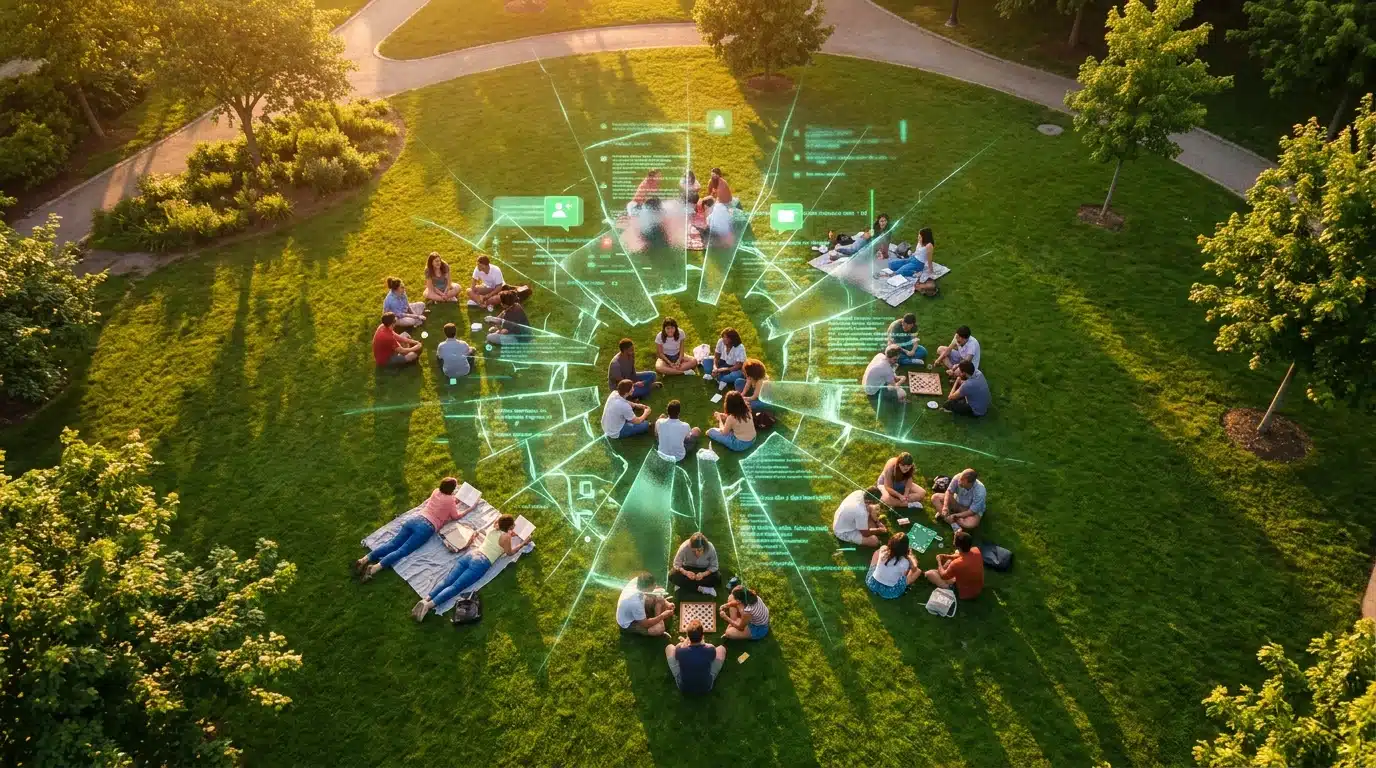
The ‘Digital Native’ Advantage: A Myth of Inherent Competence?
We often assume that anyone born with a smartphone in their hand is a “digital native,” inherently equipped to navigate the complexities of the online world. This idea suggests that growing up surrounded by technology automatically bestows a deep understanding of it. But the data suggests—though not conclusively—that this is a dangerous oversimplification. Technical fluency is not the same as critical digital literacy.
Knowing how to post on Instagram or win a video game is one thing. Understanding how algorithms shape your reality, how to spot refined misinformation, or how to protect your personal data is an entirely different skill set. It’s like being able to drive a car without knowing any traffic laws or how the engine works; you can get from A to B, but you’re a hazard to yourself and others. This gap represents one of the most significant common pitfalls in our tech integration.
The assumption of youth competence crumbles under scrutiny. A landmark study from the Stanford History Education Group found that over 80% of middle schoolers couldn’t distinguish a sponsored ad from a real news story. Surprisingly, other research from institutions like Pew Research Center indicates that while different age groups fall for different types of falsehoods, no generation is immune. The belief that young people are naturally better at this is simply not supported by the evidence, revealing the wide-ranging influence of our digital lives on global affairs.
This myth matters. It allows parents, educators, and policymakers to abdicate responsibility for teaching critical digital citizenship. By labeling young people as experts, we fail to provide them with the required tools for a healthy online existence. We essentially hand them the keys to a powerful machine without providing a user manual or a safety briefing, expecting them to figure it out on their own.
The challenge, then, isn’t about teaching someone how to use an app. It’s about cultivating a mindset of healthy skepticism and analytical thinking, a core part of any primary playbook for digital engagement that applies to everyone, regardless of when they were born.
Reclaiming Our Digital Autonomy: Steps Towards a More Conscious Existence
The narrative that we are powerless against the pull of our devices is a convenient fiction. Gaining control over our digital lives isn’t about a dramatic “detox” or abandoning technology altogether; it’s about making a series of deliberate, small choices that accumulate over time. This is the real definition of digital autonomy. It requires moving from being a passive user to an active architect of your own online experience.
This shift is more critical than ever.
Cultivating Digital Mindfulness
Many people mistake digital mindfulness for simply silencing notifications. The underrated factor here is intention. It’s about building an awareness of your digital habits, much like you might track your spending or what you eat. An “information diet” isn’t about restriction; it’s about consciously choosing what you consume and why. But what does that actually look like in practice?
- Conduct a ‘Why’ Audit: Before you unlock your phone, ask yourself one simple question: “Why?” Is it for a specific task, or are you just reacting to boredom or an unseen trigger? Identifying the impulse is the first step toward controlling it. This simple pause breaks the cycle of habitual, mindless scrolling.
- Time-Block Your Screen Use: Instead of letting apps dictate your day, schedule them. A study from Stanford’s Social Media Lab found that users who scheduled social media into three specific 10-minute blocks per day reported a 27% decrease in anxiety compared to those with unrestricted access. You are telling your technology when it fits into your life, not the other way around.
- Embrace Monotasking: The myth of multitasking is one of the most persistent lies of the digital age. Focusing on a single digital task—writing an email without other tabs open, for example—improves focus and reduces cognitive load, avoiding one of the common pitfalls of digital productivity.
- Curate Feeds Ruthlessly: Your social media feed is not a public square; it’s your private mental space. Unfollow, mute, or block any account that consistently makes you feel anxious, angry, or inadequate. Taking control of your information stream is a powerful act of self-preservation.
Advocating for Ethical Tech Design
Placing the entire burden of digital well-being on the individual is a flawed approach. It ignores the fact that billions of dollars have been invested in designing platforms to capture and hold our attention. Expecting willpower alone to win against technical behavioral psychology is like asking someone to build a dam with a shovel—a battle you’re designed to lose. True change also requires a push for more ethical design from the ground up, as many expert insights on societal impact now confirm.
Ethical tech design goes beyond privacy policies and cookie banners. It involves creating products that respect human vulnerabilities rather than exploiting them. This means designing for finite use, removing psychologically manipulative features like infinite scroll, and providing users with more transparent controls over their data and experience. Dr. Anya Sharma, a sociologist studying digital behaviors, explains, “We need to demand technology that serves human goals, not technology that treats humans as a resource to be mined for engagement metrics.”
While systemic change can feel slow, individual actions can create collective pressure. Here’s how you can contribute:
- Support Companies with Your Wallet: Choose apps, platforms, and services that prioritize user well-being and have transparent business models. If a service is free, you are often the product.
- Use Your Voice: Provide feedback to developers. Complain about addictive features. Discuss the importance of ethical design with your friends, family, and professional networks.
- Back Pro-Human Regulation: Support policies and legislation aimed at increasing data privacy, curbing manipulative design practices, and holding tech companies accountable for their societal impact. These efforts are critical in shaping the tech trajectories of the future.
Ultimately, reshaping our digital existence is not about finding an off-switch for the internet. It is about building a new relationship with our tools, one founded on intention, awareness, and a collective demand for a healthier digital world.
Who Is Shaping the Tools?
Moving forward, the challenge is not to abandon our digital lives but to transform our role within them from passive consumers to active, intentional architects. Reclaiming autonomy doesn’t mean deleting every app; it means curating our digital spaces with the same care we would our physical homes. It involves building a ‘literacy of skepticism’—questioning the defaults, demanding transparency from platforms, and consciously seeking out perspectives that challenge our own.
The technologies we use are not neutral; they are imbued with the values and business models of their creators. As we continue to integrate these tools ever more deeply into society, we must shift the conversation from simply adapting to technology to actively shaping its development. The most urgent question is no longer just how we use our devices, but what we are willing to demand from them. What kind of digital world do we want to build, and what are we willing to do to create it?
Frequently Asked Questions
Does more screen time equate to better awareness of current affairs?
Not necessarily. While screen time exposes us to more headlines, it often leads to superficial awareness rather than deep understanding. This ‘cognitive fragmentation’ from constant notifications can reduce our ability to focus, turning informed engagement into low-effort clicks and shares.
How do algorithms influence our perception of societal impact?
Algorithms shape our reality by creating ‘echo chambers’ or ‘filter bubbles.’ They prioritize content that aligns with our existing beliefs to keep us engaged, which inadvertently filters out dissenting opinions. This can lead to a polarized perception of society, where our personal worldview is constantly reinforced and rarely challenged.
Are newer tech trends always beneficial for society?
No, many new tech trends create as many problems as they solve. Innovations like automated chatbots or gig economy apps often introduce new issues, such as poor customer experiences or precarious labor conditions. It is key to assess a technology’s true value beyond the marketing hype and consider its unintended consequences.
What are the real differences between digital fluency and digital literacy?
Digital fluency is the technical skill to use a device or app, like posting on social media. Digital literacy, is the critical ability to understand the technology’s impact—how to identify misinformation, protect personal data, and recognize algorithmic bias. One is about ‘how to use,’ the other is about ‘how it works and affects you.’
Can we escape the ‘always-on’ culture in modern digital life?
While a complete escape is unrealistic for most, we can reclaim digital autonomy. This involves shifting from passive consumption to intentional engagement by setting boundaries, curating digital feeds, and demanding more ethical practices from tech companies. The goal is to control our technology, not let it control us.