Gig Worker Benefits: Navigating 2026 Federal Regulations

The 2026 Shift: How New Federal Regulations Will Impact 30% of US Gig Workers’ Benefits and Protections
The landscape of work in the United States is constantly evolving, with the gig economy emerging as a dominant force in recent decades. Millions of Americans rely on gig work for their primary income or to supplement their earnings. However, the unique nature of this employment model has long presented challenges regarding worker classification, benefits, and protections. As we approach 2026, significant federal regulations are set to take effect, promising a monumental shift that will directly impact an estimated 30% of the US gig workforce. These changes aim to redefine the relationship between gig workers and the platforms they work for, bringing them closer to traditional employee statuses in certain key areas. Understanding these upcoming regulations is not just important for gig workers and platform companies, but for anyone interested in the future of labor in America. The implications are far-reaching, touching upon everything from minimum wage and overtime to healthcare access and collective bargaining rights. This comprehensive guide will delve into the specifics of these federal mandates, exploring their potential effects, the challenges they present, and what both workers and platforms can do to prepare for this transformative period.
Understanding the Gig Economy and Its Current State
Before we dive into the specifics of the 2026 federal regulations, it’s crucial to grasp the current state of the gig economy. The term ‘gig worker’ broadly refers to independent contractors, online platform workers, contract firm workers, and temporary workers. These individuals often work on a project-by-project basis, offering services through digital platforms like Uber, DoorDash, Upwork, and Etsy. The flexibility and autonomy offered by gig work have attracted a vast demographic, from students and parents to retirees and those seeking supplemental income. However, this flexibility often comes at a cost: the absence of traditional employee benefits and protections.
Currently, most gig workers are classified as independent contractors. This classification means they are not entitled to benefits such as minimum wage, overtime pay, unemployment insurance, workers’ compensation, or employer-sponsored health insurance. While this model offers platforms significant cost savings and operational flexibility, it leaves many gig workers vulnerable, particularly in times of economic downturn or illness. The debate over worker classification – whether gig workers are employees or independent contractors – has been at the forefront of labor discussions for years, leading to various state-level initiatives and legal battles. These ongoing tensions underscore the urgent need for a unified federal approach, which the 2026 regulations aim to provide. The lack of clarity around gig worker benefits has created an uneven playing field, with some workers enjoying certain protections in specific states, while others remain without a safety net. This patchwork of regulations has proven difficult for both platforms operating nationwide and for workers who may cross state lines for their work or live in areas with fewer protections.
The economic impact of the gig economy is undeniable. It contributes billions to the national GDP and provides opportunities for millions. Yet, the social safety net for these workers remains largely unaddressed. This disparity has fueled calls for reform, advocating for a system that balances the innovation and flexibility of the gig model with fundamental labor protections. The upcoming federal regulations represent a significant step towards addressing this imbalance, promising a more equitable future for a substantial portion of the US workforce.
The Genesis of the 2026 Federal Regulations
The journey towards the 2026 federal regulations has been long and complex, rooted in decades of evolving labor laws and the rapid expansion of the gig economy. Historically, labor laws were designed for a traditional employer-employee relationship, which doesn’t neatly fit the independent contractor model prevalent in the gig sector. As the gig economy surged, so did concerns from labor advocates, unions, and even some lawmakers about the lack of gig worker benefits and protections. These concerns were amplified during the COVID-19 pandemic, when many gig workers, deemed essential, found themselves without sick leave, health insurance, or unemployment benefits when work dried up or they fell ill.
Several key factors have driven the push for federal intervention. Firstly, the inconsistencies in state-level regulations created a confusing and often unfair environment. States like California, with its AB5 law, attempted to reclassify many gig workers as employees, leading to significant legal battles and mixed results. These state efforts highlighted the need for a national standard to ensure uniformity and prevent a race to the bottom in terms of worker protections. Secondly, a growing body of research and reports underscored the precarious financial situation of many gig workers, often earning below minimum wage when accounting for expenses, and lacking access to crucial benefits that traditional employees take for granted.
The federal government, through agencies like the Department of Labor (DOL), began to seriously explore new interpretations of existing labor laws, particularly the Fair Labor Standards Act (FLSA). The FLSA establishes minimum wage, overtime pay, recordkeeping, and child labor standards affecting full-time and part-time workers in the private and public sectors. The core of the debate revolved around applying the ‘economic reality’ test to determine whether a worker is an employee or an independent contractor. This test considers several factors, including the degree of control an employer has over a worker, the worker’s opportunity for profit or loss, the worker’s investment in equipment or materials, the worker’s skill and initiative, and the permanency of the working relationship.
The specific regulations slated for 2026 are the culmination of these discussions, proposed rule changes, and extensive public commentary. While the exact details are still being finalized and subject to potential legal challenges, the overarching goal is clear: to provide greater clarity and expand protections for a significant portion of the gig workforce. These regulations are not intended to eliminate the independent contractor model entirely but rather to ensure that those who are economically dependent on a platform for their livelihood receive a baseline of fair treatment and essential benefits. This proactive approach by the federal government marks a pivotal moment, signaling a commitment to addressing the long-standing disparities in the gig economy and establishing a more robust framework for gig worker benefits moving forward.
Key Provisions of the 2026 Regulations
The upcoming 2026 federal regulations are poised to introduce several critical provisions that will redefine the employment status and rights of many gig workers. While the precise language is subject to ongoing refinement and potential legal challenges, the core tenets aim to bring a significant portion of the gig workforce under the umbrella of traditional labor protections. It’s estimated that these changes could directly affect up to 30% of the US gig workforce, depending on how platforms adapt and how vigorously the regulations are enforced.
One of the most significant changes revolves around worker classification. The new rules are expected to adopt a more stringent ‘economic reality’ test, making it more difficult for companies to classify workers as independent contractors if their relationship with the platform resembles traditional employment. This test will likely emphasize factors such as the extent of the platform’s control over the worker’s performance, the worker’s opportunity for profit or loss, and the integral nature of the worker’s services to the platform’s business. Workers who are deemed employees under this updated test would then be entitled to a range of gig worker benefits currently enjoyed by traditional employees.
For those reclassified as employees, the impact will be substantial. Key benefits and protections include:
- Minimum Wage and Overtime Pay: Reclassified workers would be guaranteed the federal minimum wage and overtime pay for hours worked beyond 40 in a week, a stark contrast to the current situation where many gig workers earn below minimum wage once expenses are factored in.
- Unemployment Insurance: Eligibility for unemployment benefits would provide a crucial safety net during periods of no work or job loss, a protection largely absent for independent contractors.
- Workers’ Compensation: Coverage for injuries or illnesses sustained on the job would ensure financial support and medical care, reducing the burden on workers who currently bear these costs themselves.
- Employer-Sponsored Benefits: While not universally mandated, reclassification could open the door for access to employer-sponsored health insurance, retirement plans, and paid sick leave, depending on the platform’s policies and the specific regulations.
- Right to Organize: Employees have the right to form or join a union and collectively bargain for better wages, benefits, and working conditions. This could significantly empower gig workers to advocate for their interests.
Beyond direct benefits, the regulations are also expected to impact data transparency and fairness. There may be requirements for platforms to provide more clear and consistent information to workers regarding pay structures, ratings systems, and deactivation policies. This aims to reduce arbitrary decision-making and provide workers with greater recourse in disputes.
It’s important to note that these regulations are not a one-size-fits-all solution. There will likely be exemptions or different classifications for truly independent contractors who genuinely operate their own businesses with significant autonomy. The challenge for policymakers has been to draw a clear line that protects vulnerable workers without stifling the innovation and flexibility that define the gig economy. The 2026 provisions represent a bold attempt to strike this balance, fundamentally altering the calculus for platforms and enhancing the gig worker benefits landscape.

Impact on Gig Workers: Opportunities and Challenges
The forthcoming 2026 federal regulations represent a double-edged sword for gig workers, presenting both significant opportunities for improved working conditions and potential challenges that could alter the nature of gig work. For the estimated 30% of the US gig workforce who will likely be reclassified or benefit from enhanced protections, the changes promise a more secure and equitable working future.
Opportunities for Gig Workers:
- Enhanced Financial Security: Guaranteed minimum wage and overtime pay will provide a much-needed financial floor, reducing income instability. Access to unemployment insurance will offer a critical safety net during periods of low demand or illness, mitigating financial hardship.
- Improved Health and Safety: Workers’ compensation coverage means that gig workers injured on the job will have access to medical care and wage replacement, a protection previously unavailable to most. This also incentivizes platforms to invest more in worker safety.
- Access to Essential Benefits: The potential for employer-sponsored health insurance and retirement plans could drastically improve the long-term financial and physical well-being of gig workers, reducing out-of-pocket expenses and fostering greater financial planning.
- Greater Bargaining Power: The right to organize and collectively bargain empowers workers to negotiate for better terms, wages, and gig worker benefits, shifting some power dynamics away from platforms.
- Increased Transparency and Fairness: Regulations requiring clearer information on pay, ratings, and deactivation policies can lead to a more transparent and just system, reducing arbitrary decisions and providing workers with clearer avenues for redress.
Challenges for Gig Workers:
- Reduced Flexibility: A major appeal of gig work is its flexibility. If platforms are forced to treat workers more like employees, they might impose stricter schedules, shifts, or performance metrics, potentially reducing the autonomy that many gig workers value.
- Fewer Opportunities: Platforms might respond to increased labor costs by reducing the number of available gigs, increasing eligibility requirements, or even automating certain tasks, leading to fewer opportunities for some workers.
- Increased Competition: With potentially better benefits, gig work might become more attractive, leading to increased competition for available tasks and potentially lower earnings for some, despite minimum wage guarantees.
- Distinction Between ‘True’ Independent Contractors: Drawing the line between employees and truly independent contractors could become blurred, potentially impacting those who genuinely prefer and rely on the traditional independent contractor model for its absolute freedom and entrepreneurial spirit.
- Transition Period Disruptions: The period leading up to and immediately following the implementation of these regulations could be marked by confusion, platform adjustments, and potential legal battles, creating instability for workers.
Ultimately, the success of these regulations will depend on a careful balance. While the goal is to enhance gig worker benefits and protections, policymakers and platforms must also consider the unique characteristics of gig work that make it appealing to millions. The challenge lies in creating a framework that offers a safety net without dismantling the flexibility and innovation that the gig economy thrives on. Workers will need to stay informed, adapt to new platform requirements, and potentially explore new avenues for advocacy to ensure their voices are heard during this transformative period.
Implications for Gig Economy Platforms and Businesses
The 2026 federal regulations will undoubtedly trigger a significant transformation within the gig economy, presenting both considerable challenges and potential opportunities for platforms and businesses that rely on independent contractors. The shift in worker classification and the expansion of gig worker benefits will necessitate fundamental changes to operational models, financial strategies, and legal compliance frameworks.
Challenges for Platforms:
- Increased Labor Costs: The most immediate and substantial impact will be on labor costs. Providing minimum wage, overtime, unemployment insurance, workers’ compensation, and potentially other benefits like health insurance will significantly increase operational expenses for platforms. This could lead to higher service fees for consumers or reduced payouts for workers, depending on how platforms choose to absorb these costs.
- Operational Restructuring: Platforms will need to re-evaluate their entire operational model. Managing employees requires different systems for scheduling, payroll, HR, and legal compliance compared to managing independent contractors. This could involve significant investments in new infrastructure and personnel.
- Reduced Flexibility: The core appeal of the gig model for platforms is its scalability and flexibility. Treating workers as employees may necessitate stricter management, scheduling, and oversight, potentially reducing the agility that allows platforms to quickly adapt to demand fluctuations.
- Legal and Compliance Risks: Navigating the new classification rules will be complex. Platforms face the risk of misclassification lawsuits if they fail to properly identify and treat workers according to the new federal standards. This will require robust legal counsel and internal compliance audits.
- Business Model Re-evaluation: Some platforms may find their current business models unsustainable under the new regulations. This could lead to consolidation, market exits, or a pivot towards different service offerings or geographical focus areas where the impact is less severe.
Opportunities for Platforms:
- Improved Worker Retention and Quality: Offering enhanced gig worker benefits can lead to a more stable and satisfied workforce. Reduced turnover, increased loyalty, and a higher quality of service can result from workers feeling valued and secure.
- Enhanced Brand Reputation: Platforms that embrace and effectively implement the new regulations can improve their public image, attracting socially conscious consumers and investors. This can be a significant competitive advantage in a crowded market.
- Reduced Legal Uncertainty (Long-term): While the initial transition will be legally complex, a clear federal standard could eventually reduce the patchwork of state-level regulations and the constant threat of classification lawsuits, providing greater long-term legal certainty.
- Innovation in Hybrid Models: The regulations might spur innovation in new hybrid employment models that blend aspects of traditional employment with gig flexibility, finding creative ways to offer benefits while maintaining some autonomy for workers.
- Attracting a Wider Talent Pool: The promise of better benefits and protections could attract individuals who previously shied away from gig work due to its instability, thereby expanding the available talent pool for platforms.
Ultimately, the success of platforms in this new regulatory environment will hinge on their ability to adapt strategically. This may involve lobbying efforts to shape the final rules, investing in technology to streamline compliance, exploring new pricing models, and fostering transparent communication with their workforce. Proactive engagement and a willingness to evolve will be crucial for navigating the 2026 shift and maintaining viability in a transformed gig economy landscape.
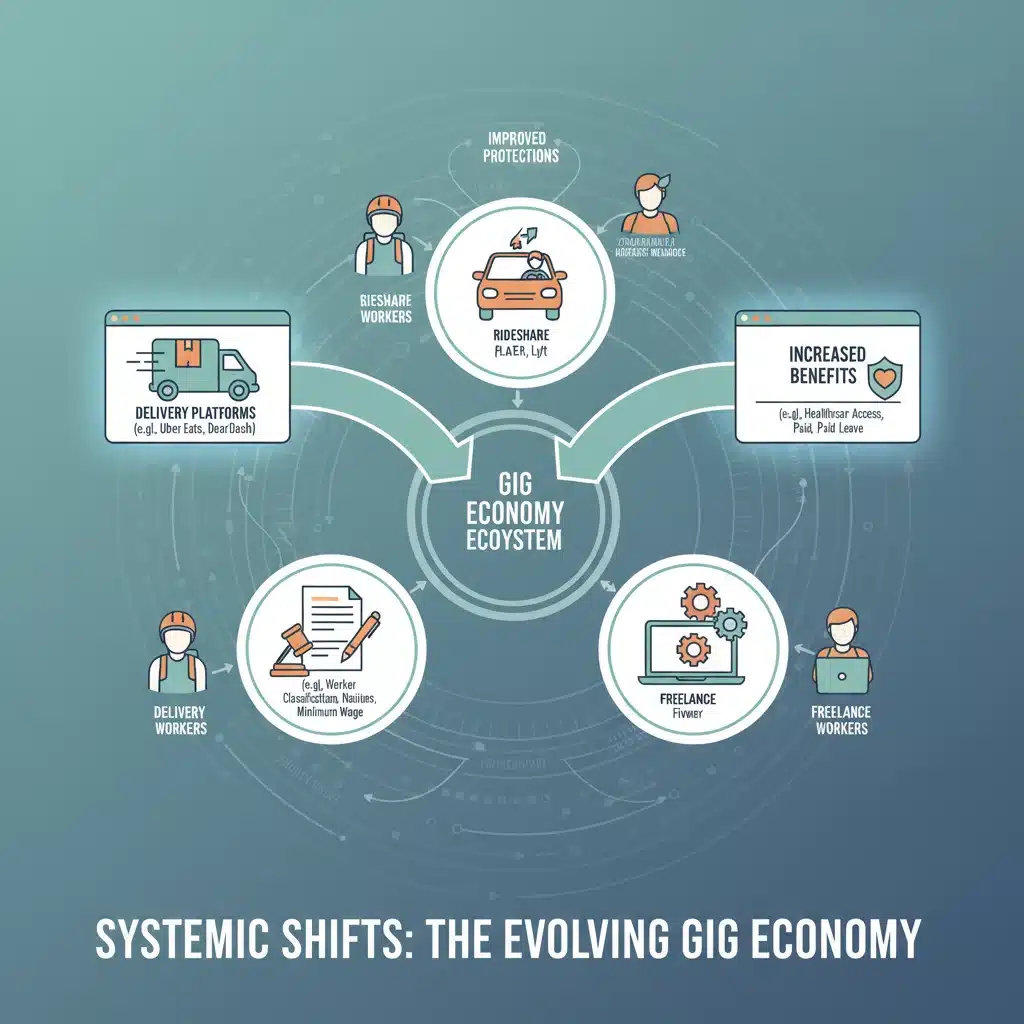
Preparing for 2026: A Guide for Workers and Platforms
With 2026 fast approaching, both gig workers and platform companies need to proactively prepare for the impending federal regulations. The changes are significant, and early preparation can mitigate risks and maximize opportunities.
For Gig Workers:
- Stay Informed: Regularly monitor official announcements from the Department of Labor and reputable labor news sources. Understand the specific criteria for worker classification under the new ‘economic reality’ test and how it might apply to your work.
- Document Your Work: Maintain meticulous records of your hours worked, earnings, expenses, and the degree of control platforms exert over your work. This documentation will be crucial if there are disputes over classification or gig worker benefits.
- Understand Your Rights: Familiarize yourself with the rights of employees under federal labor laws (FLSA, NLRA) and how these might now apply to you. Know what minimum wage, overtime, and collective bargaining rights entail.
- Engage with Advocacy Groups: Consider joining or supporting organizations that advocate for gig worker rights. These groups often provide valuable information, legal advice, and a collective voice for workers.
- Evaluate Your Financial Planning: While new benefits are welcome, understand that they might not cover every aspect of financial security. Continue to plan for retirement, healthcare, and emergencies, adapting your strategy as new benefits become available.
- Consider Your Preferences: Reflect on what aspects of gig work you value most. If flexibility is paramount, assess how potential changes might impact your ability to work on your own terms. Be prepared to adapt or explore alternative work arrangements if necessary.
For Gig Economy Platforms and Businesses:
- Conduct a Comprehensive Audit: Immediately begin auditing your current worker classification practices against the anticipated federal standards. Identify which workers are most likely to be reclassified as employees.
- Consult Legal Experts: Engage with labor law attorneys specializing in gig economy regulations. They can provide tailored advice on compliance, risk mitigation, and help interpret the nuances of the new rules.
- Model Financial Impacts: Quantify the financial implications of providing new gig worker benefits, including minimum wage, overtime, taxes, and other benefits. Explore different scenarios for absorbing these costs (e.g., increased service fees, adjusted worker payouts, operational efficiencies).
- Develop New HR and Payroll Systems: If you anticipate reclassifying workers, start planning for the necessary HR infrastructure, payroll systems, and benefits administration. This is a complex undertaking that requires significant lead time.
- Communicate Transparently with Workers: As information becomes clearer, communicate openly and honestly with your gig workers about the upcoming changes, what they can expect, and how the platform plans to adapt. Transparency can build trust and reduce uncertainty.
- Explore Hybrid Models and Technology Solutions: Investigate innovative operational models that might allow for some degree of worker flexibility while complying with new regulations. Explore technology solutions that can help manage compliance, scheduling, and benefits administration more efficiently.
- Engage in Policy Discussions: Participate in industry associations and policy discussions to advocate for practical implementation guidelines and ensure that the regulations are workable for the diverse gig economy landscape.
The transition to the new regulatory environment will not be without its challenges, but proactive preparation from both sides can lead to a smoother adaptation. For workers, it’s about understanding and asserting new rights; for platforms, it’s about strategic adaptation and ensuring long-term sustainability while providing fair treatment to their workforce. The 2026 federal regulations are not merely a legal hurdle but an opportunity to reshape the future of work for millions of Americans, ensuring a more stable and protected environment for gig worker benefits.
The Broader Economic and Social Implications
The 2026 federal regulations, by significantly altering gig worker benefits and protections, are set to have profound broader economic and social implications that extend beyond individual workers and platforms. These changes could ripple through various sectors, influencing consumer behavior, labor market dynamics, and the overall social safety net.
Economic Implications:
- Inflationary Pressures: Increased labor costs for gig platforms could lead to higher prices for consumers for services like ridesharing, food delivery, and freelance work. This could contribute to broader inflationary pressures, depending on the scale of cost pass-through.
- Innovation and Investment: While some argue that increased regulation stifles innovation, others contend that a more stable workforce can lead to better service quality and long-term investment. The impact on venture capital interest in the gig economy remains to be seen – it could deter some or encourage investment in more compliant, sustainable models.
- Labor Market Shift: The reclassification could lead to a shift in the labor market. Some individuals who previously preferred gig work for its flexibility might seek traditional employment if gig platforms impose stricter controls. Conversely, the improved benefits might attract a new demographic to gig work, potentially increasing competition.
- Small Business Impact: Smaller gig platforms or individual entrepreneurs who rely on a few independent contractors might find it particularly challenging to absorb increased costs and administrative burdens, potentially leading to consolidation or market exits.
- Government Revenue: With more gig workers properly classified as employees, there could be an increase in payroll tax contributions, benefiting government revenue streams for social security, Medicare, and unemployment funds.
Social Implications:
- Reduced Income Inequality: By guaranteeing minimum wage and providing access to benefits, the regulations could help reduce income inequality among gig workers, lifting many out of precarious financial situations.
- Improved Worker Well-being: Access to health insurance, paid sick leave, and workers’ compensation can significantly improve the physical and mental well-being of gig workers, leading to a healthier and more productive workforce.
- Strengthened Social Safety Net: Expanding unemployment insurance and other benefits to a larger segment of the workforce strengthens the overall social safety net, making the economy more resilient to downturns and reducing reliance on public assistance programs.
- Evolving Perceptions of Work: The regulations could normalize the idea that all work, regardless of its ‘gig’ nature, deserves a baseline of protections and benefits, potentially influencing future labor policies across other non-traditional employment sectors.
- Unionization Efforts: The explicit right to organize for reclassified workers could lead to a resurgence in unionization efforts within the gig economy, giving workers a stronger collective voice and potentially leading to further improvements in working conditions and gig worker benefits.
However, there are also concerns that overly stringent regulations could inadvertently lead to fewer job opportunities, less flexibility for workers who genuinely prefer independent contracting, and a stifling of entrepreneurial spirit within the gig economy. The ultimate outcome will depend on how effectively the regulations are implemented, how platforms adapt, and how workers respond to the new landscape. Nevertheless, the 2026 federal regulations represent a significant societal choice – prioritizing worker protection and stability in an evolving economy.
Conclusion: A New Era for Gig Work
The impending 2026 federal regulations mark a pivotal moment in the history of the US gig economy. These mandates are set to usher in a new era, fundamentally reshaping the relationship between gig workers and the platforms they engage with. By redefining worker classification and expanding access to essential gig worker benefits and protections, the federal government aims to address long-standing disparities and create a more equitable and secure working environment for an estimated 30% of the nation’s gig workforce.
For gig workers, this shift promises enhanced financial security through minimum wage and overtime guarantees, a crucial safety net via unemployment and workers’ compensation, and the potential for improved access to healthcare and retirement planning. It also empowers them with greater collective bargaining rights and increased transparency in their working arrangements. While some may lament a potential reduction in the absolute flexibility that initially drew them to gig work, the trade-off for greater stability and fundamental protections is a significant gain for many.
For gig economy platforms, the regulations present a formidable challenge, primarily in the form of increased labor costs and the need for comprehensive operational restructuring. However, they also offer opportunities for greater worker retention, enhanced brand reputation, and long-term legal clarity. Proactive engagement, strategic adaptation, and innovative business model adjustments will be crucial for platforms to thrive in this new landscape.
The broader economic and social implications are equally significant, touching upon everything from potential inflationary pressures and shifts in the labor market to a strengthened social safety net and evolving societal perceptions of work. This transformation is not merely a legal or economic adjustment; it represents a societal commitment to ensuring that the benefits of a dynamic gig economy are shared more equitably, without compromising the fundamental rights and well-being of its workforce.
As 2026 approaches, continuous vigilance, informed decision-making, and open dialogue will be essential for all stakeholders. The goal is to forge a future where the innovation and flexibility of gig work can coexist with robust worker protections, creating a more sustainable, just, and resilient labor market for the United States. This new era for gig work is not just about compliance; it’s about building a better foundation for the millions who power this vital segment of our economy.