The Gig Economy’s Social Footprint: Comparing the Benefits and Drawbacks for 40 Million US Workers in 2026
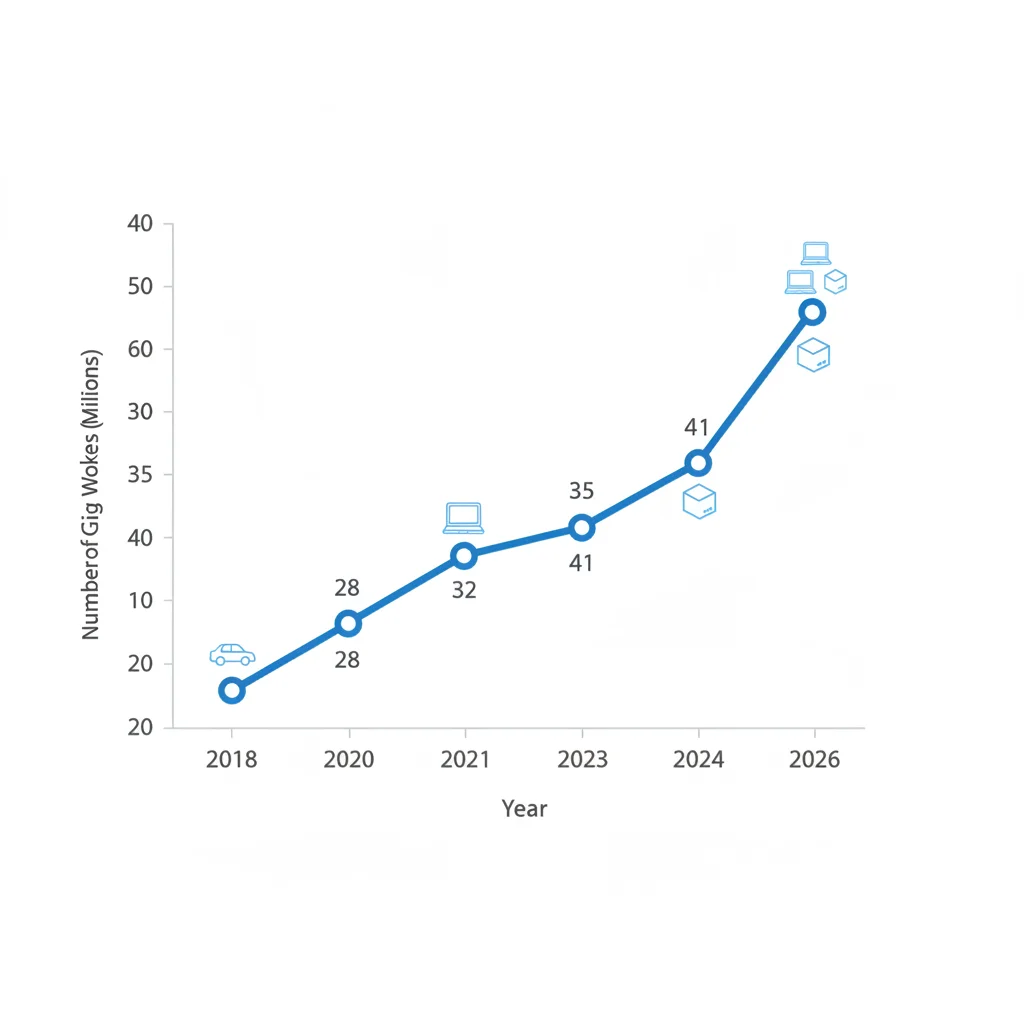
The landscape of work is undergoing a profound transformation, driven by technological advancements, evolving worker preferences, and a global shift towards more flexible employment models. At the heart of this revolution is the gig economy impact, a phenomenon that has reshaped how millions earn their livelihoods. By 2026, estimates suggest that approximately 40 million individuals in the United States will be engaged in some form of gig work, representing a significant portion of the nation’s workforce. This monumental shift prompts a crucial examination of the gig economy’s social footprint, weighing its myriad benefits against its inherent drawbacks for both individuals and society at large.
Understanding the gig economy is more complex than simply defining it as ‘temporary’ or ‘freelance’ work. It encompasses a broad spectrum of labor arrangements, from ride-sharing drivers and food delivery couriers to highly skilled freelance consultants, graphic designers, and online tutors. What unites these diverse roles is the prevalence of short-term contracts, on-demand services, and often, independent contractor status rather than traditional employment. This model promises unprecedented flexibility and autonomy, appealing to a generation seeking greater control over their professional lives. However, it also raises significant questions about economic security, access to benefits, and the long-term societal implications of a workforce increasingly untethered from traditional employer-employee relationships.
This comprehensive analysis will delve deep into the multifaceted nature of the gig economy, providing a balanced perspective on its social footprint. We will explore the compelling advantages that draw millions to gig work, such as unparalleled flexibility, diverse income streams, and opportunities for skill development. Simultaneously, we will critically examine the challenges and drawbacks, including income instability, lack of traditional benefits, and the potential for precarious work conditions. By projecting these trends to 2026, we aim to offer insights into the future trajectory of work and its broader societal impact, especially for the burgeoning 40 million US workers who will form the core of this evolving economic model. The gig economy impact is not merely an economic discussion; it is a social one, affecting everything from individual well-being to public policy and the very fabric of our communities.
The Allure of Flexibility and Autonomy: Benefits for Gig Workers
One of the most frequently cited benefits of the gig economy is the unparalleled flexibility it offers. Traditional 9-to-5 jobs often come with rigid schedules and fixed locations, which can be challenging for individuals with caregiving responsibilities, students, or those simply seeking a better work-life balance. Gig work, by contrast, often allows individuals to set their own hours, choose their projects, and work from virtually anywhere with an internet connection. This autonomy can be incredibly empowering, leading to higher job satisfaction for many. The ability to dictate one’s own terms of engagement is a powerful driver for the continued expansion of the gig economy impact.
For parents, especially mothers, the gig economy can provide a viable path to earning income while managing family commitments. Students can supplement their educational expenses without compromising their studies. Retirees can re-enter the workforce on their own terms, utilizing their experience without the pressures of a full-time commitment. This flexibility extends beyond just scheduling; it also applies to the type of work undertaken. Gig workers can often pivot between different roles or industries, gaining diverse experiences and developing a broad skill set that might not be possible in a single traditional job.
Beyond flexibility, the gig economy can offer opportunities for supplementary income and entrepreneurship. Many individuals use gig work to complement a primary job, pay off debt, or save for specific goals. For others, it serves as a stepping stone to full-time entrepreneurship, allowing them to test business ideas, build a client base, and refine their skills without the significant overhead of a traditional startup. The low barrier to entry for many gig platforms means that individuals can quickly begin earning, transforming latent skills into tangible income. This democratizes access to work, offering economic opportunities to a wider segment of the population, thereby amplifying the positive aspects of the gig economy impact.
Moreover, the gig economy fosters a culture of continuous learning and skill development. As independent contractors, gig workers are often responsible for marketing themselves, managing their finances, and continuously upgrading their skills to remain competitive. This self-driven approach can lead to greater personal and professional growth than might be experienced in a more structured corporate environment. Platforms like Upwork, Fiverr, and TaskRabbit not only connect workers with clients but also often provide resources for skill enhancement, further empowering the gig workforce. The ability to choose projects that align with personal interests and career goals can also lead to a more fulfilling work experience, a critical component of the overall gig economy’s social footprint.
Economic Opportunities and Accessibility: Widening the Net
The gig economy has undeniably broadened economic opportunities for millions, particularly for those who might face barriers to traditional employment. Individuals in rural areas, for example, can access a global market of clients and projects that would otherwise be inaccessible. People with disabilities, who might struggle with the physical demands or logistical challenges of traditional workplaces, can find remote gig opportunities that accommodate their needs. This increased accessibility is a significant component of the positive gig economy impact, fostering inclusion and reducing unemployment rates in certain demographics.
For many, gig work provides a crucial safety net during economic downturns or periods of unemployment. It allows individuals to quickly generate income, bridging gaps between traditional jobs or supplementing unemployment benefits. This resilience in the face of economic uncertainty is a powerful argument in favor of the gig model. Furthermore, the gig economy can stimulate local economies by creating new services and consumption patterns. For instance, the demand for delivery services supports local restaurants and retailers, while ride-sharing services improve transportation access.
The global reach of many gig platforms also means that local talent can compete on a global stage. A graphic designer in Ohio can work for a client in London, and a software developer in Texas can contribute to a project based in Singapore. This internationalization of labor markets can lead to higher earning potential for skilled gig workers and foster cross-cultural collaboration. It challenges traditional notions of geographical limitations in employment, opening up new avenues for prosperity and innovation. The positive gig economy impact on global talent mobility is a trend that is only set to accelerate.
Finally, the gig economy can reduce bureaucratic hurdles and startup costs associated with traditional business ventures. Instead of needing to establish a full-fledged company, individuals can leverage existing platforms to offer their services, minimizing initial investments in marketing, infrastructure, and legal compliance. This ease of entry encourages entrepreneurial spirit and allows for rapid iteration and experimentation with business models. For many aspiring entrepreneurs, the gig economy offers a low-risk environment to test ideas and build a portfolio, nurturing a new generation of independent workers and small business owners.
The Dark Side of Flexibility: Drawbacks and Challenges
Despite the numerous advantages, the gig economy is not without significant drawbacks, particularly concerning worker protections and economic stability. The most prominent concern is the lack of traditional employee benefits. Gig workers, typically classified as independent contractors, often do not receive employer-sponsored health insurance, paid time off, retirement benefits, or unemployment insurance. This places a substantial financial burden on individuals, who must independently secure these essential protections. The absence of a safety net can lead to significant financial precarity, especially during illness, injury, or economic downturns, overshadowing some of the positive aspects of the gig economy impact.
Income instability is another major challenge. Unlike salaried employees with predictable paychecks, gig workers’ earnings can fluctuate wildly based on demand, competition, and platform algorithms. This unpredictability makes financial planning difficult and can lead to stress and anxiety. Many gig workers report periods of low income, forcing them to work long hours or take on multiple gigs to make ends meet, often at the expense of their well-being. The promise of high earnings often comes with the caveat of inconsistent work, making the actual take-home pay highly variable.
The independent contractor classification also means that gig workers are often excluded from labor laws designed to protect traditional employees, such as minimum wage requirements, overtime pay, and anti-discrimination statutes. This can leave them vulnerable to exploitation, unfair labor practices, and inadequate compensation. The power imbalance between large gig platforms and individual workers is a growing concern, with platforms often dictating terms and conditions without much input from the workforce. Addressing this imbalance is crucial for a more equitable gig economy impact.
Furthermore, gig workers are solely responsible for their taxes, including self-employment taxes, which can be a complex and often surprising burden for those new to the independent contractor model. The administrative overhead of tracking income, expenses, and filing taxes can be considerable, detracting from the time and energy available for actual work. This administrative complexity, combined with the lack of benefits and unstable income, paints a less rosy picture of the gig economy for a significant portion of its participants.
Social and Psychological Toll: Isolation and Precarity
Beyond the economic challenges, the gig economy can have significant social and psychological consequences. The independent nature of gig work often means reduced social interaction with colleagues, leading to feelings of isolation and detachment. Traditional workplaces, for all their flaws, often provide a sense of community, belonging, and opportunities for networking and mentorship. Gig workers may miss out on these crucial aspects of professional life, which can impact their mental health and career development. The social fabric of work is subtly but significantly altered by the growing gig economy impact.
The constant pressure to find work, maintain high ratings, and compete with other gig workers can also contribute to stress and burnout. The lines between work and personal life can become blurred, as gig workers often feel the need to be constantly available to maximize earning opportunities. This ‘always on’ culture can erode personal time, hinder relaxation, and lead to chronic fatigue. The lack of clear boundaries and the self-driven imperative to perform can be mentally exhausting, making it difficult for individuals to truly disengage from their work.
Moreover, the absence of a clear career path or opportunities for advancement, which are common in traditional employment, can be a source of frustration for many gig workers. While some highly skilled freelancers can build successful independent careers, many in the lower-skilled gig economy find themselves stuck in repetitive tasks with little room for growth or skill development. This stagnation can lead to disillusionment and a sense of being undervalued, impacting long-term career aspirations and overall job satisfaction. The long-term societal effects of a large segment of the population facing such limited career progression are a critical aspect of the gig economy impact that warrants careful consideration.
The social safety net traditionally provided by employers, which includes not just benefits but also a sense of collective identity and shared purpose, is largely absent in the gig economy. This individualization of risk shifts the burden entirely onto the worker, potentially exacerbating existing social inequalities and creating a more atomized workforce. As 40 million US workers navigate this landscape by 2026, the cumulative social and psychological toll will become an increasingly important public health and policy concern.

Regulatory Frameworks and the Future of Gig Work in 2026
As the gig economy impact continues to grow, governments and policymakers worldwide are grappling with how to regulate this evolving sector. The primary challenge revolves around the classification of gig workers: are they employees or independent contractors? This distinction has profound implications for worker rights, benefits, and tax revenues. Various jurisdictions have attempted different approaches, from California’s AB5, which sought to reclassify many gig workers as employees, to more nuanced models that aim to create a ‘third category’ of worker with some, but not all, traditional employee benefits.
By 2026, it is highly probable that more robust and standardized regulatory frameworks will emerge in the United States. The debate is intense, with gig companies often advocating for the independent contractor model to maintain flexibility and lower operational costs, while labor unions and worker advocates push for greater protections and benefits. Solutions might include portable benefits schemes, where workers accrue benefits that can be carried across different gigs and platforms, or collective bargaining rights for gig workers to negotiate better terms and conditions. The outcome of these regulatory battles will significantly shape the future social footprint of the gig economy.
The role of technology in facilitating these regulatory changes will also be crucial. Blockchain technology, for example, could offer transparent and immutable records of work, earnings, and benefit contributions, making it easier to manage portable benefits systems. AI and machine learning could be used to monitor working conditions and ensure fair compensation, though this also raises concerns about algorithmic management and surveillance. The interplay between policy and technology will define the next phase of the gig economy impact.
Furthermore, public perception and consumer demand will play a role. As awareness grows about the precarious conditions faced by some gig workers, there may be increasing pressure on companies to adopt more ethical labor practices. Consumers might prioritize platforms that offer better worker benefits, leading to a market-driven shift towards more responsible gig models. This evolving ecosystem of regulation, technology, and consumer ethics will determine whether the gig economy becomes a sustainable and equitable force for work in the long run.
The Societal Implications: Inequality and Innovation
The gig economy impact extends far beyond individual workers, touching upon broader societal structures, including income inequality and innovation. On one hand, the gig economy has been lauded as a democratizing force, allowing individuals from diverse backgrounds to access work and generate income. It can provide entry-level opportunities for those with limited education or work experience, potentially reducing unemployment and fostering economic mobility. The flexibility it offers can also be a boon for care economy workers, enabling them to balance their professional and personal lives more effectively.
However, critics argue that the gig economy exacerbates income inequality by creating a two-tiered labor market. At the top, highly skilled freelancers command premium rates, enjoying true autonomy and high earnings. At the bottom, a large segment of gig workers in low-skill, on-demand services faces intense competition, low pay, and precarious working conditions. This creates a significant divide, where the benefits of flexibility and autonomy are not equally distributed, potentially widening the gap between the affluent and the vulnerable segments of the workforce. The concentration of wealth at the platform level, while workers bear the brunt of operational risks, is a key concern.
From an innovation perspective, the gig economy is a double-edged sword. It drives innovation by fostering new business models, encouraging technological development in areas like logistics and payment processing, and creating novel services that enhance convenience for consumers. The agility of gig platforms allows for rapid experimentation and adaptation to market demands, which can lead to significant economic growth and efficiency gains. This innovative spirit is a powerful positive aspect of the gig economy impact.
Yet, the focus on short-term contracts and project-based work might disincentivize companies from investing in long-term employee training and development, which traditionally builds human capital. If a significant portion of the workforce is constantly in flux, the institutional knowledge and collective expertise within organizations could diminish. This could have long-term implications for national competitiveness and the development of specialized skills. Balancing the short-term gains of gig innovation with the long-term need for human capital development is a critical challenge for society.
Preparing for 2026: Policy Recommendations and Individual Strategies
As we look towards 2026 and the projected 40 million US gig workers, proactive measures are essential to harness the positive aspects of the gig economy impact while mitigating its drawbacks. For policymakers, this means developing comprehensive regulatory frameworks that provide a baseline of worker protections without stifling innovation. This could involve mandating portable benefits funds, establishing clear guidelines for worker classification, and exploring collective bargaining mechanisms tailored for independent contractors. The goal should be to create a ‘floor’ of security beneath gig work, ensuring dignity and fairness.
Investment in education and training programs is also crucial. As the nature of work evolves, so too must the skills of the workforce. Governments, educational institutions, and even gig platforms should collaborate to offer accessible and affordable training in high-demand skills, enabling gig workers to move into higher-paying, more stable roles. This continuous upskilling is vital for ensuring that the gig economy remains a pathway to opportunity rather than a trap of low-wage precarity.
For individuals considering or currently engaged in gig work, strategic planning is paramount. This includes actively managing finances, setting aside funds for taxes and benefits, and building an emergency savings fund. Diversifying income streams by working for multiple platforms or offering a variety of services can reduce reliance on a single source of income. Networking with other gig workers can also provide valuable support, mentorship, and opportunities for collaboration, combating the isolation sometimes associated with independent work. Understanding the full gig economy impact from a personal perspective is key to thriving.
Furthermore, advocating for policy change and participating in worker organizations can empower gig workers to collectively voice their concerns and push for better conditions. The future of the gig economy is not predetermined; it will be shaped by the actions of workers, platforms, policymakers, and consumers. By fostering a collaborative approach, we can ensure that the gig economy fulfills its promise as a positive and sustainable contributor to the future of work for all 40 million US workers and beyond.
Conclusion: Navigating the Evolving Gig Landscape
The gig economy represents a paradigm shift in how work is organized and performed, offering both immense opportunities and significant challenges. By 2026, its gig economy impact on 40 million US workers will be undeniable, shaping their economic realities, social interactions, and personal well-being. The allure of flexibility, autonomy, and expanded economic access draws millions to this model, fostering entrepreneurship and providing crucial income streams. However, the absence of traditional benefits, income instability, and the potential for social isolation present substantial drawbacks that demand thoughtful attention.
As this dynamic sector matures, the focus must shift towards creating a more balanced and equitable ecosystem. This requires innovative regulatory frameworks that provide a safety net for gig workers without stifling the very flexibility that makes this model attractive. It necessitates continuous investment in skill development and educational opportunities to empower workers to thrive in a rapidly changing labor market. And it calls for a collective effort from platforms, policymakers, and workers themselves to foster a gig economy that is not only efficient but also socially responsible and inclusive.
The social footprint of the gig economy is still being defined. The choices we make today regarding policy, technology, and ethical practices will determine whether it becomes a force for widespread prosperity and empowerment or a source of increased precarity and inequality. By embracing a balanced perspective and actively working towards solutions, we can ensure that the gig economy fulfills its promise as a positive and sustainable contributor to the future of work for all 40 million US workers and beyond.