Navigating 2026 U.S. Data Privacy Regulations: A Business Imperative
The digital age has brought unprecedented opportunities for businesses, but with great power comes great responsibility, particularly concerning consumer data. As we inch closer to 2026, the United States is poised for significant shifts in its data privacy landscape. Businesses operating within or serving U.S. consumers must be acutely aware of these impending changes to ensure compliance, maintain consumer trust, and avoid hefty penalties. This comprehensive guide delves into what businesses need to know about the evolving US data privacy 2026 regulations.
Understanding the intricacies of data privacy laws can be daunting, especially when they differ from state to state and are constantly being updated. However, proactive engagement and strategic planning are not just advisable; they are essential for long-term business success in a data-driven world. By 2026, the patchwork of state-specific laws is expected to become more complex, potentially with new federal frameworks or more harmonized state approaches. Regardless of the exact form, the core principles of consumer data rights, transparency, and accountability will remain paramount.
The Evolving Landscape of US Data Privacy 2026
Historically, the U.S. has taken a sector-specific approach to data privacy, as seen with regulations like HIPAA for healthcare and COPPA for children’s online privacy. This contrasts sharply with the comprehensive, omnibus laws prevalent in other regions, most notably the European Union’s General Data Protection Regulation (GDPR). However, recent years have witnessed a growing momentum towards more comprehensive state-level privacy laws, signaling a potential shift in the broader US data privacy 2026 paradigm.
Key State-Level Developments Leading to 2026
Several states have been at the forefront of establishing robust data privacy frameworks. The California Consumer Privacy Act (CCPA), augmented by the California Privacy Rights Act (CPRA), set a high bar, granting consumers significant rights over their personal information. Following California’s lead, states like Virginia (Virginia Consumer Data Protection Act – VCDPA), Colorado (Colorado Privacy Act – CPA), Utah (Utah Consumer Privacy Act – UCPA), and Connecticut (Connecticut Data Privacy Act – CTDPA) have enacted their own versions of comprehensive privacy legislation. These laws, while sharing common principles, also contain unique provisions that businesses must navigate.
- California (CCPA/CPRA): Focuses on consumer rights including access, deletion, and opt-out of sale/sharing of personal information. The CPRA further introduces the California Privacy Protection Agency (CPPA) for enforcement and expands sensitive personal information definitions.
- Virginia (VCDPA): Emphasizes controller and processor responsibilities, consumer rights, and data protection assessments for high-risk processing activities.
- Colorado (CPA): Grants consumers rights to opt-out of targeted advertising, sale of personal data, and profiling. It also mandates data protection assessments.
- Utah (UCPA): Generally considered more business-friendly, with opt-out rights and reasonable security practices requirements.
- Connecticut (CTDPA): Similar to Virginia and Colorado, it provides consumer rights and requires data protection assessments.
By 2026, it is highly probable that more states will have enacted similar legislation, or existing laws will have undergone further amendments. This proliferation of state-specific laws creates a complex compliance environment for businesses operating nationally, making a unified strategy for US data privacy 2026 compliance crucial.
Potential Federal Data Privacy Legislation by 2026
The fragmented nature of U.S. data privacy laws has long been a point of discussion, with many advocating for a comprehensive federal privacy law. While previous attempts have stalled, the increasing number of state laws and international pressure could reignite efforts for a federal standard by 2026. A federal law could potentially preempt state laws, creating a more streamlined compliance landscape, or it could establish a baseline, allowing states to enact stricter measures.
Key Considerations for a Federal Law:
- Scope: Would it apply to all businesses or only those exceeding certain thresholds?
- Preemption: Would it preempt existing and future state laws, or serve as a floor?
- Consumer Rights: What specific rights would consumers be granted (e.g., access, deletion, correction, portability, opt-out)?
- Enforcement: Which agency would be responsible for enforcement (e.g., FTC, a new dedicated agency)? What would be the penalties for non-compliance?
- Private Right of Action: Would individuals have the right to sue companies for privacy violations?
Even without a single, overarching federal law, the trajectory of state-level legislation suggests a growing emphasis on consumer consent, data minimization, purpose limitation, and robust security measures. Businesses must anticipate these trends as they prepare for US data privacy 2026.
Core Principles of US Data Privacy 2026 and Beyond
Despite the variations across existing and anticipated regulations, several core principles consistently emerge. Adhering to these principles will form the bedrock of any successful data privacy compliance program for US data privacy 2026.
1. Transparency and Notice
Businesses must be transparent about their data collection, use, and sharing practices. This typically involves clear, concise, and accessible privacy policies that inform consumers about:
- What personal data is collected.
- The purposes for which the data is collected and used.
- With whom the data is shared (third parties, service providers).
- How consumers can exercise their privacy rights.
- Contact information for privacy inquiries.
2. Consumer Rights and Control
A cornerstone of modern data privacy is empowering consumers with control over their personal information. Common consumer rights include:
- Right to Access: Consumers can request access to the personal data a business holds about them.
- Right to Deletion: Consumers can request the deletion of their personal data.
- Right to Correction/Rectification: Consumers can request corrections to inaccurate personal data.
- Right to Opt-Out: Consumers can opt-out of the sale or sharing of their personal data, targeted advertising, and certain profiling activities.
- Right to Data Portability: Consumers can request their data in a portable, machine-readable format.
Businesses need robust mechanisms to receive, verify, and respond to these consumer requests within specified timeframes.
3. Data Minimization and Purpose Limitation
This principle dictates that businesses should only collect the personal data that is necessary for a specific, legitimate purpose. They should also only retain data for as long as needed to fulfill that purpose. Excessive data collection and indefinite retention increase privacy risks and compliance burdens.
4. Security and Data Protection
Businesses are obligated to implement reasonable security measures to protect personal data from unauthorized access, use, disclosure, alteration, or destruction. This involves technical, administrative, and physical safeguards appropriate to the volume and sensitivity of the data processed. Data breach notification requirements are also a critical component of this principle.
5. Accountability and Governance
Organizations must be able to demonstrate compliance with privacy laws. This includes:
- Maintaining records of data processing activities.
- Conducting Data Protection Impact Assessments (DPIAs) or Data Protection Assessments (DPAs) for high-risk processing.
- Implementing internal policies and procedures.
- Training employees on privacy best practices.
- Appointing a privacy officer or designating a responsible party.
Preparing Your Business for US Data Privacy 2026: A Strategic Roadmap
Proactive preparation is key to navigating the complex and evolving landscape of US data privacy 2026. Here’s a strategic roadmap for businesses:
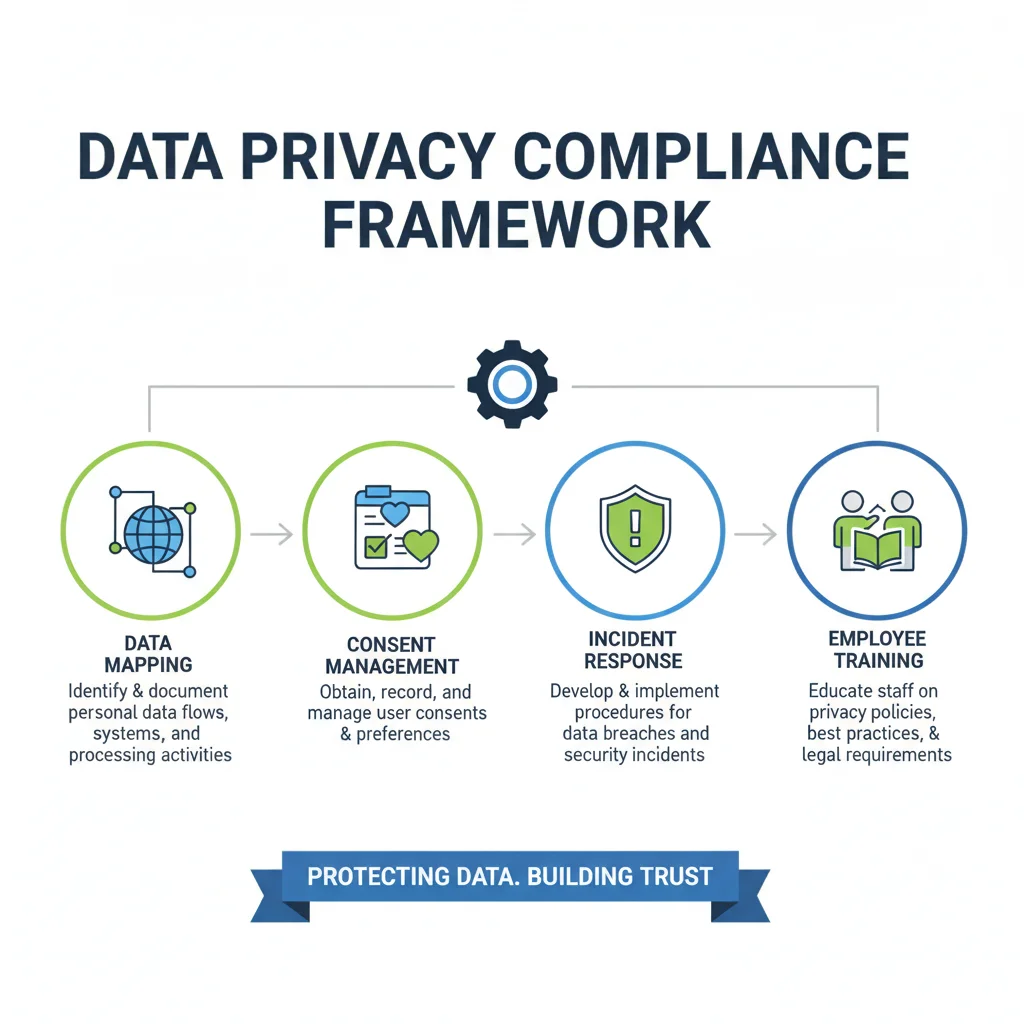
Step 1: Conduct a Comprehensive Data Audit and Mapping
Before you can protect data, you need to know what data you have. A thorough data audit involves:
- Identifying all personal data: What types of personal information do you collect (e.g., names, emails, IP addresses, browsing history, health data, financial data)?
- Locating data storage: Where is this data stored (e.g., databases, cloud services, third-party vendors)?
- Understanding data flows: How does data enter, move through, and exit your organization? Who has access to it?
- Determining data purpose: Why is each piece of data collected and used? Is it necessary for your business operations?
- Assessing data retention: How long is data kept? Is there a legitimate business or legal reason for its retention?
Data mapping tools can be invaluable in visualizing these data flows and identifying potential privacy risks.
Step 2: Review and Update Privacy Policies and Notices
Your privacy policy is your promise to consumers. It must be clear, comprehensive, and compliant with all applicable laws, especially for US data privacy 2026. Ensure it:
- Clearly outlines your data collection, use, and sharing practices.
- Explains consumer rights and how to exercise them.
- Is easily accessible on your website and other relevant platforms.
- Is updated regularly to reflect changes in your data practices or legal requirements.
Consider implementing just-in-time notices for specific data collection points, such as cookie consent banners or forms that clearly state the purpose of data collection.
Step 3: Establish Robust Consumer Request Mechanisms
Businesses must have efficient and verifiable processes for handling consumer requests related to their privacy rights (access, deletion, correction, opt-out). This includes:
- Dedicated channels: Provide clear contact methods (e.g., web form, toll-free number, email address) for submitting requests.
- Identity verification: Implement reasonable measures to verify the identity of the person making the request to prevent unauthorized disclosures.
- Timely responses: Ensure your processes allow you to respond to requests within the legally mandated timeframes (e.g., 45 days, with potential extensions).
- Record keeping: Maintain detailed records of all requests and how they were handled.
Step 4: Enhance Data Security Measures
Data security is not just a technical issue; it’s a fundamental aspect of data privacy. Businesses should:
- Implement strong access controls: Limit access to personal data based on the principle of least privilege.
- Encrypt sensitive data: Encrypt data both in transit and at rest, especially for highly sensitive information.
- Conduct regular security assessments: Perform vulnerability scans and penetration tests to identify and address weaknesses.
- Develop an incident response plan: Have a clear plan in place for detecting, responding to, and recovering from data breaches.
- Train employees: Regular security awareness training is crucial to prevent human error, a common cause of breaches.
Step 5: Vet Third-Party Vendors and Service Providers
Many businesses rely on third-party vendors for various services, from cloud hosting to marketing analytics. These vendors often process personal data on your behalf, and you remain accountable for their data handling practices. For US data privacy 2026, it is essential to:
- Conduct due diligence: Thoroughly vet all vendors for their security and privacy practices before engaging them.
- Implement strong data processing agreements (DPAs): Ensure contracts clearly define roles, responsibilities, data protection obligations, and liability in case of a breach.
- Monitor vendor compliance: Regularly review vendor security reports and audits to ensure ongoing compliance.
Step 6: Invest in Employee Training and Awareness
Your employees are your first line of defense against privacy breaches. Comprehensive and ongoing training is critical:
- Educate employees on data privacy principles and relevant regulations.
- Train them on company privacy policies and procedures.
- Provide specific guidance on handling personal data, identifying phishing attempts, and reporting security incidents.
- Foster a culture of privacy throughout the organization.
Step 7: Conduct Data Protection Assessments (DPAs/DPIAs)
Many state laws, and potentially future federal laws, require businesses to conduct data protection assessments for processing activities that present a heightened risk to consumer privacy. These assessments help identify and mitigate privacy risks before new processing activities or technologies are implemented.
The Impact of Non-Compliance on US Data Privacy 2026
The consequences of failing to comply with US data privacy 2026 regulations can be severe and multifaceted. Businesses face not only financial penalties but also significant reputational damage.
Financial Penalties
State privacy laws often include substantial fines for violations. For example, the CCPA/CPRA allows for civil penalties of up to $2,500 per violation and up to $7,500 for intentional violations or violations involving minors. These penalties can quickly accumulate, particularly for businesses handling large volumes of consumer data. Furthermore, some laws include a private right of action, allowing individuals to sue companies for damages in certain circumstances, adding another layer of financial risk.
Reputational Damage and Loss of Consumer Trust
In today’s interconnected world, news of data breaches or privacy missteps travels fast. Non-compliance can lead to a significant loss of consumer trust, which is incredibly difficult to rebuild. Consumers are increasingly privacy-aware and are more likely to support businesses that demonstrate a commitment to protecting their personal information. A damaged reputation can result in lost customers, decreased sales, and a negative brand image.
Legal Costs and Business Disruption
Even if a business avoids direct fines, the legal costs associated with investigations, lawsuits, and remediation efforts can be substantial. Non-compliance can also lead to operational disruptions, as resources are diverted to address privacy issues rather than core business activities.
Looking Ahead: Future Trends in US Data Privacy 2026
Beyond the immediate regulatory changes, several trends are likely to shape the future of US data privacy 2026 and beyond:
- Increased Focus on AI and Automated Decision-Making: As AI becomes more prevalent, regulations will likely address how personal data is used in algorithms, the potential for bias, and the right to explanation for automated decisions.
- Enhanced Data Security Requirements: The sophistication of cyber threats will continue to drive demand for more robust and adaptive security measures, potentially leading to stricter requirements for encryption, multi-factor authentication, and threat detection.
- Global Harmonization Efforts: While the U.S. has its unique approach, there may be continued pressure to align certain aspects of U.S. privacy laws with international standards, particularly for businesses operating globally.
- Privacy-Enhancing Technologies (PETs): The development and adoption of PETs, such as differential privacy and homomorphic encryption, could become more integrated into compliance strategies, offering new ways to protect data while enabling its use.
- Children’s Privacy Expansion: Expect continued expansion and stricter enforcement of children’s online privacy protections, potentially extending beyond current COPPA regulations.

Conclusion: Embracing Data Privacy as a Competitive Advantage
Navigating the complex and evolving landscape of US data privacy 2026 is not merely about avoiding penalties; it’s about building and maintaining trust with your customers. A strong commitment to data privacy can differentiate your business in a crowded market, enhance your brand reputation, and foster deeper customer loyalty.
The journey to full compliance is ongoing, requiring continuous monitoring of legislative developments, regular audits of data practices, and a commitment to fostering a privacy-aware culture within your organization. By investing in robust privacy programs, businesses can confidently meet the challenges of the future, turning regulatory compliance into a strategic competitive advantage.
Start your preparation today. Assess your current data practices, identify gaps, and implement the necessary changes to ensure your business is not just compliant but also a trusted steward of consumer data in 2026 and beyond. The future of your business depends on it.