US Digital Accessibility Standards 2026: A Comprehensive Guide

US Digital Accessibility Standards 2026: A Comprehensive Guide
In an increasingly digital world, access to information and services online is no longer a luxury but a fundamental right. As we approach 2026, the landscape of digital accessibility standards in the United States continues to evolve, pushing businesses and organizations to create more inclusive digital experiences. For anyone developing, maintaining, or overseeing digital platforms, understanding and adhering to these standards is paramount. Not only does it broaden your audience and enhance user experience for millions, but it also mitigates legal risks associated with non-compliance.
This comprehensive guide will delve into the critical digital accessibility standards that will shape the digital space in 2026. We’ll explore the foundational principles, key regulations, and practical steps to ensure your digital platforms are accessible to all, regardless of their abilities. From Web Content Accessibility Guidelines (WCAG) to Section 508 and the Americans with Disabilities Act (ADA), we’ll unpack what you need to know to stay compliant and build truly inclusive digital environments.
The Imperative of Digital Accessibility: Why It Matters More Than Ever
The concept of digital accessibility is simple yet profound: it ensures that digital products, services, and information are usable by everyone, including individuals with disabilities. This includes people with visual, auditory, motor, cognitive, and neurological impairments. In the US, an estimated one in four adults lives with some form of disability, representing a significant portion of the population that relies on accessible technology.
Beyond the moral imperative, there are compelling business and legal reasons to prioritize digital accessibility standards. From a business perspective, an accessible website or application expands your market reach, improves brand reputation, and often enhances overall user experience for all users (e.g., better SEO, mobile-friendliness). Legally, non-compliance can lead to costly lawsuits, fines, and reputational damage. The legal landscape surrounding digital accessibility, particularly in the US, is dynamic and increasingly enforced.
As technology advances, so too do the expectations for accessibility. What might have been considered ‘accessible’ a few years ago may no longer meet current or future digital accessibility standards. Therefore, a proactive and continuous approach to accessibility is essential for long-term success and compliance.
Foundational Framework: Web Content Accessibility Guidelines (WCAG)
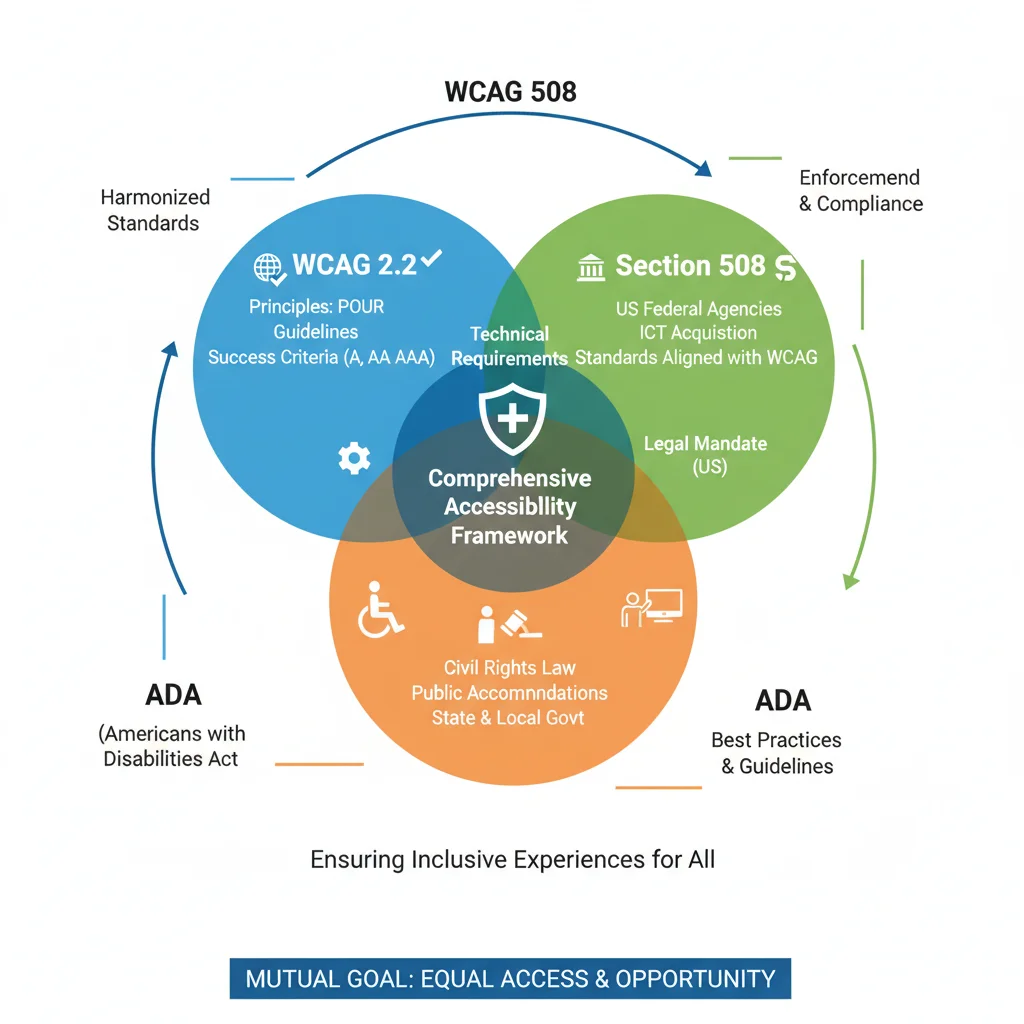
At the heart of most digital accessibility standards worldwide, including in the US, are the Web Content Accessibility Guidelines (WCAG). Developed by the World Wide Web Consortium (W3C), WCAG provides a set of recommendations for making web content more accessible to people with disabilities. While not a law itself, WCAG serves as the technical benchmark for compliance with many legal frameworks, such as Section 508 and the ADA.
Understanding WCAG Versions and Levels
WCAG is an evolving standard. Currently, WCAG 2.1 is widely adopted, and WCAG 2.2 was finalized in October 2023, introducing new success criteria. Looking ahead to 2026, adherence to WCAG 2.2, and likely preparations for WCAG 3.0 (also known as ‘Project Silver’), will be crucial. WCAG is structured around four core principles, often referred to by the acronym POUR:
- Perceivable: Information and user interface components must be presentable to users in ways they can perceive. This means providing text alternatives for non-text content, captions for audio and video, and ensuring sufficient contrast.
- Operable: User interface components and navigation must be operable. This includes making all functionality available from a keyboard, giving users enough time to read and use content, and avoiding content that causes seizures.
- Understandable: Information and the operation of user interface must be understandable. This involves making text readable and understandable, making web pages appear and operate in predictable ways, and helping users avoid and correct mistakes.
- Robust: Content must be robust enough that it can be interpreted reliably by a wide variety of user agents, including assistive technologies. This means maximizing compatibility with current and future user agents, including assistive technologies.
Each principle is supported by guidelines, which are then broken down into testable success criteria. These success criteria are categorized into three levels of conformance: A (lowest), AA, and AAA (highest). Most legal regulations, including Section 508, typically mandate WCAG 2.0 or 2.1 Level AA conformance. For 2026, expecting WCAG 2.2 Level AA as the baseline is a safe and strategic approach.
Key WCAG 2.2 Additions to Consider for 2026
WCAG 2.2 builds upon 2.1 by adding new success criteria, primarily at Level A and AA, to address accessibility needs for users with cognitive disabilities, low vision, and mobile device users. Some notable additions include:
- 2.5.7 Dragging Movements (A): Ensures that actions performed by dragging have an alternative method of input.
- 2.5.8 Target Size (AA): Requires interactive target sizes to be at least 24 by 24 CSS pixels, improving usability for users with motor impairments or those using touch screens.
- 3.2.6 Findable Help (A): Specifies that help mechanisms (like contact information or FAQs) must be easily locatable.
- 3.3.7 Redundant Entry (A): Aims to reduce the need for users to re-enter information previously provided.
- 3.3.8 Accessible Authentication (AA): Addresses cognitive load by offering accessible alternatives to complex authentication processes (e.g., memorizing passwords).
These new criteria highlight a growing emphasis on cognitive accessibility and practical usability in various digital contexts. Organizations must integrate these updates into their accessibility strategies to meet future digital accessibility standards.
Section 508 of the Rehabilitation Act: Federal Compliance in the US
Section 508 of the Rehabilitation Act of 1973, as amended, mandates that all federal agencies and departments make their electronic and information technology (EIT) accessible to people with disabilities. This includes websites, software, hardware, and electronic documents. While primarily applicable to federal entities and those doing business with them, Section 508 significantly influences broader digital accessibility standards in the US.
In 2017, the Access Board updated Section 508, incorporating by reference WCAG 2.0 Level AA. This means that to comply with Section 508, federal agencies and their contractors must meet the WCAG 2.0 Level AA success criteria. As we move towards 2026, it is highly probable that Section 508 will update to incorporate WCAG 2.2 Level AA, or at least encourage its adoption as best practice.
Who Does Section 508 Affect?
The reach of Section 508 extends beyond just government agencies:
- Federal Agencies: All executive agencies, military departments, and the U.S. Postal Service.
- Contractors and Vendors: Any private company or organization that sells EIT products or services to the federal government must ensure those products and services are Section 508 compliant.
- Public Entities Receiving Federal Funds: While not directly mandated, many state and local government entities and organizations receiving federal funding often adopt Section 508 as a guideline to ensure broader accessibility.
For businesses aiming to engage with the federal government, understanding and implementing Section 508 (and by extension, WCAG) is not optional. It’s a prerequisite for participation. Proactive compliance ensures you’re ready for government contracts and positions you as a leader in inclusive technology.
The Americans with Disabilities Act (ADA): A Broad Mandate for Digital Inclusion
The Americans with Disabilities Act (ADA) is a landmark civil rights law that prohibits discrimination against individuals with disabilities in all areas of public life. While enacted in 1990, long before the internet became ubiquitous, courts have increasingly interpreted the ADA to apply to websites, mobile apps, and other digital platforms of public accommodations. Unlike Section 508, which specifically targets federal entities, the ADA has a much broader scope, impacting virtually any business or organization that serves the public.
The Department of Justice (DOJ) has consistently affirmed that the ADA applies to the web. Although the DOJ has not issued specific technical standards for website accessibility, it has frequently referenced WCAG 2.0 Level AA as a suitable benchmark for compliance. For 2026, this informal guidance is likely to solidify, with WCAG 2.2 Level AA becoming the de facto standard for ADA digital accessibility.
Key Implications of ADA for Digital Platforms
- Public Accommodations: Title III of the ADA covers businesses and non-profit service providers that are considered ‘public accommodations’ (e.g., retail stores, restaurants, hospitals, hotels, entertainment venues). When these entities offer services online, their websites and apps must be accessible.
- State and Local Government Services: Title II of the ADA applies to state and local government entities, requiring them to make their programs, services, and activities accessible, including those offered digitally.
- Increased Litigation: The absence of specific technical regulations from the DOJ has led to a surge in ADA-related digital accessibility lawsuits. Businesses facing such lawsuits are often compelled to remediate their digital properties to WCAG 2.0/2.1/2.2 Level AA standards.
For businesses operating in the US, compliance with ADA in the digital realm is not merely about avoiding lawsuits; it’s about serving all potential customers and citizens. Prioritizing digital accessibility standards in line with WCAG ensures you meet both the spirit and the letter of the ADA.
Other Relevant US Digital Accessibility Standards and Initiatives for 2026
Beyond WCAG, Section 508, and ADA, several other standards and initiatives contribute to the overall landscape of digital accessibility standards in the US. While some are industry-specific or voluntary, they collectively push towards a more inclusive digital future.
CVAA (21st Century Communications and Video Accessibility Act)
The CVAA updates federal communications law to ensure that people with disabilities have access to modern communication technologies. This includes requirements for:
- Advanced Communications Services (ACS): Text messaging, email, instant messaging, and interoperable VoIP services must be accessible.
- Video Programming: Requires closed captions for internet protocol (IP)-delivered video programming that was shown on television with captions.
- User Interfaces: Devices used for ACS must have accessible user interfaces.
While often focused on telecommunications and media, the CVAA’s principles reinforce the broader need for accessible digital interfaces and content, particularly for platforms involved in communication and video delivery.
State-Specific Accessibility Laws and Policies
Many US states have enacted their own accessibility laws, often mirroring or expanding upon federal mandates. For instance, California’s Unruh Civil Rights Act can be used to enforce digital accessibility, and several state government websites have specific accessibility policies. Businesses operating within particular states should be aware of any additional local requirements that may influence their approach to digital accessibility standards.
Industry-Specific Guidelines and Best Practices
Certain industries, such as healthcare, education, and financial services, may have adopted or developed their own accessibility guidelines that go beyond the general WCAG requirements. These might address specific types of content (e.g., medical forms, educational platforms) or user interactions unique to their sector. Adhering to these industry-specific best practices can further enhance accessibility and demonstrate a commitment to serving all users.
Practical Steps to Achieve and Maintain Digital Accessibility in 2026
Achieving compliance with digital accessibility standards is an ongoing process, not a one-time fix. Here’s a roadmap for organizations to navigate this journey effectively towards and beyond 2026:
1. Conduct Regular Accessibility Audits and Assessments
Regularly audit your digital platforms (websites, apps, documents) using a combination of automated tools and manual testing. Automated tools can quickly identify common issues, but manual testing by experienced accessibility professionals and, crucially, by users with disabilities, provides invaluable insights into real-world usability challenges. Prioritize audits against WCAG 2.2 Level AA.
2. Integrate Accessibility into the Development Lifecycle (Shift Left)
Don’t treat accessibility as an afterthought. Integrate it from the very beginning of your design and development process. This ‘shift left’ approach means:
- Design: Ensure wireframes and mockups consider color contrast, font choices, clear navigation, and alternative text placeholders.
- Development: Train developers on accessible coding practices (e.g., semantic HTML, ARIA attributes, keyboard navigation).
- Testing: Implement accessibility testing as a standard part of your QA process.
This proactive integration is far more cost-effective and efficient than remediating issues post-launch.
3. Provide Comprehensive Training for Your Teams
Accessibility is everyone’s responsibility. Provide ongoing training for all relevant teams, including designers, developers, content creators, marketers, and quality assurance personnel. Training should cover:
- The importance of accessibility and its impact.
- Specific WCAG guidelines relevant to their roles.
- How to use accessibility testing tools.
- Best practices for creating accessible content (e.g., clear language, proper heading structure, descriptive link text).
4. Establish an Accessibility Statement and Feedback Mechanism
Publish a clear and easily findable accessibility statement on your website. This statement should:
- Outline your commitment to accessibility.
- Detail the accessibility standards you aim to meet (e.g., WCAG 2.2 Level AA).
- Describe any known limitations and your plans for improvement.
- Crucially, provide a clear and accessible way for users to report accessibility barriers or provide feedback. This feedback loop is essential for continuous improvement.
5. Prioritize Content Accessibility
While technical accessibility is vital, accessible content is equally important. Ensure that:
- All images have descriptive alt text.
- Videos have accurate captions and transcripts.
- Audio content includes transcripts.
- Documents (PDFs, Word files) are structured for accessibility.
- Language is clear, concise, and easy to understand.
Content creators play a significant role in meeting digital accessibility standards.
6. Monitor and Adapt to Evolving Standards
The digital accessibility landscape is dynamic. Stay informed about updates to WCAG, changes in federal and state laws, and emerging best practices. Regularly review your accessibility policies and procedures to ensure they remain current and effective. Subscribing to industry newsletters, attending webinars, and engaging with accessibility communities can help you stay ahead.

The Future of Digital Accessibility: Beyond 2026
As we look beyond 2026, the evolution of digital accessibility standards will likely continue at a rapid pace. The development of WCAG 3.0 (Project Silver) promises a more flexible and robust framework, moving beyond the current pass/fail criteria to incorporate a scoring system and a wider range of user needs and technologies, including virtual reality and augmented reality.
Key trends to watch for include:
- AI and Machine Learning for Accessibility: AI-powered tools are improving automated accessibility testing and even generating alternative text or captions, though human oversight remains critical.
- Personalized Accessibility: Future technologies may allow for more personalized accessibility settings that adapt to individual user preferences and needs dynamically.
- Inclusive Design as a Core Principle: The concept of inclusive design, where accessibility is embedded from the very start of product development, will become even more prevalent.
- Global Harmonization: While this guide focuses on US standards, there’s a global movement towards harmonizing accessibility guidelines, making it easier for multinational organizations to comply across different regions.
Embracing these future trends, even while focusing on current digital accessibility standards, will position organizations as leaders in innovation and social responsibility.
Conclusion: Building an Inclusive Digital Future
For businesses and organizations in the United States, navigating the complex world of digital accessibility standards in 2026 is not just a regulatory hurdle; it’s an opportunity to build a more inclusive, equitable, and user-friendly digital world. By understanding and proactively implementing WCAG 2.2 Level AA, adhering to Section 508, complying with the ADA, and staying informed about other relevant guidelines, you can ensure your digital platforms are accessible to everyone.
The benefits extend far beyond legal compliance: enhanced brand reputation, expanded market reach, improved SEO, and a genuinely better experience for all users. As technology continues to advance, our commitment to accessibility must also grow. Let’s work together to make 2026 a landmark year for digital inclusion, setting new benchmarks for how we connect, share, and interact in the digital realm.
Embrace accessibility not as a checklist, but as a core value, and you will unlock the full potential of your digital presence for every individual.